Survivor: Holding the Mirror Up to Racism and How a Country Needs to Heal the Wounds of Slavery

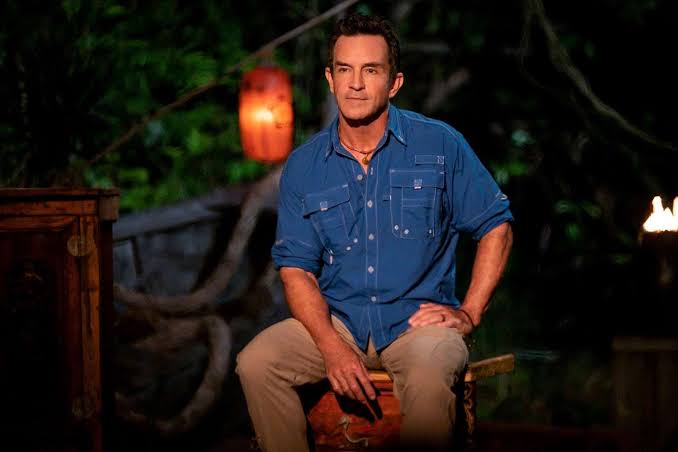
I have been watching Survivor since the first season finale. I still remember when Richard Hatch (private parts blurred) walked around naked to intimidate the other players prior to the final vote. In Season 2, I remember that Jerri Manthey set-up and lied about an Army Intelligence officer (Kel Gleason, Native American and Hispanic) to get him voted out early. In the spring of 2005, while I was serving in Iraq, I caught a finale by chance on a television in an MWR room on Victory Base; a little slice of home! I have seen nearly every episode of nearly every season since. The game has always shown how people form alliances and justify their choices when a million dollars is on the line. I am fascinated by human behavioral psychology, and Survivor and Jeff Probst never let me down. Lately, in Season 51, it has held up a clear mirror to how our society talks about race—and how that talk often ignores the actual history that ended slavery in America.

In Season 51, black players formed the Helicopter Alliance. One of them, Jelly, said it was created “to make sure black people did well in the game.” After a tribe swap, they used that bond to vote out a white player. An X post by Michael Keith put the reaction many fans had into words: Another season of black players doing it ‘for the culture’. If white people ever mentioned voting based on color, they would be ridiculed and labeled. But on Survivor it’s OK to be racists as long as you’re not white.
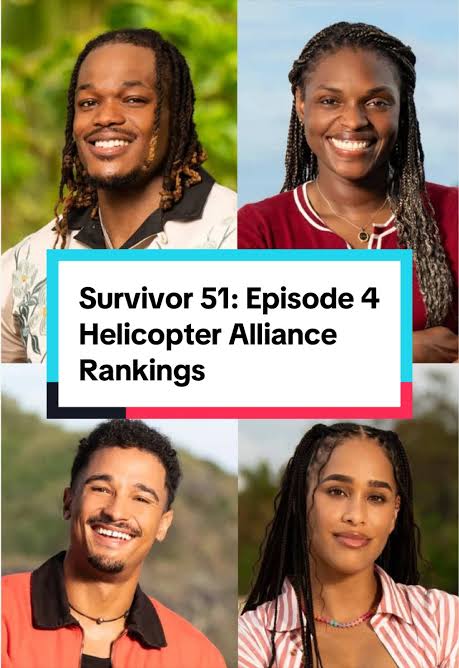
I replied because the pattern feels familiar and wrong. “It is phenomenally disappointing in an otherwise GOATed game,” I wrote. “These are not bad people, but they reflect their upbringing. Why does it seem, over and over again that the racism in America is rooted in the black psyche?” I also pointed out the double standard: if white players had openly worked to eliminate others based on race, it would have been a scandal. Other comments in the thread called race-based alliances boring and predictable, claimed white people do the same thing quietly, or argued that history makes the word “racism” unfair here.

Now we are faced with a situation where if the truth comes out about the alliance and it’s purpose, would the non-black players be considered racist for trying to break it up and vote out the black players because they are in a black alliance?
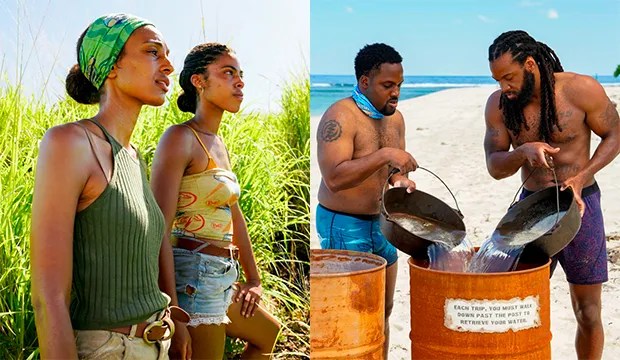
This is not the first time identity has shaped the game. In Season 41, Black players formed an open alliance after the merge and spoke at Tribal Council about representing their community “for the culture.” Earlier seasons saw strong women’s alliances, and Season 13 even began with tribes divided by race. A study of the first forty seasons found that women and players of color were more likely to be voted out early. Players will always look for any edge—shared age, region, strength, or race. The problem is the uneven rule: one version of racial voting is often treated as representation, while the reverse would be condemned.
I grew up in an integrated neighborhood in Southern California and in a mixed, blended family. I was taught to judge people by their character, not the color of their skin. That idea still makes the most sense to me. The same principle applies when we talk about the past. Society often discusses slavery and reparations as if the institution ended only yesterday, and as if the only people who suffered or sacrificed were the enslaved. That leaves out a large part of the story.

My great-great-grandfather’s 1863 Civil War diary, serialized by my mother in 1963 in a yearlong series of recounted, transcribed entries, and now in a book called “The Centum Diary,” he mentions the Contraband Camp in Corinth, Mississippi, where he was stationed for much of that year. After Union forces took the area, thousands of freed slaves gathered there. The camp grew into a small town with houses, a church, a school, a hospital, and farms where the residents worked for wages. Men from the camp later joined the Union Army as the 1st Alabama Infantry of African Descent. It was one of the places where freedom began to take shape under Union protection.

Roughly 360,000 white male and about 37,000 black male Union soldiers died in the Civil War, what I call the War to End Slavery. Those men—white and Black—fought to end the slavery. I also have a distant cousin, General Gordon Granger, who on June 19, 1865, in Galveston, Texas, issued General Order No. 3. He told the people of Texas that, under the Emancipation Proclamation, “all slaves are free.” That announcement is the origin of Juneteenth.
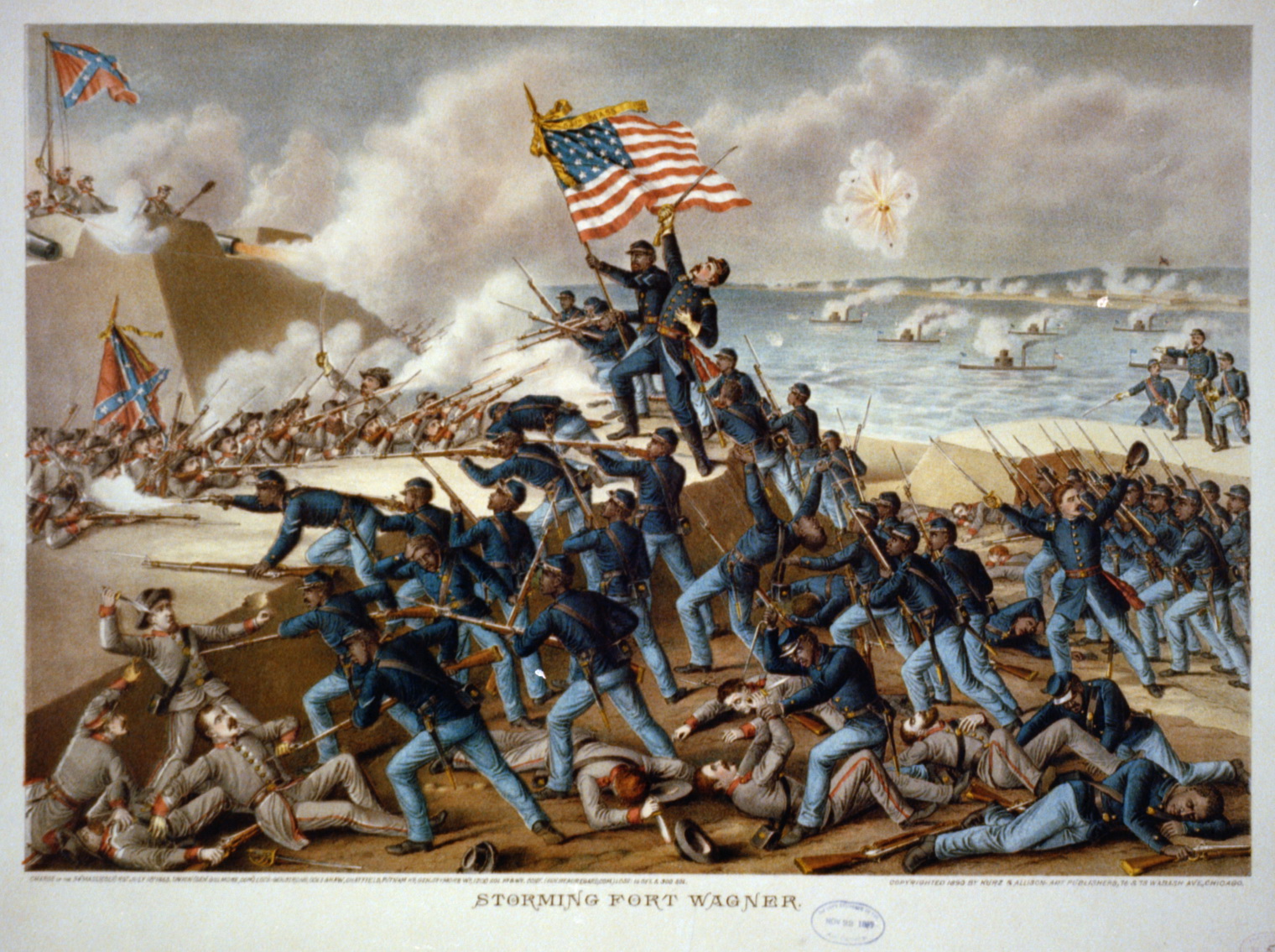
If the country is going to talk seriously about reparations, it should at least acknowledge who bore the battle. The soldiers who fought and died to end slavery paid a price that cannot be measured in money. Ignoring that sacrifice while treating race-based alliances on a reality show as progress does not help us move forward. Survivor reflects the culture that produces it. It’s fascinating that after all this time; young blacks still revert to racist ideas to survive a society that long ago saw them as people and valuable members of society. Yes, through trials and tribulations, but surely, we are ready to move on.

The mirror is being held up again. Looking at both the game and the fuller history—without looking away—lets us see where double standards and incomplete stories come from. Judging individuals by their character, and remembering who ended slavery, remains a better standard than sorting people by the color of their skin.
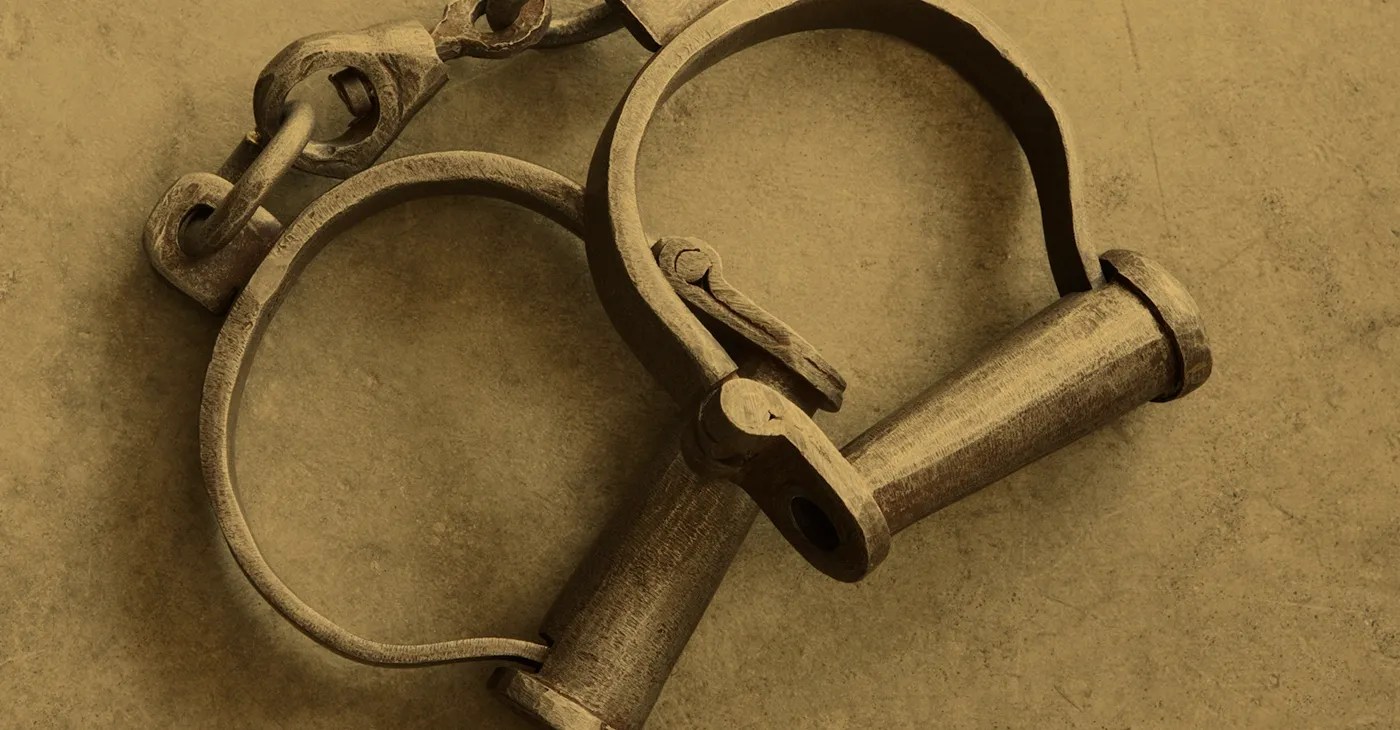
Slavery and the Church

Recently, a group of Protestant and Anglican church leaders met to discuss Christianity’s role in slavery. The Washington Times covered the event with this story: ‘Churches urged to acknowledge role in racism: Panel holds up mirror to American Christians.’

Balderdash! What a colossal waste of time and resources! No more self-flagellation over slavery! 

Most Americans never owned slaves (in fact, less than 5% ever did), and many were always abolitionists, especially those who were members of religious groups, such as the Quakers. 

Institutional slavery in the US lasted only 80 years, from 1783 to 1863, the shortest period of time for any country. Crucially, it was not instituted by Americans as a cultural pillar of our country but, rather, was brought to America by the British and Portuguese and sent to the ash heap of our nation’s history only one-third of the way into our 240 years.

Religious leaders should be spending their time preaching the Bible and saving souls, not inventing crises. 

In fact, this is simply a stealth attack on the tenets of Christianity and religion in general. It is an attempt to find faults within religion and exploit them. In making religious people acknowledge wrongs they personally had nothing to do with, those who want to change the message of the Church hope to make believers feel bad about themselves and, therefore, capitulate to those who hold victim status.

Interestingly, no Bible references were cited in the Times article. Why?

The Bible contains various passages that address the issue of slavery. It’s important to note that the Bible was written in different historical and cultural contexts, and attitudes toward slavery evolved over time. Here are some key points:

Old Testament (Hebrew Bible):

  • Slavery was a part of the social structure in ancient times, and the Old Testament acknowledges its existence.
  • There were regulations regarding the treatment of slaves, emphasizing fair treatment and humane conditions (Exodus 21:2-11, Leviticus 25:39-46).
  • The Year of Jubilee, occurring every 50 years, was a time when Hebrew slaves were to be set free, and debts were to be forgiven (Leviticus 25:10).
  • Foreign slaves (mostly non-black) could be owned permanently, and their status was inheritable, but they were also protected by certain laws (Leviticus 25:44-46).

New Testament:

  • The New Testament doesn’t explicitly condemn slavery, and there are instructions given to slaves and masters (Ephesians 6:5-9, Colossians 3:22-4:1).
  • In the context of the New Testament, slavery was a common social institution.
  • The teachings of Jesus emphasize love, compassion, and the equality of all people in the eyes of God.

Interpretation and Context:

Interpretation of these passages varies among different Christian denominations and scholars.

It’s important to approach these texts with an understanding of historical context and cultural differences. Most modern Christian denominations condemn any form of slavery and emphasize the principles of justice, compassion, and equality.

In addition to the passages outlined above, it is interesting to look at the Book of Psalms, which primarily consists of poetic and hymnic passages that express a range of emotions, including praise, lament, and supplication. While Psalms doesn’t explicitly address the issue of slavery in the same way that some other sections of the Bible do, there are passages that touch on themes related to oppression, captivity, and deliverance, all in the context of Jewish/Hebrew/Israelite slaves.

One example is Psalm 137, which is often referred to as the “By the rivers of Babylon” psalm. It reflects the feelings of the Israelites during their captivity in Babylon:

“By the rivers of Babylon, there we sat down and wept, when we remembered Zion. On the willows there we hung up our lyres. For there our captors required of us songs, and our tormentors, mirth, saying, ‘Sing us one of the songs of Zion!’ How shall we sing the Lord’s song in a foreign land?” (Psalm 137:1-4, ESV)

This psalm expresses the deep sorrow and longing for freedom experienced by the Israelites in exile. While it doesn’t specifically mention slavery in the sense of servitude, it reflects the anguish of a people taken captive and removed from their homeland.

In researching his DNA and ancestry, an American black person will typically sooner or later come across a dead end called slavery. Some, however, learn of branches of their ancestral past that circumvent slavery and expose a different or blended experience.

The American black Christian experience blends with a gospel spirituality that included singing songs of freedom in the tradition of the Biblical Psalms. Many of these songs are now part of official hymnals of certain Protestant denominations, such as the Baptists and Methodists.

These include songs like “Swing Low, Sweet Chariot,” “When the Saints Go Marching In,” “Go Down Moses,” “River Jordan,” “Nobody Knows (the Trouble I’ve Seen),” and “Joshua (Fought the Battle of Jericho),” which lament captivity and tell of freedom and heaven.

In the United States, we have one culture, the American culture. And anyone who would divide us is un-American. We are acutely aware of our past, but none of us can change it (though the woke, cancel culture crowd loves to try by changing curriculum, tearing down statues and monuments, and appointing racial overlords to corporate organizational charts). In the end, we are all one people, with one Constitution, one Declaration of Independence, written in English, regardless of race, creed, or color, according to our civil rights law. 

None of us need feel guilty about things we had no control over. Those who want you to feel guilty about these things are seeking to control you emotionally and psychologically.

Our energy and focus should be spent on things we can change now, like not supporting proxy wars, closing our border to invaders, cultivating our own energy sources, treating each other with dignity and respect, punishing criminals, rooting out corruption, and creating conditions where all Americans, alive now, can enjoy the foundational principles of this great nation: Life, Liberty and the Pursuit of Happiness.