Immigration: WWJD?

“What would Jesus do?” is a fine question until someone applies it to a national border the way a bumper sticker applies it to a traffic jam. Suddenly the options shrink to “open the gates and hand out the snacks” or “you’re not a real Christian.” Most of us have stood in that checkout line long enough to know the answer is usually neither. Jesus, as the record shows, was remarkably specific about both mercy and limits. He also had a habit of answering a loaded question with a better one.
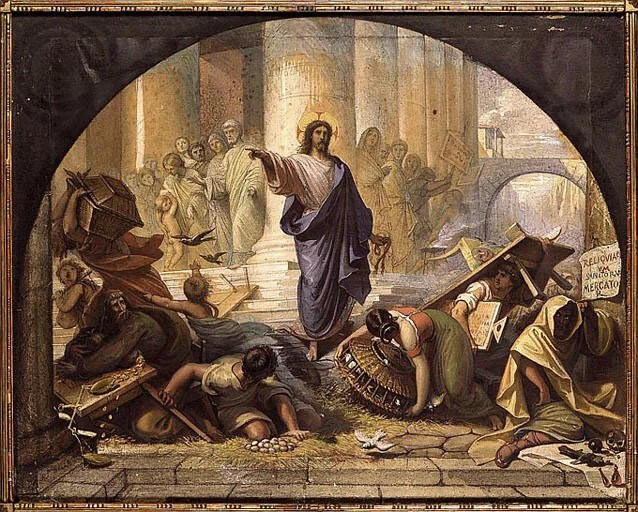
“So he made a whip out of cords, and drove all from the temple courts, both sheep and cattle; he scattered the coins of the money changers and overturned their tables.” – John 2:15 (NIV)

Start with the part everyone quotes. The Good Samaritan (Luke 10) is not a parable about immigration policy; it is a story about a man who stops for a stranger (not a criminal, illegal alien) bleeding in a ditch when the respectable people walk past. The command to love the sojourner in Leviticus 19 is equally direct: do not oppress the (legal) stranger, treat him fairly, remember that you could be a stranger in a strange land, too. Do unto others, Golden Rule, etc. These are not suggestions. A Christian who has never helped a person in genuine need is missing something essential. That part is not complicated.
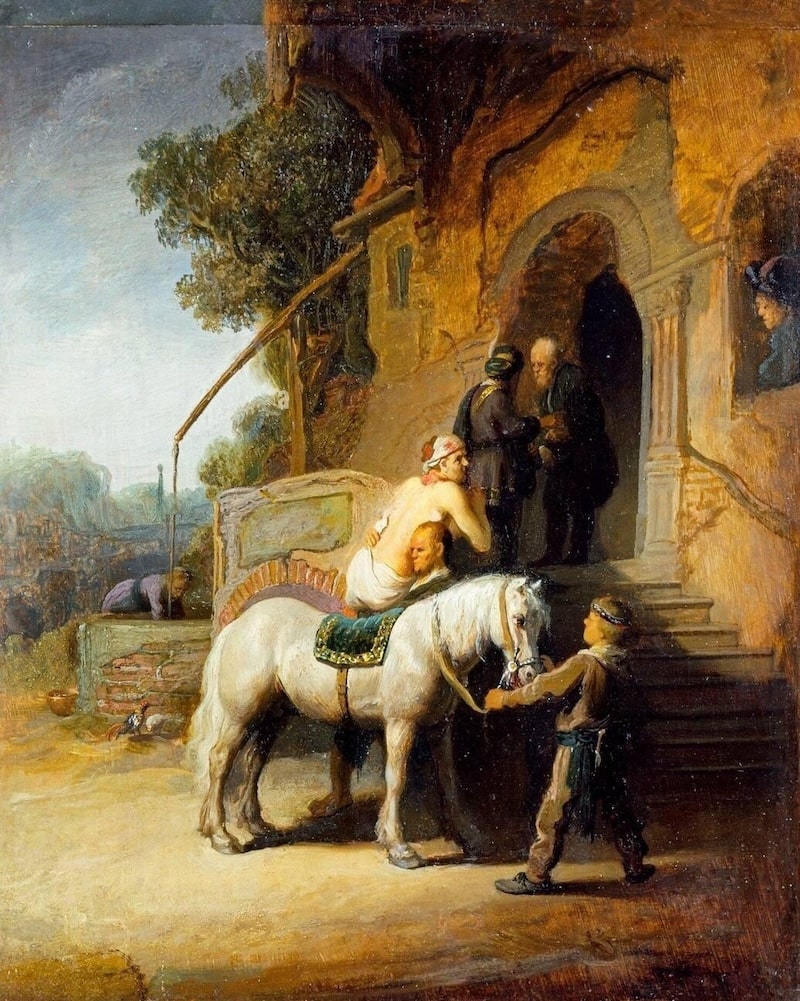
“But a certain Samaritan, as he journeyed, came where he was: and when he saw him, he had compassion on him, and went to him, and bound up his wounds, pouring in oil and wine, and set him on his own beast, and brought him to an inn, and took care of him.” Luke 10 (KJV)

The rest of the book, however, refuses to stop at the bumper sticker. Matthew 7:6 offers a practical warning that still surprises people who only read the first half of the chapter: do not give what is precious (The Word of God) to those who will trample it and then turn on you. The Gospels, ordered liberty, and the basic expectation that women are not property are precious. Handing them over without regard to whether the recipient intends to keep them is not hospitality; it is poor stewardship. Acts 17 notes that God set boundaries for nations. Biblical Israel had gates. The lawful sojourner received protection and equal justice under the law, yet he also lived under that law. Unlimited claim on generosity and entitlement was not part of the deal.
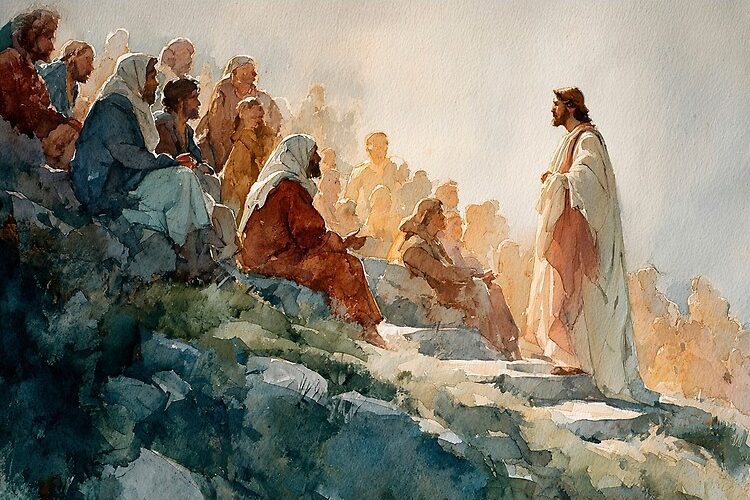
“Do not give dogs what is sacred; do not throw your pearls to pigs. If you do, they may trample them under their feet, and turn and tear you to pieces.” – Matthew 7:6 (NIV)

Then there is the blunt instruction in 2 Thessalonians 3: “If anyone is not willing to work, let him not eat.” It is difficult to turn that into a slogan. It is also difficult to pretend it does not apply once someone has legally crossed a border. Compassion systematically subsidizes idleness or the refusal of basic norms eventually running out of other people’s money and patience, earned from industry not idleness. Societies that discover this the hard way tend to become less, not more, able to help the people who need it.
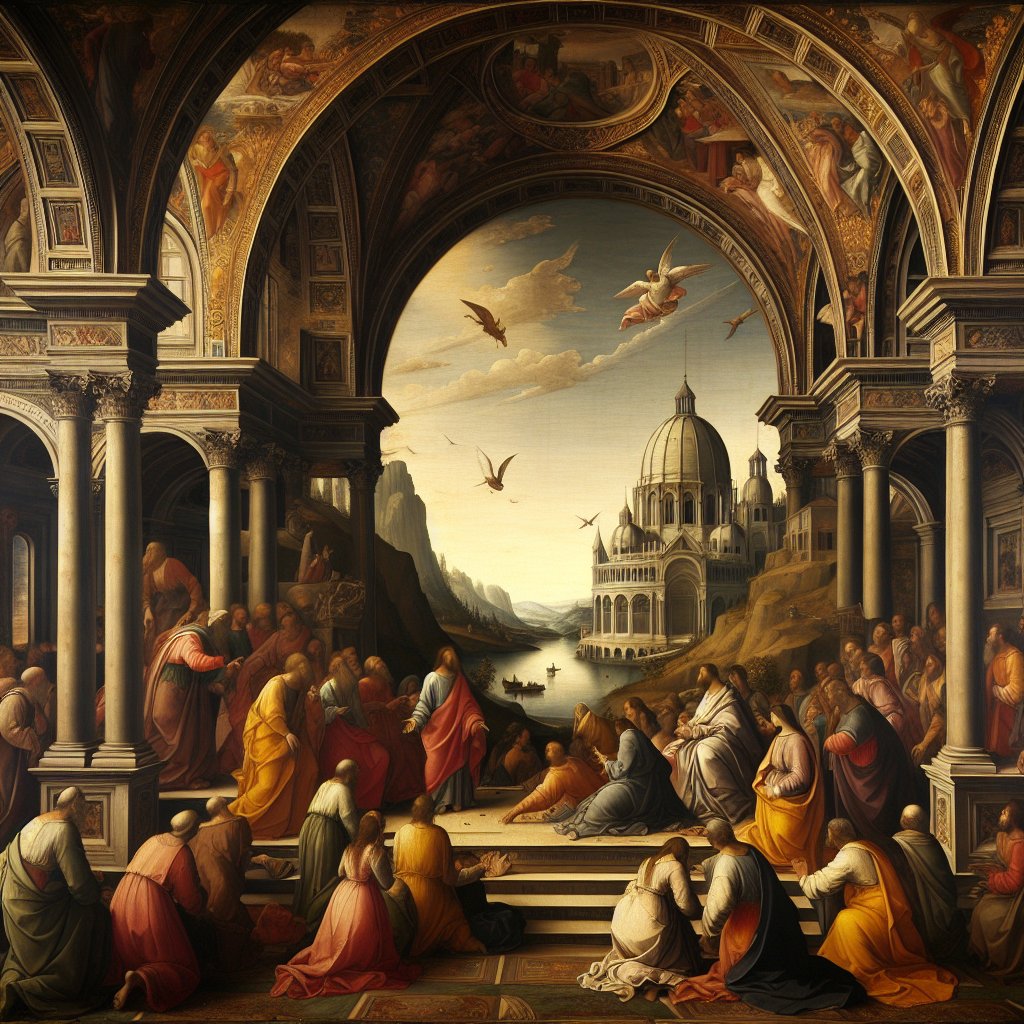
“For even when we were with you, this we commanded you, that if any would not work, neither should he eat.” 2 Thessalonians 3:10 (KJV)

The modern pressure to treat every arrival as an automatic neighbor, entitled to indefinite residence and benefits they didn’t earn or pay for, often skips these distinctions. Irregular flows that are heavily weighted toward young men from places with very different rules about women, authority, and violence have produced measurable costs in several countries—higher rates of certain crimes, slower employment, and neighborhoods that function more like parallel societies than extensions of the host. Formal programs that prioritize families and the vulnerable have different records. The data are not a secret; they are simply inconvenient for the slogan. Pointing them out does not require cruelty. It requires noticing that resources and social trust are not infinite, and that self-preservation is the condition for any long-term generosity, understanding or tolerance.

“He said to the crowd: “When you see a cloud rising in the west, immediately you say, ‘It’s going to rain,’ and it does. And when the south wind blows, you say, ‘It’s going to be hot,’ and it is. Hypocrites! You know how to interpret the appearance of the earth and the sky. How is it that you don’t know how to interpret this present time?” – Luke 12:54-56 (NIV)

A reasonable reading of “What would Jesus do?” therefore includes both the man in the ditch and the pearls. It includes the sojourner and the gate. It includes the call to repent and the recognition that not everyone who arrives has accepted that call. Justice and compassion meet under law, not in the space where law is treated as an obstacle to good feelings. Christians can (and should) show personal mercy without demanding that their political community pretend cultural distance, demographic reality, and the duty to work do not exist. Those who insist the only Christian answer is unlimited acceptance are asking the question in a way that already contains their preferred reply. The fuller record is less convenient and more durable.

“From one man he made all the nations, that they should inhabit the whole earth; and he marked out their appointed times in history and the boundaries of their lands.” Acts 17:26 (NIV)

We are, in the end, on a mission from God. The mission includes the wounded stranger. It also includes not handing the mission over to people who intend to rewrite the instructions once they are inside. Both parts can be true at once. The trick is refusing the demand to choose only one.

Slavery and the Church

Recently, a group of Protestant and Anglican church leaders met to discuss Christianity’s role in slavery. The Washington Times covered the event with this story: ‘Churches urged to acknowledge role in racism: Panel holds up mirror to American Christians.’

Balderdash! What a colossal waste of time and resources! No more self-flagellation over slavery! 

Most Americans never owned slaves (in fact, less than 5% ever did), and many were always abolitionists, especially those who were members of religious groups, such as the Quakers. 

Institutional slavery in the US lasted only 80 years, from 1783 to 1863, the shortest period of time for any country. Crucially, it was not instituted by Americans as a cultural pillar of our country but, rather, was brought to America by the British and Portuguese and sent to the ash heap of our nation’s history only one-third of the way into our 240 years.

Religious leaders should be spending their time preaching the Bible and saving souls, not inventing crises. 

In fact, this is simply a stealth attack on the tenets of Christianity and religion in general. It is an attempt to find faults within religion and exploit them. In making religious people acknowledge wrongs they personally had nothing to do with, those who want to change the message of the Church hope to make believers feel bad about themselves and, therefore, capitulate to those who hold victim status.

Interestingly, no Bible references were cited in the Times article. Why?

The Bible contains various passages that address the issue of slavery. It’s important to note that the Bible was written in different historical and cultural contexts, and attitudes toward slavery evolved over time. Here are some key points:

Old Testament (Hebrew Bible):

  • Slavery was a part of the social structure in ancient times, and the Old Testament acknowledges its existence.
  • There were regulations regarding the treatment of slaves, emphasizing fair treatment and humane conditions (Exodus 21:2-11, Leviticus 25:39-46).
  • The Year of Jubilee, occurring every 50 years, was a time when Hebrew slaves were to be set free, and debts were to be forgiven (Leviticus 25:10).
  • Foreign slaves (mostly non-black) could be owned permanently, and their status was inheritable, but they were also protected by certain laws (Leviticus 25:44-46).

New Testament:

  • The New Testament doesn’t explicitly condemn slavery, and there are instructions given to slaves and masters (Ephesians 6:5-9, Colossians 3:22-4:1).
  • In the context of the New Testament, slavery was a common social institution.
  • The teachings of Jesus emphasize love, compassion, and the equality of all people in the eyes of God.

Interpretation and Context:

Interpretation of these passages varies among different Christian denominations and scholars.

It’s important to approach these texts with an understanding of historical context and cultural differences. Most modern Christian denominations condemn any form of slavery and emphasize the principles of justice, compassion, and equality.

In addition to the passages outlined above, it is interesting to look at the Book of Psalms, which primarily consists of poetic and hymnic passages that express a range of emotions, including praise, lament, and supplication. While Psalms doesn’t explicitly address the issue of slavery in the same way that some other sections of the Bible do, there are passages that touch on themes related to oppression, captivity, and deliverance, all in the context of Jewish/Hebrew/Israelite slaves.

One example is Psalm 137, which is often referred to as the “By the rivers of Babylon” psalm. It reflects the feelings of the Israelites during their captivity in Babylon:

“By the rivers of Babylon, there we sat down and wept, when we remembered Zion. On the willows there we hung up our lyres. For there our captors required of us songs, and our tormentors, mirth, saying, ‘Sing us one of the songs of Zion!’ How shall we sing the Lord’s song in a foreign land?” (Psalm 137:1-4, ESV)

This psalm expresses the deep sorrow and longing for freedom experienced by the Israelites in exile. While it doesn’t specifically mention slavery in the sense of servitude, it reflects the anguish of a people taken captive and removed from their homeland.

In researching his DNA and ancestry, an American black person will typically sooner or later come across a dead end called slavery. Some, however, learn of branches of their ancestral past that circumvent slavery and expose a different or blended experience.

The American black Christian experience blends with a gospel spirituality that included singing songs of freedom in the tradition of the Biblical Psalms. Many of these songs are now part of official hymnals of certain Protestant denominations, such as the Baptists and Methodists.

These include songs like “Swing Low, Sweet Chariot,” “When the Saints Go Marching In,” “Go Down Moses,” “River Jordan,” “Nobody Knows (the Trouble I’ve Seen),” and “Joshua (Fought the Battle of Jericho),” which lament captivity and tell of freedom and heaven.

In the United States, we have one culture, the American culture. And anyone who would divide us is un-American. We are acutely aware of our past, but none of us can change it (though the woke, cancel culture crowd loves to try by changing curriculum, tearing down statues and monuments, and appointing racial overlords to corporate organizational charts). In the end, we are all one people, with one Constitution, one Declaration of Independence, written in English, regardless of race, creed, or color, according to our civil rights law. 

None of us need feel guilty about things we had no control over. Those who want you to feel guilty about these things are seeking to control you emotionally and psychologically.

Our energy and focus should be spent on things we can change now, like not supporting proxy wars, closing our border to invaders, cultivating our own energy sources, treating each other with dignity and respect, punishing criminals, rooting out corruption, and creating conditions where all Americans, alive now, can enjoy the foundational principles of this great nation: Life, Liberty and the Pursuit of Happiness.