Survivor: Holding the Mirror Up to Racism and How a Country Needs to Heal the Wounds of Slavery

I have been watching Survivor since the first season finale. I still remember when Richard Hatch (private parts blurred) walked around naked to intimidate the other players prior to the final vote. In Season 2, I remember that Jerri Manthey set-up and lied about an Army Intelligence officer (Kel Gleason, Native American and Hispanic) to get him voted out early. In the spring of 2005, while I was serving in Iraq, I caught a finale by chance on a television in an MWR room on Victory Base; a little slice of home! I have seen nearly every episode of nearly every season since. The game has always shown how people form alliances and justify their choices when a million dollars is on the line. I am fascinated by human behavioral psychology, and Survivor and Jeff Probst never let me down. Lately, in Season 51, it has held up a clear mirror to how our society talks about race—and how that talk often ignores the actual history that ended slavery in America.

In Season 51, black players formed the Helicopter Alliance. One of them, Jelly, said it was created “to make sure black people did well in the game.” After a tribe swap, they used that bond to vote out a white player. An X post by Michael Keith put the reaction many fans had into words: Another season of black players doing it ‘for the culture’. If white people ever mentioned voting based on color, they would be ridiculed and labeled. But on Survivor it’s OK to be racists as long as you’re not white.
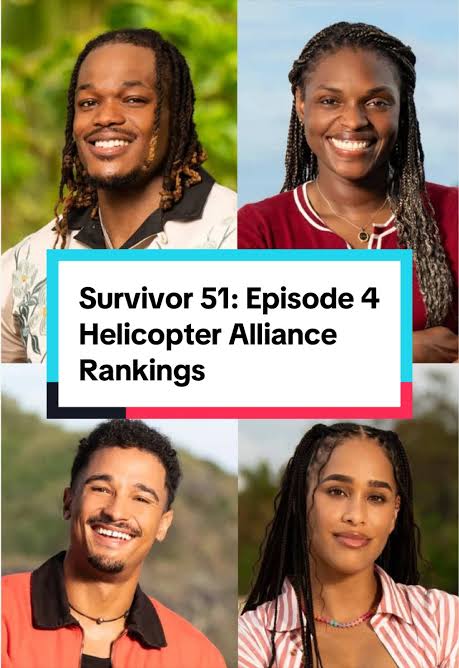
I replied because the pattern feels familiar and wrong. “It is phenomenally disappointing in an otherwise GOATed game,” I wrote. “These are not bad people, but they reflect their upbringing. Why does it seem, over and over again that the racism in America is rooted in the black psyche?” I also pointed out the double standard: if white players had openly worked to eliminate others based on race, it would have been a scandal. Other comments in the thread called race-based alliances boring and predictable, claimed white people do the same thing quietly, or argued that history makes the word “racism” unfair here.

Now we are faced with a situation where if the truth comes out about the alliance and it’s purpose, would the non-black players be considered racist for trying to break it up and vote out the black players because they are in a black alliance?
This is not the first time identity has shaped the game. In Season 41, Black players formed an open alliance after the merge and spoke at Tribal Council about representing their community “for the culture.” Earlier seasons saw strong women’s alliances, and Season 13 even began with tribes divided by race. A study of the first forty seasons found that women and players of color were more likely to be voted out early. Players will always look for any edge—shared age, region, strength, or race. The problem is the uneven rule: one version of racial voting is often treated as representation, while the reverse would be condemned.

I grew up in an integrated neighborhood in Southern California and in a mixed, blended family. I was taught to judge people by their character, not the color of their skin. That idea still makes the most sense to me. The same principle applies when we talk about the past. Society often discusses slavery and reparations as if the institution ended only yesterday, and as if the only people who suffered or sacrificed were the enslaved. That leaves out a large part of the story.

My great-great-grandfather’s 1863 Civil War diary, serialized by my mother in 1963 in a yearlong series of recounted, transcribed entries, and now in a book called “The Centum Diary,” he mentions the Contraband Camp in Corinth, Mississippi, where he was stationed for much of that year. After Union forces took the area, thousands of freed slaves gathered there. The camp grew into a small town with houses, a church, a school, a hospital, and farms where the residents worked for wages. Men from the camp later joined the Union Army as the 1st Alabama Infantry of African Descent. It was one of the places where freedom began to take shape under Union protection.

Roughly 360,000 white male and about 37,000 black male Union soldiers died in the Civil War, what I call the War to End Slavery. Those men—white and Black—fought to end the slavery. I also have a distant cousin, General Gordon Granger, who on June 19, 1865, in Galveston, Texas, issued General Order No. 3. He told the people of Texas that, under the Emancipation Proclamation, “all slaves are free.” That announcement is the origin of Juneteenth.
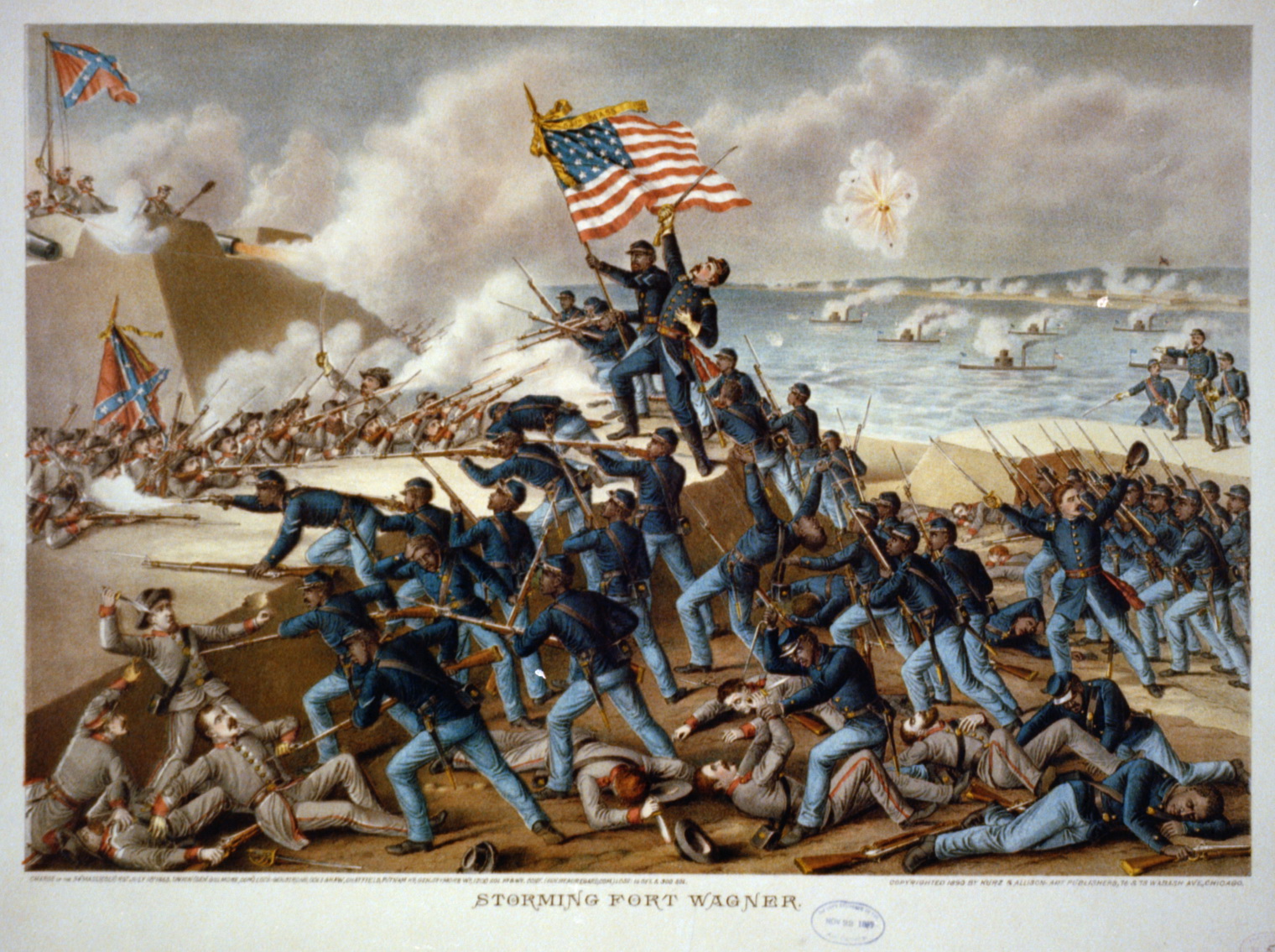
If the country is going to talk seriously about reparations, it should at least acknowledge who bore the battle. The soldiers who fought and died to end slavery paid a price that cannot be measured in money. Ignoring that sacrifice while treating race-based alliances on a reality show as progress does not help us move forward. Survivor reflects the culture that produces it. It’s fascinating that after all this time; young blacks still revert to racist ideas to survive a society that long ago saw them as people and valuable members of society. Yes, through trials and tribulations, but surely, we are ready to move on.

The mirror is being held up again. Looking at both the game and the fuller history—without looking away—lets us see where double standards and incomplete stories come from. Judging individuals by their character, and remembering who ended slavery, remains a better standard than sorting people by the color of their skin.

America and Hamilton the Musical

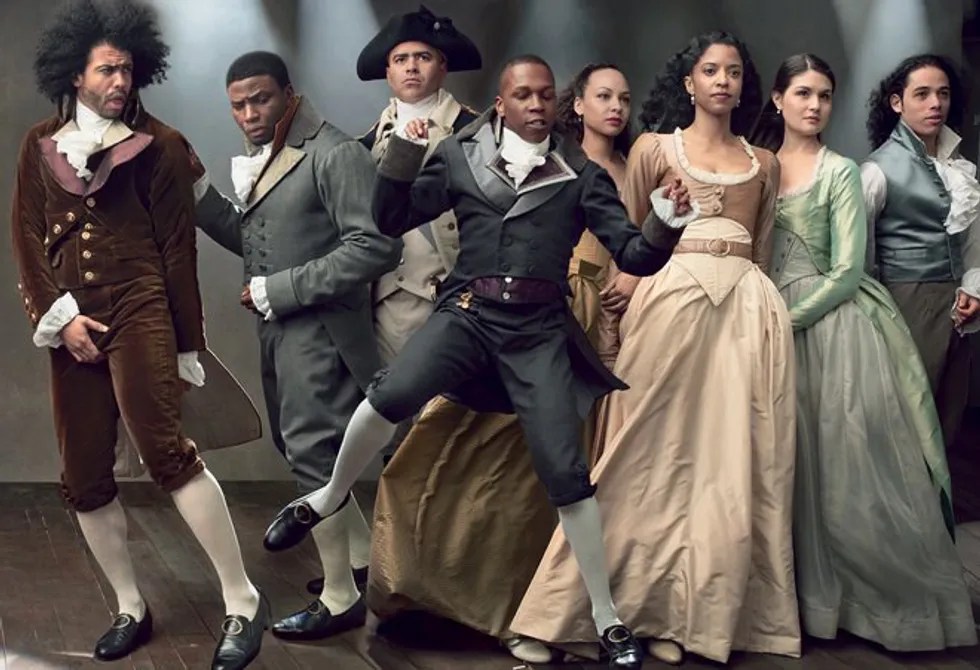
In 2015, Lin-Manuel Miranda created a stunning and magical Broadway experience with his telling of the great American immigrant, Alexander Hamilton. Nearly 10 years later the show still reigns supreme on The Great White Way (“white” because of the bright lights and white asphalt at the time).

I’d first seen the original show, with Miranda playing the lead role, on TV via Disney+ several years ago. I laughed, I cried, I was amazed and disgusted at some of the revelations of one of our founding fathers. Friend/Wife and I recently saw it in person, and up-close (we sat second row, left, on the aisle through a lottery program initiated by Miranda in order to make Broadway more accessible to those who can’t afford it. The tickets we won cost $10 each, and would have normally cost nearly $400.), and had plenty of time to take in the atmosphere.

The house was packed, very slightly diverse and older. Very few young people in their teens or twenties. Mostly older rich white folks. More Asians than people of color, who were strictly outnumbered. One of the leads was an Asian female actor, which may have contributed to the increase in Asian audience members, two of whom sat in front of us, beaming whenever the Asian actress sang or spoke.

At intermission the dash was on for the restrooms. The next day friend/wife told me about the conversation in the line for the ladies’ room, which she described as 95 percent white, older, wealthy women. “What do you think?” “Very creative.” “Very different than other shows.”

Friend/Wife said they obviously didn’t know what they were walking into.

After hearing the line that included the words, “Betsy Ross’ flag,” I had an epiphany. There were no American flags, nor red, white and blue anywhere on the stage, costumes or merchandise.

According to publicly available sources, the absence of American flags and the limited use of traditional red, white, and blue in the set and costumes of the show were intentional creative choices made by Miranda and the production team. The musical aims to provide a fresh and contemporary perspective on the founding of the United States, and it does so by employing a diverse cast, modern musical styles, and a minimalist set design.

Miranda has expressed the desire to make the historical narrative more relatable to a diverse and contemporary audience. The decision to have a diverse cast, regardless of historical accuracy, contributes to this goal. The minimalistic set design, without overt patriotic symbols like flags, he says, allows the audience to focus on the characters, their stories, and the themes of the musical rather than relying on traditional visual cues associated with historical period pieces.

While “Hamilton” is set during the American Revolutionary War and the early years of the United States, it “deliberately avoids a traditional, nostalgic approach to historical storytelling.” The use of modern music styles and a diverse cast helps make the story “feel more accessible and relevant” to a broad audience, emphasizing the universal aspects of ambition, struggle, and the complexities of building a nation. Manuel says the creative choices in “Hamilton” reflect an innovative and “inclusive approach to presenting historical narratives on the stage.”

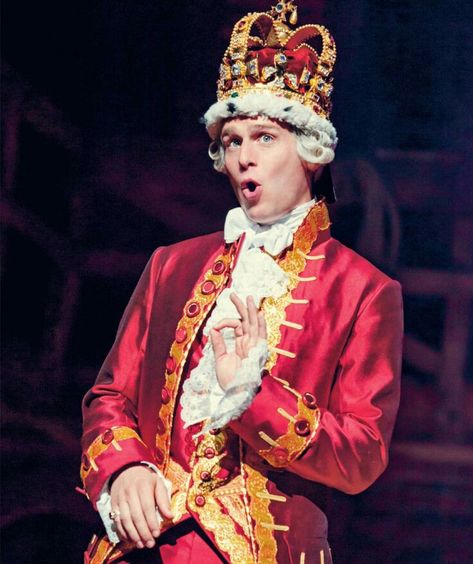
The one obviously white speaking/singing character in the show is that of “King George.” Racially type-cast, this character is a foil to the non-white ensemble. He is the court jester, the clown, the target of ridicule. The audience laughs at his frustration and condescension of Hamilton and his cast of darker characters, all playing white founding fathers of the United States. It is subtle discrimination, but bigotry nonetheless, which is okay, I guess, because it is humor after all, right? And making fun of people, their color, ancestry and social status is allowed in an accepting, free speech, non-woke or cancel culture environment such as Broadaway, right?

Who, me, bitter? No way! Just noticing things and then expressing my freedom of speech.

Li-Manuel Miranda, I think is a bit bitter. And this is his shot.

His bias surfaces in the production choices that eliminate any hint of American patriotism. He appropriates western European culture as a vehicle to change the visual narrative of our country’s founding (remember, the truth is that the country was founded by a bunch of patriotic, relatively wealthy white guys, who ironically helped create a country where the freedom to make a fortune mocking them exists).

If Miranda were sincere about making the story more accessible to diverse populations, he would do more than just a lottery that gives maybe ten or so tickets of $10 each. He would sponsor traveling troupes, clean up the language and play to young, diverse audiences. Or not.

It occurred to me that the Broadway show now serves a different purpose. It milks money from rich white folks, and at the same time guarantees a vehicle for non-white singers, dancers and actors. Fair enough.

We live in an open, free market capitalist society. People are successful because they make a product people want to buy, and survives on repeat customers. I’ve no doubt that the show will be eternally popular. It’s that good.

If you haven’t seen it. Go. Shoot for the lottery and be patient. My friend/wife has won three times.

Just know what you’re getting yourself into. Maybe even read Ron Chernow’s biography of Alexander Hamilton, on which Miranda bases his story. It would help you follow the story and let you focus more on the incredible talent of the performers.

Despite my frustration at the absence of any traditional patriotism expressed in lyrics or set or costumes, there is in fact one mention of such symbolism.

A search of the lyrics of “Guns and Ships,” the line “Leave the battlefield waving Betsy Ross’ flag higher” is a metaphorical expression emphasizing the idea of achieving victory and independence. The mention of Betsy Ross’ flag, with its thirteen stars in a circle representing the original thirteen colonies, is a symbol of the United States.

The context of the line is in the midst of describing the challenges faced by the Continental Army, a “ragtag volunteer army,” in its fight against the powerful British forces. The reference to waving Betsy Ross’ flag higher suggests overcoming adversity and proudly asserting the American cause. It’s a poetic way of expressing the determination and resilience of the American forces in the face of a formidable opponent, and adds depth and imagery to the narrative of the musical.

In the end, my own bias is exposed. But maybe that was one of Mirand’s goals. That, like art in general, it’s not about the creator’s interpretation, it’s about yours.

Lesson learned? Take another look (or three or four) at things before you judge them completely. Challenge yourself to have an open mind. You don’t have to accept the status quo or first impressions. Let the stew simmer, and blend into it’s intended or unintended deliciousness, just like what America has become.