Immigration: WWJD?

“What would Jesus do?” is a fine question until someone applies it to a national border the way a bumper sticker applies it to a traffic jam. Suddenly the options shrink to “open the gates and hand out the snacks” or “you’re not a real Christian.” Most of us have stood in that checkout line long enough to know the answer is usually neither. Jesus, as the record shows, was remarkably specific about both mercy and limits. He also had a habit of answering a loaded question with a better one.
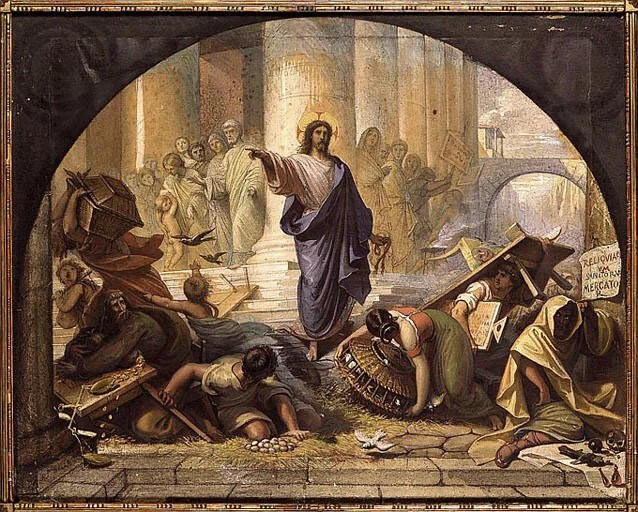
“So he made a whip out of cords, and drove all from the temple courts, both sheep and cattle; he scattered the coins of the money changers and overturned their tables.” – John 2:15 (NIV)

Start with the part everyone quotes. The Good Samaritan (Luke 10) is not a parable about immigration policy; it is a story about a man who stops for a stranger (not a criminal, illegal alien) bleeding in a ditch when the respectable people walk past. The command to love the sojourner in Leviticus 19 is equally direct: do not oppress the (legal) stranger, treat him fairly, remember that you could be a stranger in a strange land, too. Do unto others, Golden Rule, etc. These are not suggestions. A Christian who has never helped a person in genuine need is missing something essential. That part is not complicated.
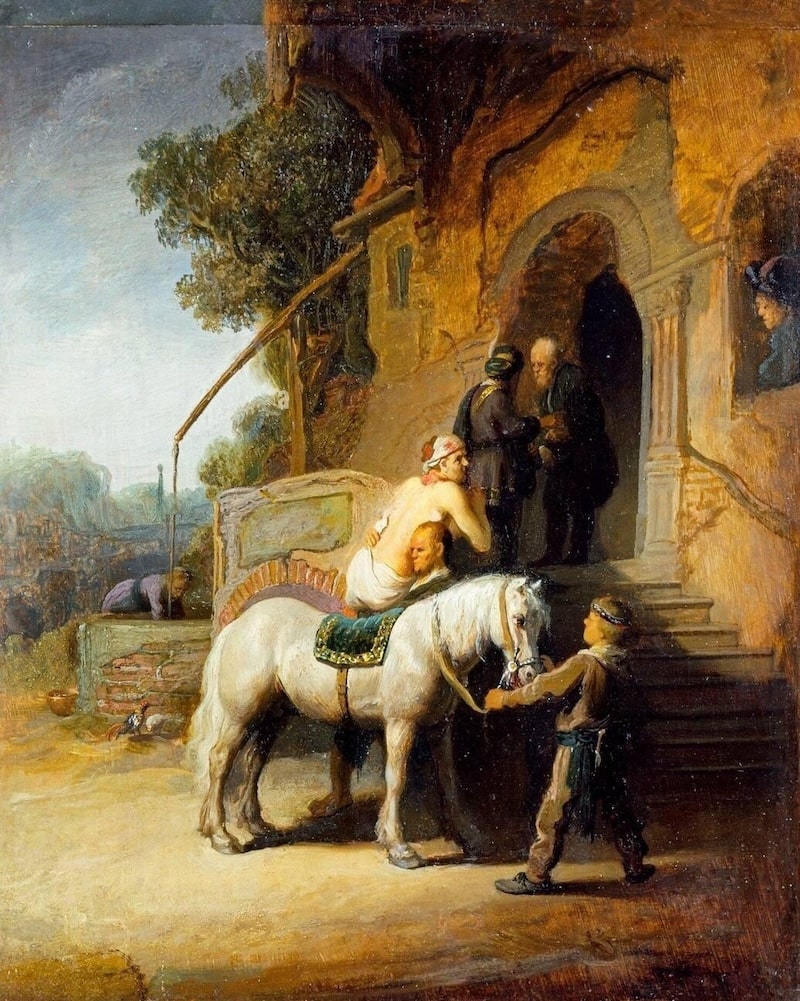
“But a certain Samaritan, as he journeyed, came where he was: and when he saw him, he had compassion on him, and went to him, and bound up his wounds, pouring in oil and wine, and set him on his own beast, and brought him to an inn, and took care of him.” Luke 10 (KJV)

The rest of the book, however, refuses to stop at the bumper sticker. Matthew 7:6 offers a practical warning that still surprises people who only read the first half of the chapter: do not give what is precious (The Word of God) to those who will trample it and then turn on you. The Gospels, ordered liberty, and the basic expectation that women are not property are precious. Handing them over without regard to whether the recipient intends to keep them is not hospitality; it is poor stewardship. Acts 17 notes that God set boundaries for nations. Biblical Israel had gates. The lawful sojourner received protection and equal justice under the law, yet he also lived under that law. Unlimited claim on generosity and entitlement was not part of the deal.
“Do not give dogs what is sacred; do not throw your pearls to pigs. If you do, they may trample them under their feet, and turn and tear you to pieces.” – Matthew 7:6 (NIV)

Then there is the blunt instruction in 2 Thessalonians 3: “If anyone is not willing to work, let him not eat.” It is difficult to turn that into a slogan. It is also difficult to pretend it does not apply once someone has legally crossed a border. Compassion systematically subsidizes idleness or the refusal of basic norms eventually running out of other people’s money and patience, earned from industry not idleness. Societies that discover this the hard way tend to become less, not more, able to help the people who need it.
“For even when we were with you, this we commanded you, that if any would not work, neither should he eat.” 2 Thessalonians 3:10 (KJV)

The modern pressure to treat every arrival as an automatic neighbor, entitled to indefinite residence and benefits they didn’t earn or pay for, often skips these distinctions. Irregular flows that are heavily weighted toward young men from places with very different rules about women, authority, and violence have produced measurable costs in several countries—higher rates of certain crimes, slower employment, and neighborhoods that function more like parallel societies than extensions of the host. Formal programs that prioritize families and the vulnerable have different records. The data are not a secret; they are simply inconvenient for the slogan. Pointing them out does not require cruelty. It requires noticing that resources and social trust are not infinite, and that self-preservation is the condition for any long-term generosity, understanding or tolerance.

“He said to the crowd: “When you see a cloud rising in the west, immediately you say, ‘It’s going to rain,’ and it does. And when the south wind blows, you say, ‘It’s going to be hot,’ and it is. Hypocrites! You know how to interpret the appearance of the earth and the sky. How is it that you don’t know how to interpret this present time?” – Luke 12:54-56 (NIV)

A reasonable reading of “What would Jesus do?” therefore includes both the man in the ditch and the pearls. It includes the sojourner and the gate. It includes the call to repent and the recognition that not everyone who arrives has accepted that call. Justice and compassion meet under law, not in the space where law is treated as an obstacle to good feelings. Christians can (and should) show personal mercy without demanding that their political community pretend cultural distance, demographic reality, and the duty to work do not exist. Those who insist the only Christian answer is unlimited acceptance are asking the question in a way that already contains their preferred reply. The fuller record is less convenient and more durable.

“From one man he made all the nations, that they should inhabit the whole earth; and he marked out their appointed times in history and the boundaries of their lands.” Acts 17:26 (NIV)

We are, in the end, on a mission from God. The mission includes the wounded stranger. It also includes not handing the mission over to people who intend to rewrite the instructions once they are inside. Both parts can be true at once. The trick is refusing the demand to choose only one.

The Passion of Donald Trump

donald-trump-church

With Republican zealots plotting against him, can the will of the People save Donald Trump from political crucifixion?

Not to compare The Donald to Jesus Christ as a person, but to compare his current political circumstances to the persecution and historical political circumstances of Jesus’ in order to illuminate what the American political establishment is doing and why.

Presumptive Republican presidential nominee Donald Trump – who is already a very established leader in the business world – is trying to assert himself as the political leader of the United States. But he hasn’t paid his dues nor suffered countless election defeats and other indignities of a tried and true politician. He hasn’t played the game from the other side of the fence. Although a very successful businessman, Trump is anything but a traditional political leader, yet. Hence his popularity.

About this time nearly 2,000 years ago, Christ attempted to assert his claim to the three heads of influence: the position of High Priest in the strict Jewish Essene sect to which he belonged; the title of King of the Jews, which was his bloodline, but to which his own brother James claimed righteously because he asserted that Jesus was not the legitimate heir; and the leader of the political group called The Twelve Disciples, which laid influence on the governance of the Jewish people through religion and politics.

The passion of the christ caiphas high priests temple judas passion010

To say the very least, Jesus was misunderstood. He had risen in the religious ranks through determination and deeds. His following was popular and growing, which worried the establishment priests.

Jesus wanted all to be able to worship God in the temple; the sick, the lame, the Gentiles and women, not just those deemed acceptable by the crony religious leadership of the day.

Jesus had stepped out of his role as simply future King of the Jews of the David line, and wanted to unite the forces of society from a single point of power.

Donald Trump, successor to his family fortune, protestant Christian, and now political wannabe, is attempting the same thing and is getting the same results from the political establishment and religious left that Jesus received from the ruling Essene priests, Herod (King of the Jews who espoused peace and cooperation with the establishment government from Rome), and Pontius Pilate, the Roman Governor of Judea.

How dare he presume rights to ultimate power!

What chutzpah!

tumblr_inline_nvlmlhqfO31ss6hjj_500

But indeed, the opponents of Trump are getting more and more perturbed as he appears to step closer and closer to the ultimate position of power in the world, that of Presidency of the United States.

The most recent claim, by The Economist, that a Trump presidency would be a “top ten global threat,” is absurd. But such statements gain media attention like flies on dung.

Every new story about how Trump couldn’t possibly be president or shouldn’t be president takes on curiouser and curiouser rationale.

The Economist piece claims his presidency would encourage terrorist recruitment, and send global markets to the basement. These claims are erroneous at best and evil propaganda at worst.

But why the panic? Why are prominent Republican and conservative leaders huddling in Washington, D.C. to come up with an alternate plan, even if Trump wins enough delegates to claim the Republican nomination?

Why has Mitt Romney turned into the Republican establishment pit bull, espousing the type of vitriol and hyperbole against Trump that we never saw when he ran against President Obama?

carav_verraad_judas_grt

They have their collective panties in a bunch because they see with Trump an end to their political influence and standing.

A Trump victory would make them all irrelevant, and then beholden to Trump for positions in the new administration and beyond. Trump would become the face of the Republican Party and its defacto leader.

A President Trump would act fast and decisively to melt away the fat of unnecessary government. Depending on whom he chooses to join him in his administration – and they are already lining up – he would find it more or less difficult getting things through a majority Republican Congress.

His biggest is with the conservatives, just as Jesus’ biggest hurdle was members of his own sect who were zealots (Simon Magus and Judas Iscariot). Jesus the pacifist does not appear to share that trait with Trump, but that has yet to be revealed, as Trump’s political record has not yet been written.

Remember, even though Ronald Reagan called the Soviet Union the “Evil Empire,” and told Gorbachev to “tear down [the Berlin] wall,” he actually only invaded one country, Grenada. Hardly the hawkish neocolonialist his detractors wanted to make him out to be.

Call it bluster, call it bullying, what Trump says has a purpose. He is setting the stage for negotiations with influential powers around the globe and domestically.

The question is which power will prevail, the power of contempt and rhetoric of the Republican establishment, or the power of the People to elect the candidate of their choice? More and more it looks like it will be The Coiffed One.

Will the persecution of Donald Trump lead to his political crucifixion at a brokered convention? Or will the passion of Donald Trump reveal a new beginning for America? It may just come down to the will of the masses.

In Mark 15:15, wanting to please the crowd, Pilate released Barabbas, a convicted murderer, instead of sparing Jesus from the cross. If the pleasure of the crowd is with Trump, will the establishment powers let the People have their day?

Ecce_homo_by_Antonio_Ciseri_(1)