Monthly Archives: November 2023
Slavery and the Church
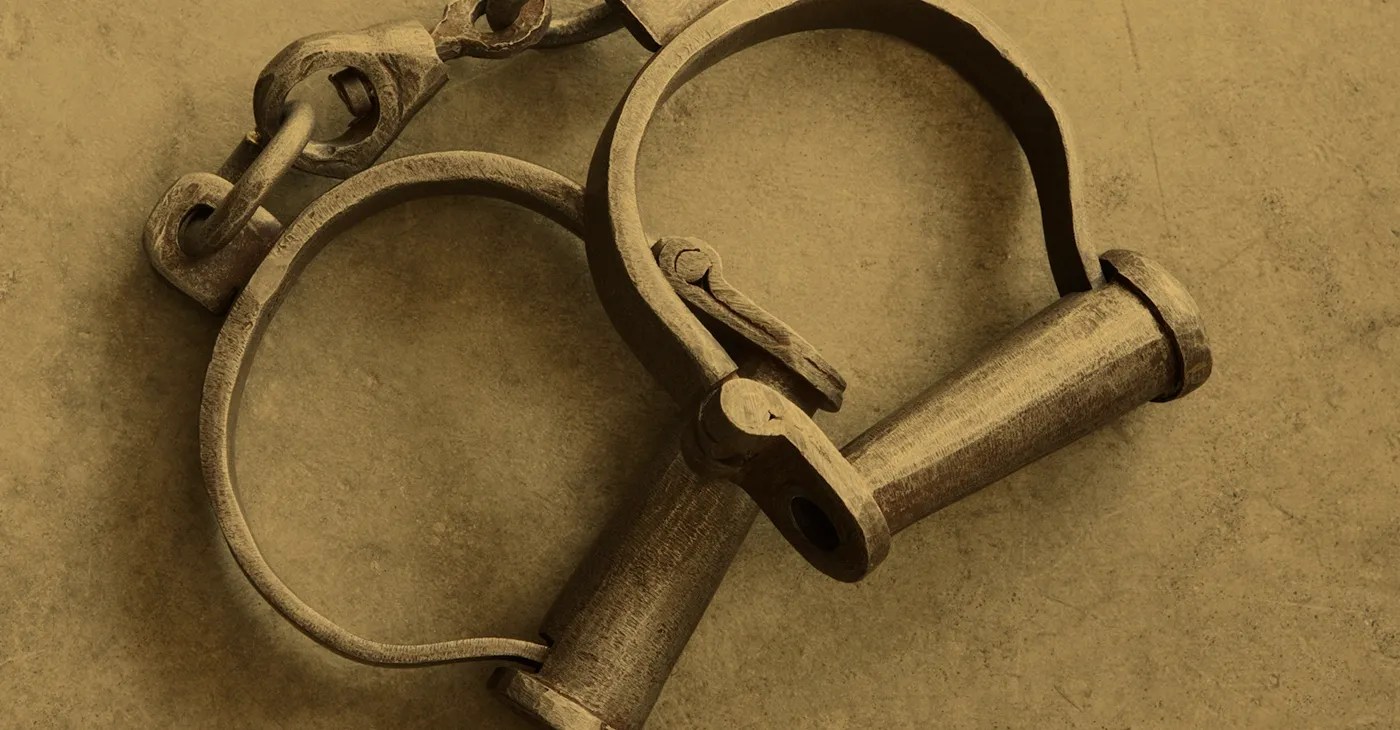
Recently, a group of Protestant and Anglican church leaders met to discuss Christianity’s role in slavery. The Washington Times covered the event with this story: ‘Churches urged to acknowledge role in racism: Panel holds up mirror to American Christians.’
Balderdash! What a colossal waste of time and resources! No more self-flagellation over slavery!
Most Americans never owned slaves (in fact, less than 5% ever did), and many were always abolitionists, especially those who were members of religious groups, such as the Quakers.
Institutional slavery in the US lasted only 80 years, from 1783 to 1863, the shortest period of time for any country. Crucially, it was not instituted by Americans as a cultural pillar of our country but, rather, was brought to America by the British and Portuguese and sent to the ash heap of our nation’s history only one-third of the way into our 240 years.
Religious leaders should be spending their time preaching the Bible and saving souls, not inventing crises.
In fact, this is simply a stealth attack on the tenets of Christianity and religion in general. It is an attempt to find faults within religion and exploit them. In making religious people acknowledge wrongs they personally had nothing to do with, those who want to change the message of the Church hope to make believers feel bad about themselves and, therefore, capitulate to those who hold victim status.
Interestingly, no Bible references were cited in the Times article. Why?
The Bible contains various passages that address the issue of slavery. It’s important to note that the Bible was written in different historical and cultural contexts, and attitudes toward slavery evolved over time. Here are some key points:
Old Testament (Hebrew Bible):
- Slavery was a part of the social structure in ancient times, and the Old Testament acknowledges its existence.
- There were regulations regarding the treatment of slaves, emphasizing fair treatment and humane conditions (Exodus 21:2-11, Leviticus 25:39-46).
- The Year of Jubilee, occurring every 50 years, was a time when Hebrew slaves were to be set free, and debts were to be forgiven (Leviticus 25:10).
- Foreign slaves (mostly non-black) could be owned permanently, and their status was inheritable, but they were also protected by certain laws (Leviticus 25:44-46).
New Testament:
- The New Testament doesn’t explicitly condemn slavery, and there are instructions given to slaves and masters (Ephesians 6:5-9, Colossians 3:22-4:1).
- In the context of the New Testament, slavery was a common social institution.
- The teachings of Jesus emphasize love, compassion, and the equality of all people in the eyes of God.
Interpretation and Context:
Interpretation of these passages varies among different Christian denominations and scholars.
It’s important to approach these texts with an understanding of historical context and cultural differences. Most modern Christian denominations condemn any form of slavery and emphasize the principles of justice, compassion, and equality.
In addition to the passages outlined above, it is interesting to look at the Book of Psalms, which primarily consists of poetic and hymnic passages that express a range of emotions, including praise, lament, and supplication. While Psalms doesn’t explicitly address the issue of slavery in the same way that some other sections of the Bible do, there are passages that touch on themes related to oppression, captivity, and deliverance, all in the context of Jewish/Hebrew/Israelite slaves.
One example is Psalm 137, which is often referred to as the “By the rivers of Babylon” psalm. It reflects the feelings of the Israelites during their captivity in Babylon:
“By the rivers of Babylon, there we sat down and wept, when we remembered Zion. On the willows there we hung up our lyres. For there our captors required of us songs, and our tormentors, mirth, saying, ‘Sing us one of the songs of Zion!’ How shall we sing the Lord’s song in a foreign land?” (Psalm 137:1-4, ESV)
This psalm expresses the deep sorrow and longing for freedom experienced by the Israelites in exile. While it doesn’t specifically mention slavery in the sense of servitude, it reflects the anguish of a people taken captive and removed from their homeland.
In researching his DNA and ancestry, an American black person will typically sooner or later come across a dead end called slavery. Some, however, learn of branches of their ancestral past that circumvent slavery and expose a different or blended experience.
The American black Christian experience blends with a gospel spirituality that included singing songs of freedom in the tradition of the Biblical Psalms. Many of these songs are now part of official hymnals of certain Protestant denominations, such as the Baptists and Methodists.
These include songs like “Swing Low, Sweet Chariot,” “When the Saints Go Marching In,” “Go Down Moses,” “River Jordan,” “Nobody Knows (the Trouble I’ve Seen),” and “Joshua (Fought the Battle of Jericho),” which lament captivity and tell of freedom and heaven.
In the United States, we have one culture, the American culture. And anyone who would divide us is un-American. We are acutely aware of our past, but none of us can change it (though the woke, cancel culture crowd loves to try by changing curriculum, tearing down statues and monuments, and appointing racial overlords to corporate organizational charts). In the end, we are all one people, with one Constitution, one Declaration of Independence, written in English, regardless of race, creed, or color, according to our civil rights law.
None of us need feel guilty about things we had no control over. Those who want you to feel guilty about these things are seeking to control you emotionally and psychologically.
Our energy and focus should be spent on things we can change now, like not supporting proxy wars, closing our border to invaders, cultivating our own energy sources, treating each other with dignity and respect, punishing criminals, rooting out corruption, and creating conditions where all Americans, alive now, can enjoy the foundational principles of this great nation: Life, Liberty and the Pursuit of Happiness.
Muhammad and the Islamist Scourge of 2023
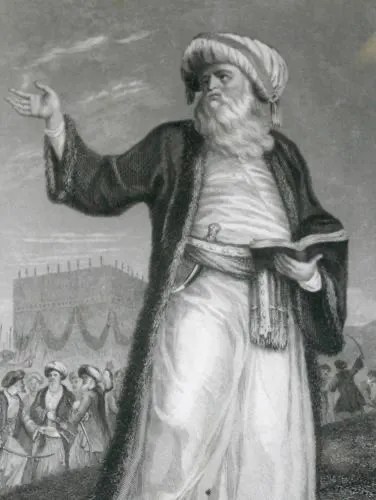
What would the Messenger of God, Muhammad, say about the current global position of Islam?
He would probably be taken aback, first by the vast expansion of the Muslim faith and then by the wealth and sheer numbers involved, over 2 billion worldwide – almost as many as there are Christians (2.2 billion).
In 2023, almost 50 countries are majority Muslim. At the time of the prophet’s death, in 632 CE (equivalent to 10-11 BC), there were just under ten countries or territories under Islamic rule, all in the Arabian Peninsula. An accurate calculation of the Muslim population at that time cannot be made due to the lack of documentation and census data.
It was only after Muhammad’s death that vast conquests and expansion took place. At its height, Islam claimed 29 countries or territories, including major portions of Asia, Africa, and Europe, in the 8th and 9th centuries before the retribution of the Crusades began in the late 9th century (lasting through the earliest part of the 13th century).
The Crusades did not lead to any significant lasting Christian presence in the Middle East but did take back and keep certain areas of southern Europe, including Spain, France, and Italy.
Muhammad today would be pleased and proud to know Islam’s expansion had reached every settled continent and had grown to include every race, creed, color, and socioeconomic background. He would be thrilled to also know that schools, called Madrasas, exist to teach children his Sharia Law, five pillars of faith, taqiyya (the moral absolution of lying to the “kafir” or “nonbelievers,” or “deceivers”), and “dhimmitude.”
“Dhimmitude,” or the “dhimma system” in the context of Islamic history, is a system involving the treatment of non-Muslim communities, particularly “People of the Book” (Jews and Christians) living in Muslim-majority lands. Dhimmitude was characterized by a set of rules and restrictions, as well as the payment of a special tax called the jizya, in exchange for protection and the ability to maintain their religious practices.
Historically, under the dhimma system, non-Muslims were given a choice between several options, which generally included:
Conversion to Islam: Non-Muslims could choose to convert to Islam, thereby becoming equal to Muslim citizens in terms of legal and social rights.
Payment of Jizya: Those who preferred to remain non-Muslims were required to pay the jizya tax, which symbolized their submission to and protection by the Muslim state. The jizya would increase over time to the point where cash-poor non-Muslims would have to pay in collateral – land, property, livestock, etc. until they were penniless and destitute. This was possible because the Muslim faith requires theocracy – the joining of government and religion (which is diametrically opposed to the US Constitution).
Adherence to Dhimmi Regulations: Non-Muslims were expected to adhere to a set of regulations governing their behavior, dress, and religious practices. They were also subject to various social and legal restrictions.
Protection: In return for the jizya and adherence to the dhimma regulations, non-Muslims were entitled to the protection of the Muslim state, ensuring their safety from external threats.
Death, Enslavement, Rape, Marriage, Concubine: If, however, a non-Muslim community chose not to convert to Islam or pay jizya, the Islamist hoards would invade, kill or enslave the men, enslave, rape and/or marry the women (turning them into concubines), and kill, enslave, marry or concubine the children—all according to Sharia Law.
It’s important to note that the dhimma system varied over time and across different regions, and not all non-Muslim communities experienced it in the same way. Additionally, the dhimma system has largely been a historical practice, and contemporary civil Islamic societies do not necessarily employ this system – at least overtly. However, caliphate Islamist societies and some Islamist terror states do continue to employ this barbaric and brutal practice.
In real-time, however, we are seeing the hidden modern dhimma hoards raise their savage heads through the uprisings against the Israeli incursion into Gaza (which, we must remember, came after Islamist Hamas terrorists massacred 1,400 innocent Israeli men, women, children, elderly, infirm, pregnant women, and babies).
The Islamist rallying cry, “From the river to the sea,” is being characterized by Islamist apologists such as US House of Representatives Member Rashida Tlaib as “an aspirational call for freedom, human rights, and peaceful coexistence.” But it is, in fact, a call for genocide, as it refers to the Hamas charter requirement that Israel will only exist “until Islam will obliterate it.” In other words, all Jews living between the Jordan River and the Mediterranean Sea (that is, in the state of Israel) are to be obliterated.
Make no mistake, the Islamic hoards are coming for you, me, our friends, family, and everyone else “of the book” (Jews and Christians).
Ironically, before reaching the age of 40, Muhammad had encounters with those who were learned in both Judaism and Christianity. Although illiterate, Muhammad observed and appreciated Christianity and Judaism, especially the lives of Abraham, Isaac and Ishmael (to whom he is related), Moses, and Jesus.
And yet, he still chose to impose the system of dhimma upon these people. And later, his followers imposed on them further and further, eventually consuming hundreds of millions of Arabs and non-Arabs alike as converts, slaves, and payers of jizya.
Today, the reach and sting of Islam is worldwide, insidious, and relentless.
Are there such things as “peaceful Muslims?” “Good Muslims?” Yes, as there were peaceful and good Germans, Japanese, Italians, and Russians in the WWII era.
 Saving Grace at Guantanamo Bay