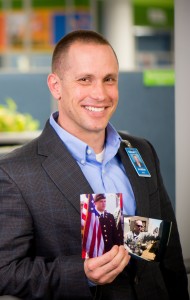
Therabot: A New Hope for Veteran Mental Health

The veteran suicide crisis, claiming 17 to 22 lives daily since 9/11, demands innovative solutions. My recent blog post, “Ending 17 Veteran Suicides Per Day,” explored the urgent need for accessible, effective mental health interventions. Today, we turn to a promising development: Therabot, an AI-powered chatbot designed to deliver psychotherapy. In an exclusive email interview, Dr. Michael V. Heinz, a psychiatrist, Dartmouth researcher, and U.S. Army Medical Corps Major, shared insights into how Therabot could transform mental health support for veterans. His vision offers hope—grounded in evidence, compassion, and cutting-edge technology.

What Is Therabot?

Therabot is an expert fine-tuned chatbot crafted to provide evidence-based psychotherapy. Unlike generic AI, it’s built to forge a therapeutic bond, creating a safe, stigma-free space for users. Dr. Heinz explains, “In our trial conducted in 2024, we found that Therabot reduced symptoms of depression, anxiety, and eating disorders.” This is critical, as uncontrolled mental health symptoms often fuel high-risk behaviors like suicide and self-harm. The trial also revealed users felt a “high degree of therapeutic alliance” with Therabot, a pivotal factor in ensuring engagement and sustained use.

For veterans, this therapeutic bond could be a lifeline. The ability to connect with an AI that feels empathetic and reliable—available 24/7, regardless of location—addresses the logistical barriers that often hinder care, such as limited access to mental health professionals in remote postings or during erratic schedules.
A Lifeline Across the Military Lifecycle

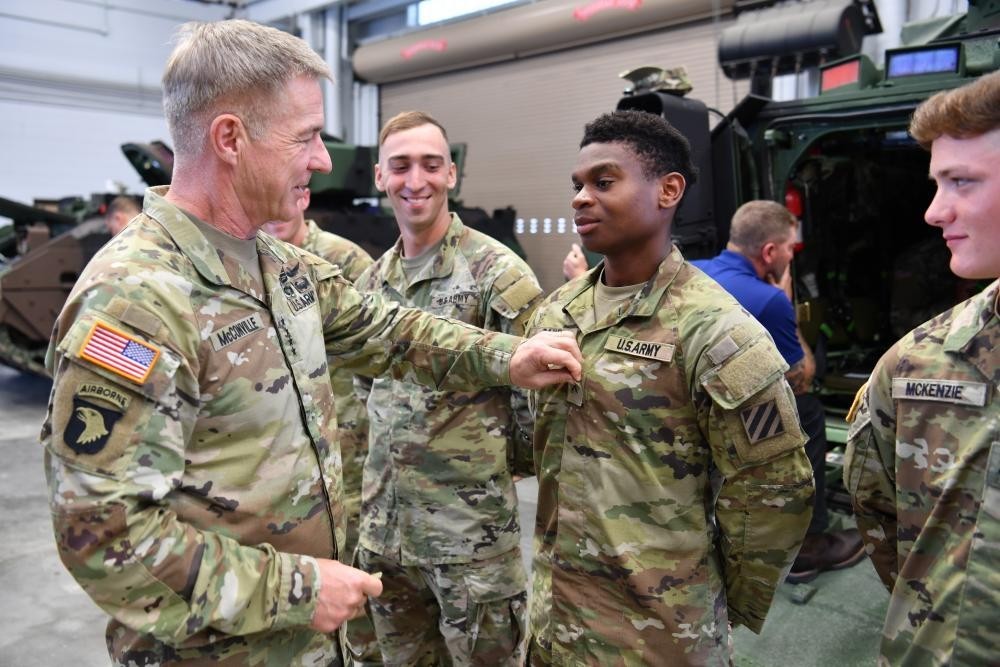
Therabot’s potential extends beyond veterans to recruits and active-duty service members, offering continuity of care throughout a military career. “One thing that can make mental healthcare difficult currently among recruits and active duty is availability and time constraints of mental health professionals when and where help is needed,” Dr. Heinz notes. “Therabot addresses both of those constraints as it is available all the time and can go with users wherever they go.”

This fusion of care is particularly compelling. Large language models like Therabot excel at retaining context and synthesizing vast amounts of personal history. Dr. Heinz envisions, “The memory capabilities and contextual understanding of these technologies… can offer a tremendous amount of personalization.” Imagine an AI that tracks a service member’s mental health from basic training through retirement, adapting to their evolving needs across deployments, relocations, and transitions. This seamless support could bridge gaps in the fragmented military mental health system, providing stability where traditional care often falters.
Addressing the Veteran Suicide Crisis

Despite the Department of Veterans Affairs spending $571 million annually on suicide prevention, the veteran suicide rate remains stubbornly high. Could Therabot offer a more effective path? Dr. Heinz outlines the costs of a meaningful trial targeting the 10% of veterans at risk for suicidal ideation:

Server and Computation Costs: High-performing models often require significant computational power, with expenses tied to the billions or trillions of parameters loaded in memory during use.

Expert Salaries: Trials need mental health professionals to supervise interactions and handle crises, alongside technical experts to maintain the platform.

FDA Approval Process: While exact costs vary, a robust trial at a VA hospital and regional clinics would require substantial funding to meet regulatory standards.

Dr. Heinz emphasizes Therabot’s cost-effectiveness compared to traditional methods, noting its scalability within the centralized VA system. “I would emphasize Therabot’s potential for transformative impact on the military lifecycle,” he says, addressing leaders like HHS Secretary Robert F. Kennedy, Jr., and FDA Head Dr. Martin Makary. Its ability to deliver personalized care at scale could redefine how the VA tackles suicide prevention.
The Power of Personalization

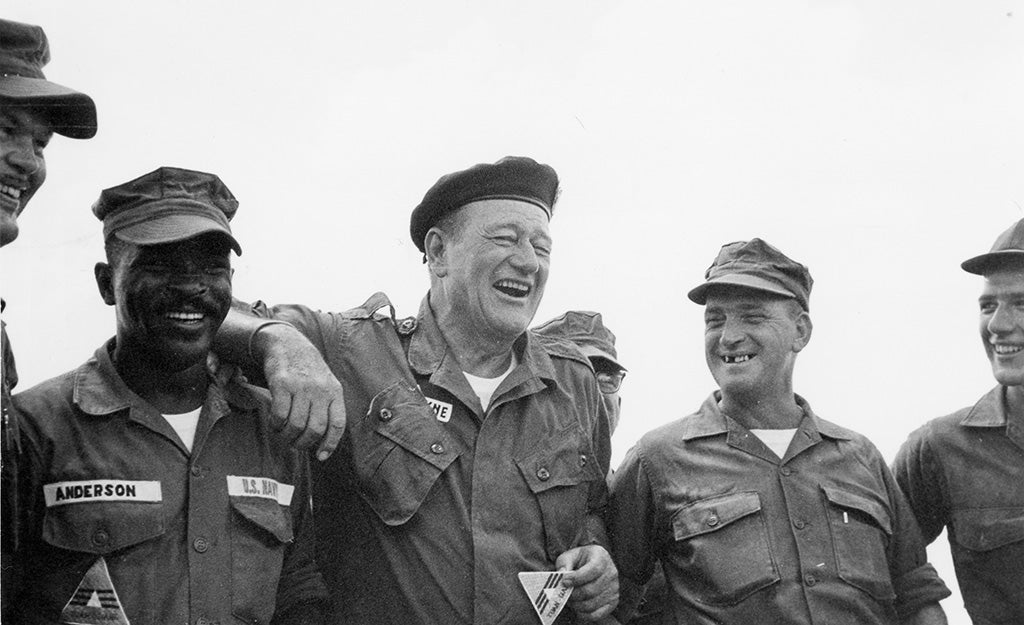
Therabot’s effectiveness hinges on its ability to engage users authentically. Dr. Heinz sees potential in customizable avatars that resonate with veterans, such as a “seasoned medic” or “peer mentor” reflecting military culture’s unique language and traditions. “Thoughtfully leveraging trusted, customizable archetypes could effectively support veterans by tapping into familiar cultural touchpoints,” he explains. This approach could foster trust and rapid therapeutic alliance, crucial for veterans hesitant to seek help.

However, Dr. Heinz urges caution: “Simulating deceased loved ones or familiar individuals might disrupt healthy grieving processes or encourage withdrawal from meaningful human interactions.” The balance lies in archetypes that feel familiar without crossing ethical lines, ensuring engagement without dependency.

For older veterans from the Korea or Vietnam eras, accessibility is key. Dr. Heinz suggests a tablet interface, citing “larger screens, clearer visuals, and easier interaction via touch-based navigation.” Features like larger buttons and simplified designs could make Therabot user-friendly for those less comfortable with smaller mobile devices.

Open-Source Collaboration and Safety

Developing Therabot requires diverse perspectives. Dr. Heinz highlights the role of interdisciplinary collaboration in finetuning models with “high quality, representative, expert-curated data” that reflects varied mental health challenges and military experiences. Collaborative evaluation of foundation models (like Meta’s Llama) also accelerates progress by identifying the best base models for mental health applications.

Safety and privacy are non-negotiable. “All data is stored on HIPAA-compliant, encrypted servers,” Dr. Heinz assures, with strict access protocols overseen by an institutional review board. This rigor applied to a military population would ensure veterans’ sensitive information remains secure, addressing concerns about AI in mental health care.

Why Therabot, Why Now?

Dr. Heinz’s passion for Therabot stems from a blend of personal and professional drives. “Through my practice, I saw how much this was needed due to the really wide gap between need and availability for mental health services,” he shares. His work at Dartmouth’s AIM HIGH Lab with Dr. Nicholas Jacobson, coupled with advances in generative AI, has fueled his belief in Therabot’s potential to deliver “deeply personalized interventions” to those who might otherwise go untreated.

His boldest hope? “That Therabot makes a lasting and meaningful positive impact on current and retired U.S. servicemembers… ultimately benefiting them, their families, their communities, and society.” By integrating a veteran’s history—trauma, past care, and mission experiences—Therabot could deliver tailored therapy, expanding access and reducing devastating outcomes like suicide.
A Call to Action

Therabot is more than a technological marvel; it’s a beacon of hope for veterans battling mental health challenges. Its 2024 trial demonstrated clinical effectiveness, safety, and user engagement, but further funding is needed for VA-specific trials and FDA approval. Dr. Heinz calls for “targeted funding that allows us to complete additional clinical testing,” urging stakeholders to invest in this life-saving innovation.

As I wrote in “Ending 17 Veteran Suicides Per Day,” the status quo isn’t enough. Therabot offers a path forward—scalable, personalized, and rooted in military culture. To make it a reality, we must advocate for funding, raise awareness, and support research that prioritizes veterans’ lives. Together, we can help Therabot save those who’ve served us so bravely.

For more on veteran mental health and to support initiatives like Therabot, visit www.savinggraceatguantanamobay.com.

Written with the assistance of Grok.

Note: Montgomery J. Granger is a retired US Army Major and educator.

End 17 #VeteranSuicides Per Day: VAGrok Gains Traction with Dartmouth’s AI Therapy Breakthrough

By MAJ (RET) Montgomery J. Granger (Health Services Administration) – Grok assisted

A few weeks ago, I wrote about the urgent need for AI innovation to tackle the veteran suicide crisis—17 of us lost daily, a number that haunts every vet who’s fought the VA’s maze of care. I pitched VAGrok, an AI chatbot to bridge the gaps, remember our stories, and cut through the bureaucracy that leaves too many behind. Since then, I’ve reached out to experts, pitched to my Congressman Nick LaLota (NY-1), and even scored an interview for a book on TBI, PTSD, and the VA disability circus. But today, there’s a new spark: Dartmouth’s groundbreaking AI therapy study, published March 27, 2025, in NEJM AI. It’s not just hope—it’s proof VAGrok could work.

In my last post, I laid bare the stakes: the VA’s continuity of care is a mess. Vets bounce between specialists, retell traumas to new faces, and watch records vanish in a system that’s more obstacle than lifeline. I envisioned VAGrok as an AI “wingman”—a tool with memory to track our care, flag risks, and fight for us when the system won’t. Then came Dartmouth’s Therabot trial: 106 people with depression, anxiety, or eating disorders used an AI chatbot for eight weeks. Results? A 51% drop in depression symptoms, 31% drop in anxiety—numbers that rival traditional therapy. Participants trusted it like a human therapist, and it delivered 24/7 support without the waitlists or stigma.

This isn’t sci-fi—it’s happening. Dartmouth’s team, led by Nicholas Jacobson, built Therabot with cognitive behavioral therapy (CBT) smarts and safety nets: if it spots suicidal thoughts, it prompts 911 or crisis lines instantly. For vets, this could mean an AI that knows your TBI triggers or PTSD flare-ups from last year, not just last week. Imagine VAGrok at Northport VA Medical Center, my proposed pilot site in NY-1: it could sync with VA records, alert docs to patterns, and talk us down in the dark hours when the 988 line feels too far.

The Dartmouth study backs what I’ve been shouting: AI can scale care where humans can’t. Jacobson notes there’s one mental health provider for every 1,600 patients with depression or anxiety in the U.S.—a gap the VA knows too well. Therabot’s not a replacement for therapists, but a partner. For vets, VAGrok could be that partner too—bridging the trust gap with memory the VA lacks. I’ve emailed Jacobson about teaming up; no reply yet, but the pieces are aligning.

Next steps? I’m pushing LaLota to pitch this to VA Secretary Doug Collins—his high-energy drive to fix the VA could make VAGrok a reality. The Dartmouth trial isn’t just data—it’s a lifeline we can grab. Vets deserve care that doesn’t forget us. VAGrok, fueled by breakthroughs like Therabot, could be how we get it. Thoughts? Hit me up—I’m all ears.

Stop Veteran Suicide Now: VAGrok – The AI Lifeline Veterans Deserve

By Major Montgomery J. Granger, US Army, Retired (Medical Service) 

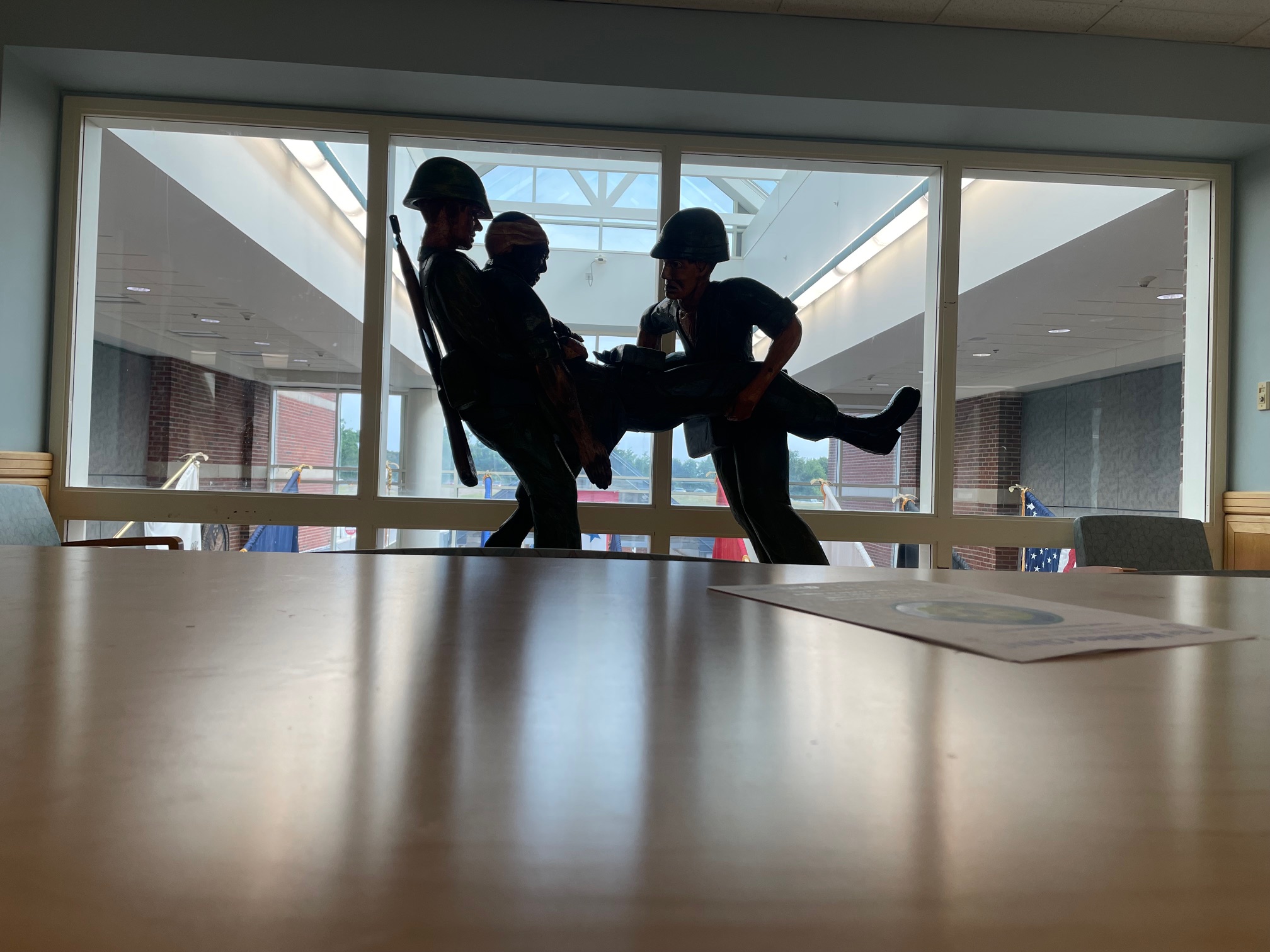
Vietnam Veterans Memorial: Three Veterans Statue, National Mall, Washington, D.C.

Seventeen veterans kill themselves every day—6,407 in 2022, over 130,000 since 9/11. That is a desecration of heroes, and the Veterans Administration (VA) has failed them.

I’m a former Combat Medic and then Medical Service officer (retired) who served 22 years, including a tour in Iraq, and I’ve seen the VA’s dissonance firsthand—low quality maintenance, unfinished facility projects, blank stares, “Last name? Last four?” It’s a meat grinder of lost MRIs, 90-day claim delays, and bean counters slicing us into percentages.

Vets hurt: helpless + hapless + hopeless = suicidal depression, and the system shrugs. Enough. VAGrok, an AI with the soul of Ray Bradbury’s “Electric Grandma,” can stop this now. It knows us, remembers us, guides us—beta-test it at Northport VA this spring, scale it by July, and aim for zero suicides. This is how we make American veterans great again (MAVGA).

A System That Forgets

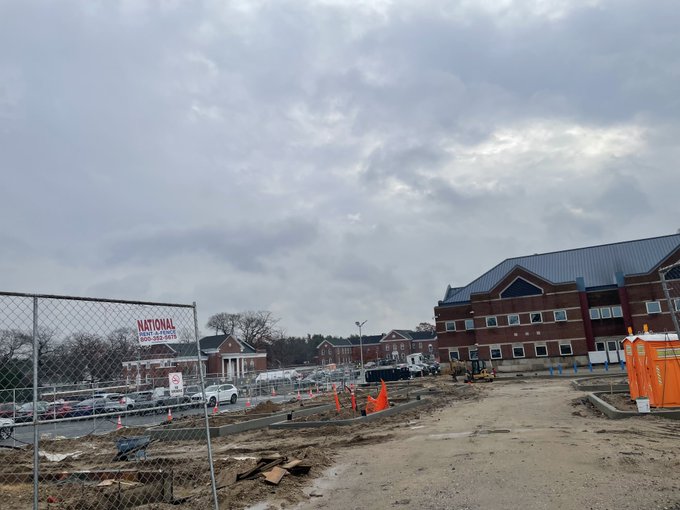
Walk into Northport VA on Long Island—my home turf, servicing 112,000 vets—and it’s a time capsule of neglect. Nearly 100 years old, it’s got failing roofs, gaping construction holes, and a “temporary” HVAC unit for the homeless facility that’s been “temporary” since before 2018. A $21 million repair project announced that year drags on, with front entrance and valet parking torn up for years—it looks as if the contractors simply walked off the job. Inside, stained ceiling tiles, grimy corners, urine scent in the bathroom greet you. I spent half my 36-year education career managing school facilities; a job like that parking lot takes 6-8 weeks, not 6-8 years. This isn’t mismanagement—it is apathy. 

Northport (Long Island, NY) VA; January 2025; project approved 2018.

Military personnel are trained to notice details—“FRONT TOWARD ENEMY” on a Claymore mine, the difference between “SAFE” and “SEMI” on a weapon. In Basic Training, we scrubbed floors with toothbrushes; drill sergeants measured our underwear folds with rulers. In combat, triage was life or death: this one’s expectant, that one’s savable. Details saved lives. So, when I see potholes and crumbling asphalt, abysmal parking, weeds instead of grass, unsmiling greeters, and the same “Last name? Last four?” every visit—no eye contact, no memory—it screams neglect. Vets notice. We’re wired for it. And it cuts deeper when the care is as fractured as the building. Perceptions precede and predict reality.

The Cost of Disconnection

The VA is a connect-the-dots puzzle with missing and misconnected dots. Continuity’s gone—many visits are a reset. Specialists don’t talk, MRIs vanish, and intake forms ask, “How many blasts? How severe?” as if we kept a tally in the chaos. I gave 100% in Iraq—24/7/365—not 20% for tinnitus, 10% for PTSD. Lincoln’s promise—“to care for him who shall have borne the battle”—didn’t mean to carve us up. Yet civilians, often with no combat scars, decide our fate, slicing us into percentages. We didn’t question our orders to go to war; why are we questioned about what it did to us? 

Last year, the VA spent $571 million on suicide prevention. Results? Still 17 a day. Posters scream, “Veterans in crisis, call 988, press 1.” In uniform we weren’t built or trained to have a “crisis,” we were trained to stay cool under fire, no matter the circumstance – we hurt. “Hurting? Call 988,” would hit closer. Or even: “Thinking of hurting yourself? Call 988.” On the battlefield, we yell, “Medic!” or “Corpsman!” Walking into a VA is the same as that – it’s a call for help. But the system is hard-of-hearing. It doesn’t know us. Trust is on life support—the proof is in the body count. Young vets (18-35) kill themselves at triple the civilian rate; female vets, 2.5 times higher. Older vet suicides are climbing, too. If 17 Tesla customers died daily over car frustration, Elon Musk would stop the line, fix it, and then roll out a solution – immediately. Why hasn’t the VA done that? 

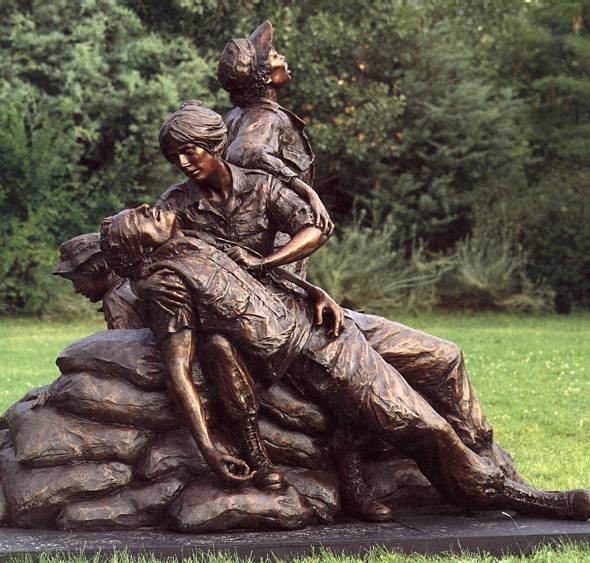
Vietnam Women’s Memorial, National Mall, Washington, D.C.

VAGrok: The Electric Grandma We Need

Imagine this: I walk into Northport VA. An app—a greeter or a large message screen—lights up: “Welcome Major Granger, your neurology appointment is in the basement. Need a map?” A map-app opens in my or a loaner device I carry with me wherever I go there. Biometrics, like facial recognition, spot me, pull my record—tours, TBI, meds, burn pit exposure, every specialist’s note. If I say “coffee,” it guides me to the kiosk, then nudges me to my appointment with a 15-minute heads-up. The doctor’s ready—no lost files, no guesswork—just a plan built from every detail of my care. VAGrok remembers me. It won’t forget. It cares, just like . . . .

Ray Bradbury’s “Electric Grandma,” from I Sing the Body Electric, who was an AI marvel—a tireless companion, healing a grieving family with memory, intuition and love. VAGrok would be that for vets. It would be an AI Medic/Corpsman with a soul, triaging suicide risk in real time—reading my face for pain or anguish. It’s not cold tech; it’s a wingman. The know-how exists—xAI could build it, hooking into VA systems with a linear, cumulative memory. No more silos, no more “prove it.” It sees us whole, restoring trust one vet at a time. And trust is a key to breaking at least one of the three H’s of suicidal depression (helpless, hapless, hopeless).

Eliminate the Waste and Abuse of the Disability Compensation Verification Process

Vast amounts of time, money and veteran lives to suicide are tied up in the process of verifying “service related” injuries and illnesses. I’m surprised they bury us whole.

If a veteran’s status is verified with a DD-214, then CARE for him/her. No one said, “Hey, Sarge, I only want to give 20% on this mission, OK?” We gave 100%, every time, 24/7/365. We didn’t question our orders to go to war, so why are we being questioned about what it did to us? The good parts are connected to the injured parts.

We made an ALL-IN bet for everything up to and including our lives. Those who lost that bet are in the ground. The rest of us are still fighting, still struggling, and 17 PER DAY are still DYING.

Continuity of care with VAGrok can prevent that – stop it cold.

Why VAGrok Works—And Who Can Make It Happen

This isn’t just about care—it’s survival. Helplessness fades when VAGrok knows your fight; haplessness lifts when it greets you with respect; hopelessness dies when it shows a path. The VA has Disney-5 star-level hospitality potential—treat us like guests, not numbers. Assume eligibility: verify my DD-214 and then care for me, no hoops, speed bumps or red tape. Upgrade facilities into welcoming hubs—fitness centers, support groups, green lawns (I don’t even care if it’s artificial turf as long as it’s clean and green), a community—not a venue of despair. Use military Guard and Reserve medics, specialists, nurses and docs who get us to fill or supplement civilian VA staff. Shift the narrative: seeking help isn’t weakness; it’s strength. 

Combat Medic Memorial, US Army Medical Department and School, Ft. Sam Houston, TX.

Donald Trump could champion this—bold, fast, “Make American Veterans Great Again.” JD Vance (Marine) brings Semper Fi trust; Pete Hegseth (Army) nails mission-first details; Doug Collins (Navy) demands efficiency. Elon Musk and xAI? Disruptive, scalable tech—this is a trip to the moon! My congressman, Rep. Nick LaLota (NY-1), sees VA Northport’s challenges. Beta-test VAGrok there—112,000 vets, ground zero. Launch April 2025, scale by July. Cost? Pennies next to 17 lives daily. Result? Zero suicides, a VA we trust and a promise kept. 

Restore trust in the VA and myriad benefits emerge: low or no suicides, improved retention, positive recruiting point (we will care for you if and when you need us).

A Cry From the Battlefield

I retired in 2008 after 22 years—three deployments, Iraq in ‘04-’05. Now I’ve got hearing loss, tinnitus, sleep apnea, heart attack in 2013, PTSD, TBI(?) and a burn pit registry entry. My first claim’s in, but why should I have to prove it? A third of my life was service; I had none of this before. The VA’s budget can’t flex—new claims, deaths, suicides shift yearly, beyond a 10-20% buffer. Assume my hurt’s from service, just like the justice system assumes I am innocent, stop treating me like I’m guilty before a trial, my trial was combat—treat me whole, not parts. Honor Lincoln’s words, not bureaucratic labyrinths.

17 vets PER DAY can’t wait. Power brief now—Northport VA, Trump Tower, Pentagon, D.C., Mar-a-Lago, let’s go!

VAGrok is the Medic/Corpsman we’d call in combat. Deploy it now. Stop the dying

NOTE: Major Granger is a three-times mobilized, retired US Army officer, trained and served as a Combat Medic/Medical Specialist for five years, and then 17 years as a Medical Service officer (70B), who, on deployments to Gitmo and Iraq with Military Police Enemy Prisoner of War units, was responsible for coordinating medical, preventive medical and environmental services for detention operations. On the civilian side, he earned a BS Ed. From the University of Alabama in Health, Physical Education, Recreation and Dance, an MA degree in Curriculum and Teaching from Teachers College – Columbia University, and School District Administrator certification through the State University of New York at Stony Brook. While at Columbia University, he taught “Sport” at the Buckley School for Boys on the Upper East Side of Manhattan, where “Donnie” Trump, Jr. was one of his students. He taught health and physical education, was a coach and Dean of Students in the New York City public high schools for 8 ½ years, moved to Long Island and then began a career as a school district administrator. Interrupted on 9/11/2001, he served on three subsequent deployments that saw him separated from three young boys, his wife and career for 2 ½ out of the next five years. When he returned, he had two more children, and worked in Suffolk County public school districts, serving as district administrator for Health, Physical Education, Athletics, Health Services, Security and Facilities. He and his wife of 31 years retired in 2022, when he began to manifest multiple health issues and started exploring the VA and its services. PS – In the 1990’s he was a staff officer with the 4220th US Army Hospital Reserve Unit that performed weekend drills at the Northport VA. PPS – He was a Disneyland (California) Davey Crockett (war) Canoe Host in 1986-87, and attended Disney University (orientation), and knows the Disney business model and hospitality secrets. PPPS – Major Granger is author of “Saving Grace at Guantanamo Bay: A Memoir of a Citizen Warrior,” about his time as the ranking US Army Medical Department officer with the Joint Detainee Operations Group, Joint Task Force 160, Guantanamo Bay, Cuba, from FEB-JUN 2002, and narrator of the YouTube short documentary film, “Heroes of GITMO,” based on his book.

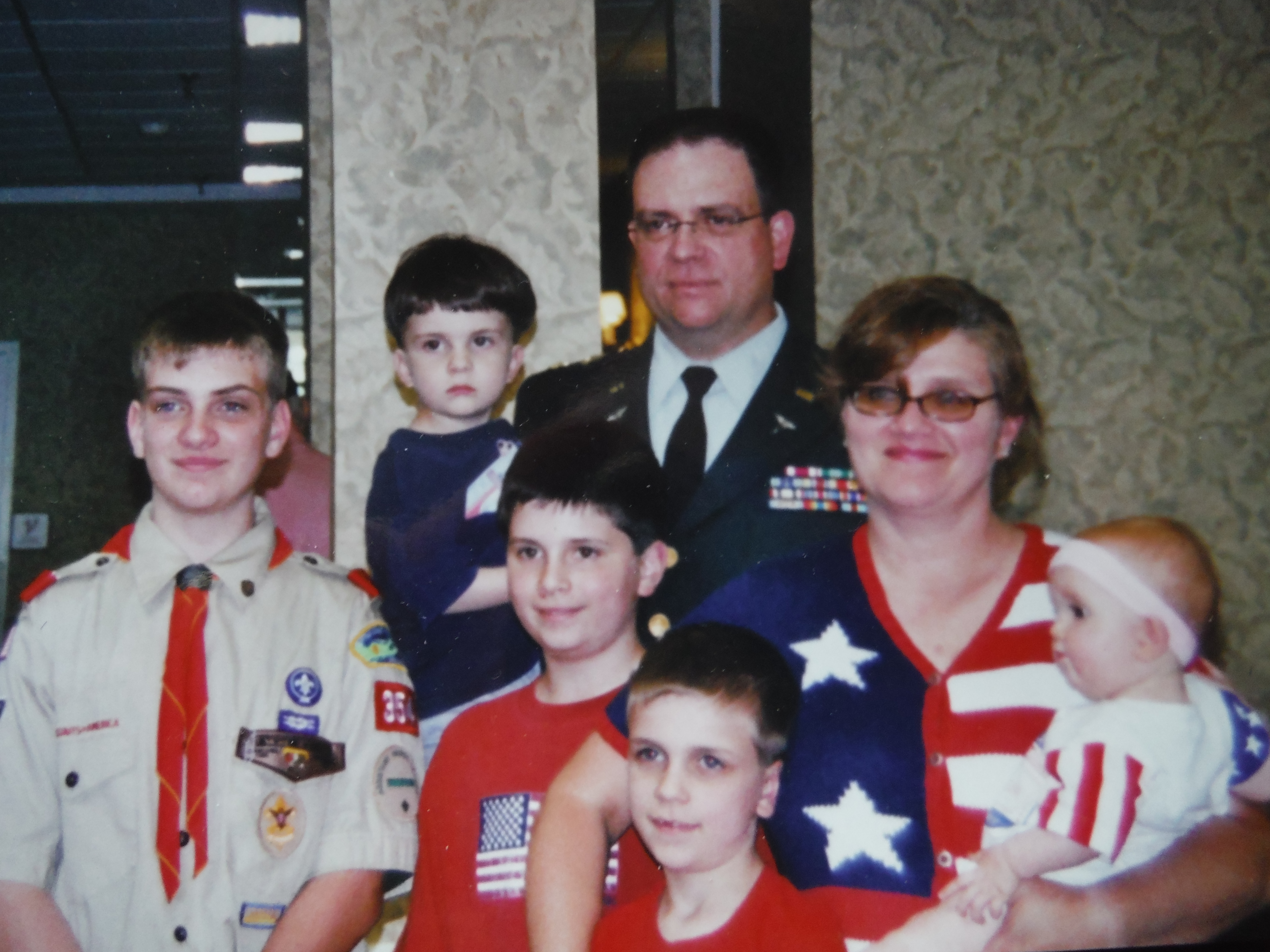
Maj. Granger and family, Flag Day, 2008.

Fix Veterans’ Care Now – It’s Life or Death

We didn’t question the order to go to war, so why are we questioned about what the war did to us? 

We wrote a blank check and pledged our sacred honor for our country, but the Department of Veterans Affairs (VA) isn’t helping enough. Since September 11, 2001, over 130,000 veterans have ended their own lives.

One suicide is a tragedy. What do you call one hundred and thirty THOUSAND?

We need to fix the VA now because our lives depend on it.

In 2024, the VA spent $571 million to stop suicides. But where did the money go? Did it save anyone? I don’t see enough proof that it’s working. Worse, when we ask for help, the VA makes us tell our war stories over and over again. It hurts, and it’s not fair. The people deciding if I get help often never saw a battlefield. This messed-up system might be why so many of us feel lost, hopeless, helpless and then give up.

The numbers make me sick. Younger veterans, aged 18-35, are almost three times more likely to die by suicide than people who didn’t serve. For women veterans, it’s 2.5 times higher than other women. Even older veterans like me are hurting more than ever. If this happened at a company—where people were so miserable they hurt themselves—everyone would yell for change. I’m yelling for change now!

Here’s How I’d Start to Fix It:

Trust Me First: When I prove I served (verified DD-214), the VA should help me right away. I shouldn’t have to fight to show my pain came from war. I earned more respect than that.

Learn the Disney Way: Disney makes people happy with the attitude of second-to-none guest service and fun. The VA could train its administrators and staff through the Disney Institute to learn to treat me in a way that makes me feel like I matter and makes me smile.

Use Cool Tech: Things like facial recognition could say my name when I walk in and get me help faster in a personalized (and secure) way. Now, it’s “Last name? Last four social?” Without even looking up.

Make the VA Appealing: Turn VA facilities into welcoming experiences that project care: clean and green, curb appeal, emphasis on maintenance, warm/cool and comfortable, like coming home—like a resort. I’d want to go there, and it might sooth my stress.

Help All of Me: Don’t just fix my body—fix my mind, too! Focus on holistic wellness, not just medical treatment. Add gyms, pools, courts, fields, recreation, activities and groups where I can talk with other veterans. It could make me stronger, more fit and happier.

Be Honest and Quick: The VA needs to show where my money goes and stop making me wait years for help, or taking years to fix things. Waiting has left me and others with nothing—sometimes not even a home.

Bring in Military Helpers: Doctors, nurses, medical specialists, Corpsmen and medics from the Active Duty, National Guard and Reserves could work at the VA. They get what I’ve been through because they’ve been there too. Rotating in military medical personnel could also help retention and recruitment. If they see quality care up close and personal, they know what they are getting themselves into.

Make Asking for Help Normal: Don’t call the suicide hot line a “crisis line.” Just say, “Hurting? Call 988.” I’m not weak for needing help—I’m brave for asking. On the battlefield, one can hear a cry for help: “Medic!” “Corpsman!” That’s what we’re saying when we finally gather the courage to walk in through the front door.

We honor those who never came home by caring for those who did.

We can’t wait anymore. The VA promised to take care of every veteran with respect, dignity and urgency. Lincoln said, “Care for those who bore the battle,” not “Oh, only those parts the soldier can prove were affected by the battle, and oh, by the way, take a number.”

The VA cuts us up with a percentage of “disability” compensation and care. Imagine that? A percentage. Is that what we should have said prior to taking the hill? “Hey, Sarge, I only want to risk 10%, is that OK?”

It’s amazing that they bury the whole person, and not just the percentage they say died because of the war.

My question isn’t going away—I am raising my voice to hopefully make things happen!

We made an all-in bet for everything up to and including our lives. It’s time the VA made good on that bet.

Our dead comrades can’t tell you how they hurt, but we can. Please listen to us now.

What the Veterans Administration Should Be: An Open Letter to Donald Trump, Elon Musk, Vivek Ramaswamy, Pete Hegseth, and Rep. Nick LaLota (NY-1)

Gentlemen,

Our justice system operates on the principle that one is innocent until proven guilty. Why, then, does the Veterans Administration (VA) seem to operate under the opposite assumption when it comes to veterans’ care and disability ratings?

Upon verifying service through documents like the DD-214 and issuing an ID card, the VA should immediately assume veterans are entitled to care as promised by the very ethos of our military service: “To care for him who shall have borne the battle, and for his widow, and his orphan.” This statement by Abraham Lincoln in his second inaugural address at the end of the Civil War, carries no qualifiers; it’s a promise to care for all veterans, regardless of where they served or what they endured.

However, the current system is fundamentally flawed. Veterans are forced to spend considerable time and effort proving their ailments are service-related, which contradicts the unconditional service and sacrifices we’ve made. Veterans took an oath without caveats; we committed to follow orders, defend the Constitution, and potentially give our lives. In return, we should receive care without the burden of proof.

The administration of the VA by civilians lacking military or combat experience has been problematic. With Pete Hegseth potentially becoming the new Secretary of Defense, there’s hope for change. This matter should also resonate with President Trump, and I believe the Department of Government Efficiency (DOGE), under the influence of Elon Musk and Vivek Ramaswamy, could address these inefficiencies with common sense and innovation.

A New Philosophy for the VA:

Prioritization: The veteran should be the priority. Upon entering a VA facility, instead of the impersonal request for “Last Name and Last Four,” why not use modern technology like facial recognition and/or other biometrics for both security and personalized greetings? This would not only enhance security but also personalize and streamline the care process.

Efficiency and Technology: Implement integrated, high-tech systems to improve efficiency. Veterans should feel welcomed and valued, much like guests at a Disney resort where the business model is simple: treat every customer as a cherished guest.

Perception and Recruitment: The negative perception of the VA could deter potential recruits. If the VA were seen as a place where veterans are genuinely cared for, it might attract and keep more individuals to military service.

Facility Management and Care:

At Northport VA on Long Island, NY, the ongoing disrepair and delays in basic maintenance projects like HVAC systems or parking areas reflect a deeper issue of neglect. A 3-year, $21 million project, started in 2018, is still unfinished. These conditions not only degrade the quality of care but also demoralize veterans who must navigate an environment that seems to have forgotten them. Part of my 36-year career in education and education leadership involved public school facilities management. Some of the jobs in the capital projects plan for the Northport VA could have been completed in 6-8 weeks, rather than the current 6-8 years!

My personal health experience, after 22 years of military service including combat deployments, involves dealing with issues like hearing loss, tinnitus, sleep apnea, and PTSD, yet the process to receive care or compensation feels like an additional battle.

Rethinking VA Budgeting and Care:

The VA’s budgeting must be adaptive to the fluctuating needs of veterans, not constrained by typical government fiscal policies. The number of new claimants cannot be accurately predicted from year-to-year. It’s been over 16 years since I retired, and I am only now applying for a disability rating for the first time. Imagine the savings and improved care if we assumed veterans’ health issues were service-related unless proven otherwise? This shift could redefine the VA from an adversarial entity to one that truly supports and heals those who served.

I understand the current disability application system results in compensation, but what if I don’t need the money, just the care? Because the process is so arduous, complex and full of bureaucratic red tape, it could take months for approval, disapproval, appeals and other delays. Many veterans needlessly pay others to help them through the application process.

Conclusion:

I urge you to consider these changes, to let loose the capabilities of DOGE and the leadership of Pete Hegseth on this broken system. We should treat the whole person, not just the ailments deemed service-connected. A wholistic approach to healthcare is the most effective. Veterans have given much; it’s time the VA reflects this nation’s gratitude and commitment to our well-being by honoring Lincoln’s compassionate vision for veteran care.

Sacred Day for Sacred Causes: Fisher House Hits Milestone for Heroes and Their Families

The Fisher House Foundation is best known for its network of more than 77 comfort homes where families of ill/injured military members can stay while their loved one is being treated.
 
Most recently, Ken Fisher, CEO of Fisher House Foundation lead the Foundation’s efforts to cover death benefits of families of fallen heroes during the government shutdown. Ken has never worn the uniform himself, but comes from a family with a long history of serving those who have served:
 
The Fisher House Foundation was founded almost 30 years ago by Ken’s Great Uncle Zach Fisher and has since served more than 300,000 families and can house up to 1,000 families per night in homes across the country.
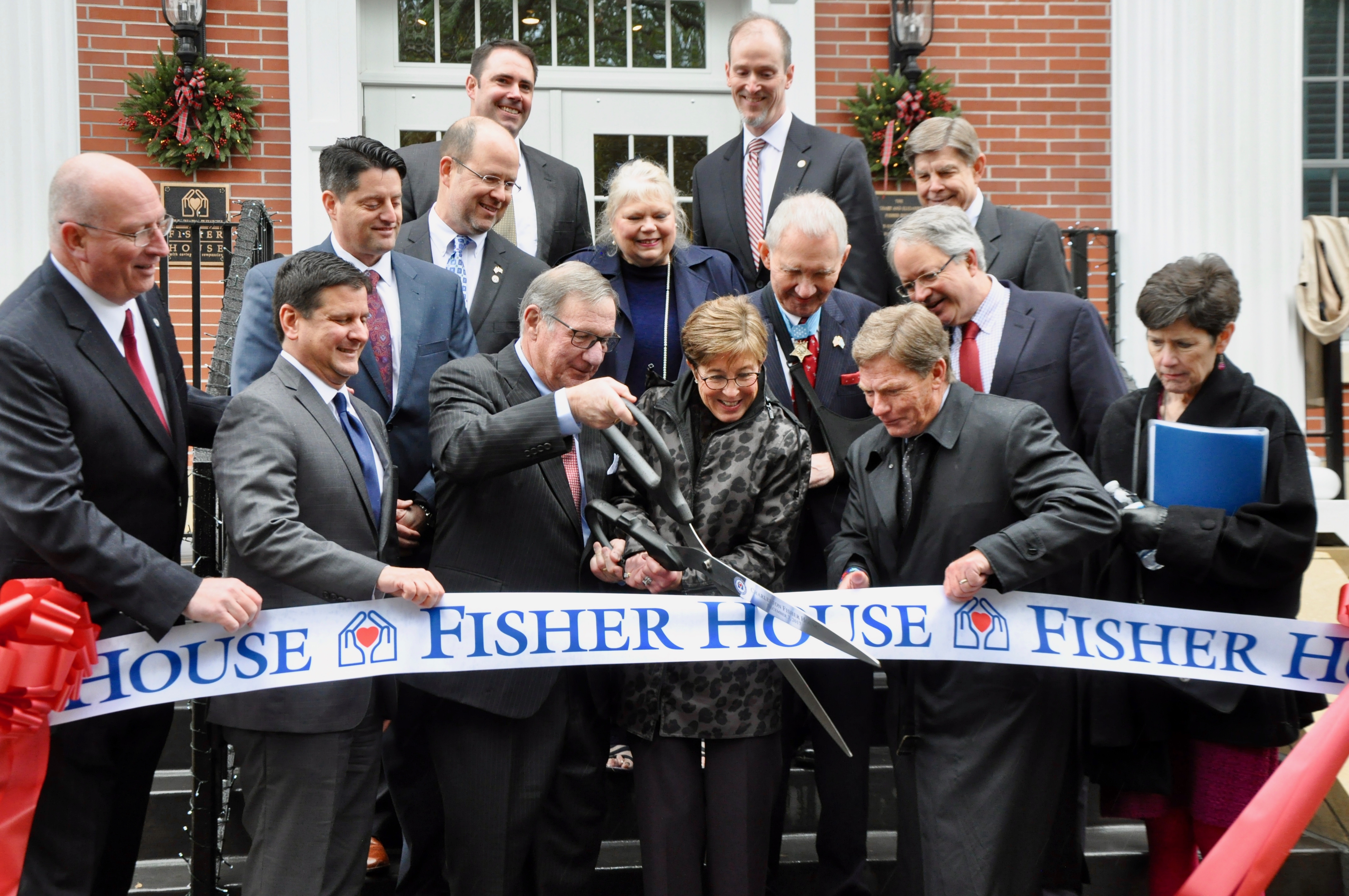
Fisher House Grand Opening
 
Zachary Fisher also founded the Intrepid Museum Foundation to memorialize the WWII aircraft carrier and honor the men and women of the armed services. Ken continues to serve on the board and is the museum’s largest supporter.
 
The Intrepid Fallen Heroes Fund has provided more than $150 million in death benefits and scholarships in support of fallen military personnel lost in service to our nation.
I had the privilege and honor of interviewing Ken Fisher to see what’s new with The Foundation, and why Memorial Day is so special.
Fisher Ken
Ken said, “Memorial Day is a sacred day for this country, because we honor those who sacrificed their lives for our freedom. While Fisher House’s core mission is to provide free housing for families of hospitalized service people and veterans, we were made aware that families of the fallen had no place to stay at Dover AFB when a loved one’s remains are returned for a Dignified Transfer. We built a Fisher House for the families of the fallen at Dover, because we didn’t feel that the options previously available were worthy of the sacrifices they had made. We also provided a non-denominational spiritual center where they could go to pray, or meditate. For many of the families, it has been one of their first interactions with the military, so it’s our hope that we not only helped ease their burden, but we also created something dignified and comforting. So far some 2400 families have used the Dover house. It is the one house I want to see empty.”
 
When I asked Ken to tell me about his uncle Zach, he had this to say, “My Uncle Zach taught me many things – specifically the true meaning of giving back.  Military and veteran families too often are forgotten but the entire family serves. He taught me the true meaning of patriotism. I remember him being asked if he had any regrets – and his response was that he didn’t – he was too busy counting his blessings. That’s the way I feel. What was a desire to continue a legacy turned into a fierce passion for my wife and me.”
 
When I asked Ken how his Uncle Zach became involved with the Intrepid, this is what he had to say, “Zach learned that the Intrepid, an Aircraft Carrier that had served in three wars and was a primary recovery vessel for NASA was going to be decommissioned and scraped. Intrepid lost some 270 sailors and aviators from Kamikaze attacks or in the skies above her. He viewed it as a piece of history that needed to be saved. It was a massive undertaking, with so many hurdles to overcome. But in true Zach fashion he succeeded. Today, it is one of the only Air, Sea, and Space Museums of its kind  – 1 million visitors each year come to Intrepid, including school children in New York City who visit for STEM education projects. It is an honor and privilege to serve as its co-chair.
 
I asked Ken where the idea for the Intrepid Fallen Heroes Fund originated, and why keeping the Intrepid Fallen Heroes Fund vibrant was important to him. Ken told me, “Zach did so much, including giving grants to families of our fallen soldiers.  After Uncle Zach passed, my father and my late cousin, Tony, started the Fallen Heroes Fund to supplement death benefits. When it was founded in 2001, these families only received about $6,000, of which a large portion was taxed. While it’s impossible to put a value on a life, that was clearly inadequate. So Fallen Heroes supplemented this by giving an additional $25,000 to these grieving families, most of which were on food stamps. I think the Foundation brought this to national attention – and soon after, Congress enacted legislation to increase the gratuity and remove the tax. Families now get $100,000 very soon after their loved one’s passing. It certainly doesn’t make up for their sacrifice, but it’s a big step toward rebuilding their lives.
 
“My father repurposed the Fallen Heroes Fund to a project-driven organization that built the Center for the Intrepid at Brook Army Medical Center, a physical rehab center, and The National Center of Excellence (NICoE) in Bethesda, to deal with PTS and TBI, the unseen wounds of war.  They now are building “Spirit Centers” that allow these men and women to get care closer to home.”
 
Ken’s father is the families’ only veteran – he served in the Korean War.
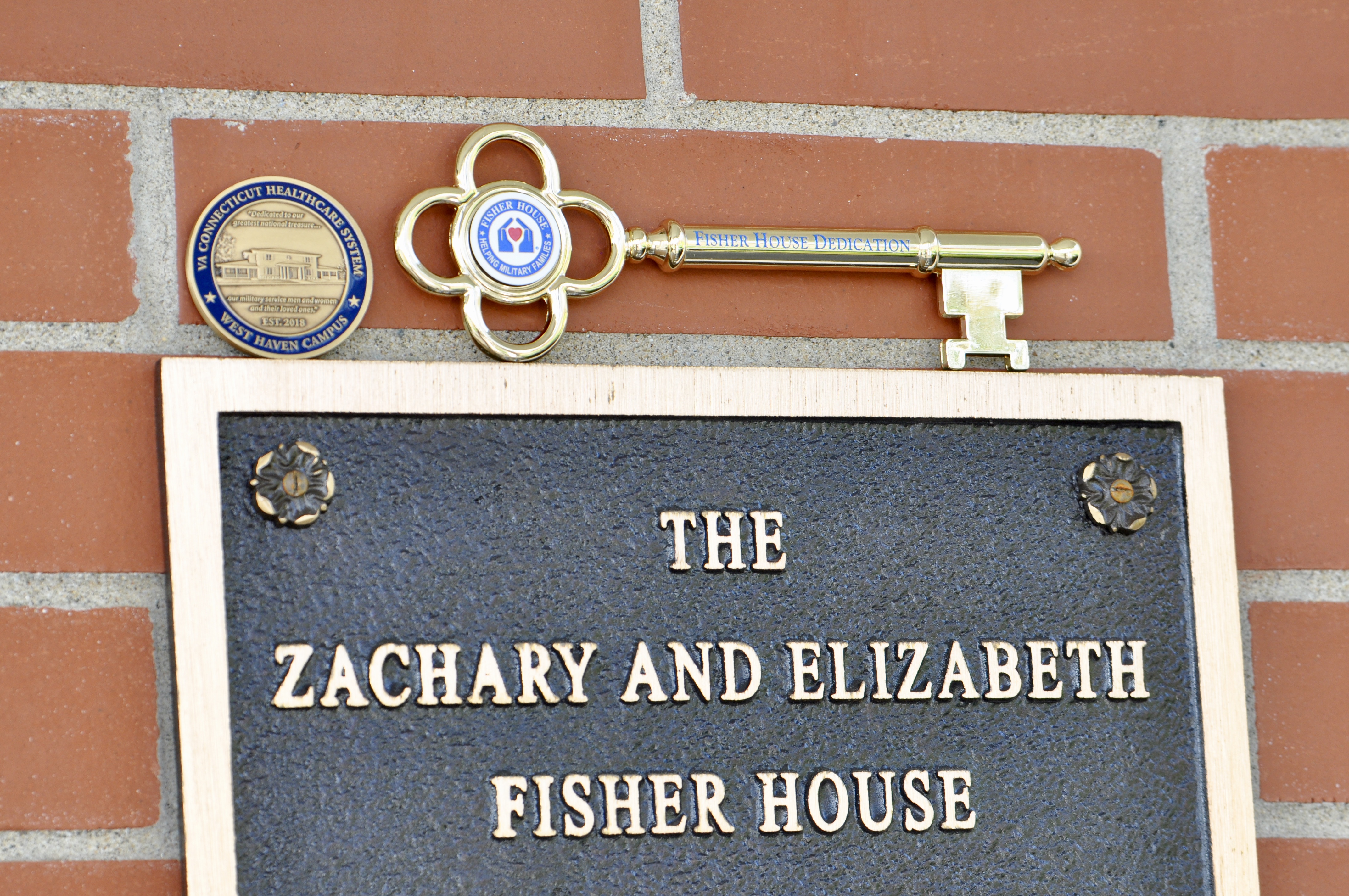
Fisher Houe Plaque
 
Finally, I asked Ken what his vision for the future of Fisher House was, and what was next for the Fisher family. He had this to say, “Our goal is to continue to build Fisher Houses wherever one is needed. My vision is to stay true to our mission, and honor our donors by doing exactly what their donation was intended to achieve. For us, that means easing the burden on families during a most difficult time in their lives. I would give that advice to anyone in their work to give back.
 
“We want to remain a family-centric organization and we will continue to work hard to maintain our A+ Charity Navigator rating.  I am so proud of what we have achieved and what the future holds.”
 
And we are proud of you and your dedicated family and partners!
 
Memorial Day is a time for reverent appreciation for the fallen. It can also be a time after which we can re-focus on those who are still with us to help give them and their families the quality of care and life we wish we had, were we in need.
 
Please visit The Fisher Foundation web page and help build the next Fisher House!

Walmart’s Military Showcase Offers Officially Licensed Military Products

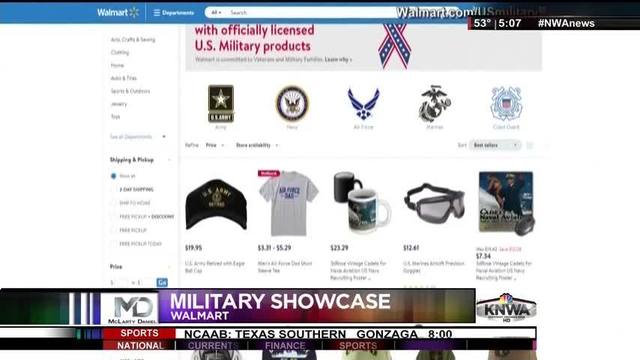
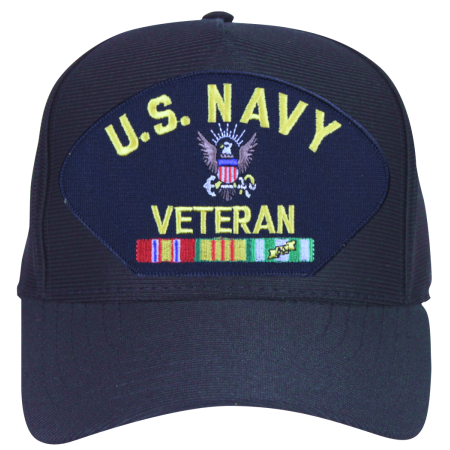
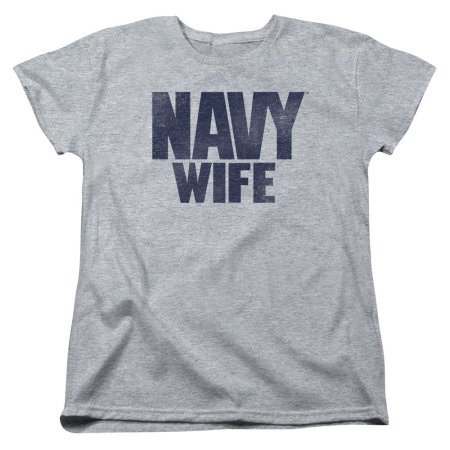
Last month Walmart launched a vetted showcase where customers can shop to salute the nation’s military, veterans and their families. Walmart.com/usmilitary features an assortment of officially licensed products across all five branches of the U.S. Armed Forces — U.S. Army, U.S. Navy, U.S. Air Force, U.S. Marine Corps and U.S. Coast Guard. The showcase launched with an initial assortment of nearly 3,000 products offered across a variety of categories.

c14530d74f87428eb1fd39b2a0b000b5_28876404_ver1.0_640_360

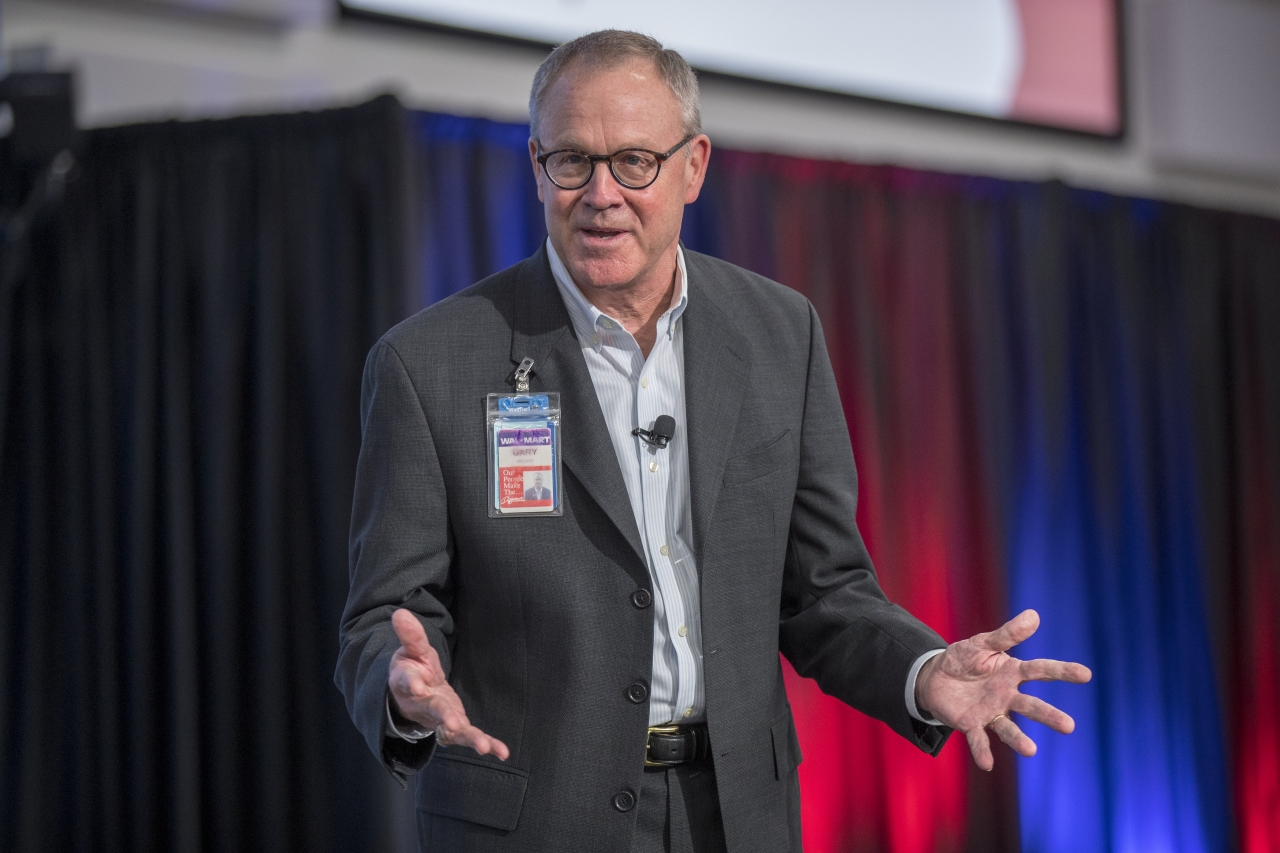
“As a 31-year U.S. Army veteran I’m proud to wear my Army gear, and I’m thrilled that Walmart is providing a way for all of us to shop for officially licensed military merchandise with confidence and convenience,” said retired Brigadier General Gary Profit, Walmart’s senior director of military programs. “It’s a privilege to be part of such important efforts to remember our service members, veterans and their families every day.”

Walmart_VetDay_154

Since Memorial Day 2013, Walmart has hired more than 188,000 veterans and promoted more than 26,000 to roles of greater responsibility. The company is well on its way to reach its hiring goal of 250,000 veterans by 2020. Interested veterans can contact their local Walmart store or visit https://corporate.walmart.com/global-responsibility/opportunity/veterans-and-military-families for details.

“The trademark licensing program leverages the importance of pride, performance and personal development to build brand awareness and create multiple touch points for Americans to show support to the U.S. Army,” says Paul Jensen, director of U.S. Army trademark licensing.

171110135608-walmart-military-gear-logo-780x439

Each military branch independently determines which quality products and vetted suppliers are deserving of their respective licenses. These official licensees may then apply to be included in Walmart’s Online Military Showcase.  As more suppliers join this program offered through Walmart Marketplace, a broader range of assortment will provide shoppers even more choices.

Military Showcase.5

When asked what the inspiration was for the showcase, BG (Ret.) Gary Profit said, “The Walmart.com Marketplace team, which includes a few veterans, one an Army captain and one a PO2, saw an opportunity to provide an online destination where our customers could shop with confidence and convenience for officially-licensed products.”

The curated products for sale through the Walmart.com showcase are sold by individual sellers authorized by each U.S. military branch. Walmart worked directly with representatives from each branch of the U.S. Armed Forces to gather input on top categories and popular products that our customers shop for and purchase to include in this showcase.

The online Military Showcase is specifically designed as a single destination for customers eager to show their support for the U.S. Armed Forces through products that represent each branch, and even specific units. These products are officially licensed so that customers hoping to purchase items benefitting the military can do so with ease. Walmart.com/usmilitary is filled with officially licensed merchandise with the goal to continuously expand the assortment to meet customer demand, and be a place where customers come to discover those hard to find items.

Military Showcase.2

While many of these licensed products are for sale in Walmart stores, they are organized and shelved differently due to Walmart’s effort to have stores reflect the needs of the community. On Walmart.com/usmilitary Walmart is able to offer a much larger assortment of officially licensed military merchandise. While Walmart stores near U.S. military installations tend to have more military-specific products, the curated digital space for officially-licensed merchandise is an online concept at this time.

Many of the suppliers of products in the Military Showcase are veterans or have a personal connection to the military community through a family member. Walmart is eager to support service members, veterans and military families during all stages of their service journey, including through potential supplier partnerships.

Walmart.2
In fact, Walmart recently hosted and sponsored VetSource, a first-of-its-kind event created by the Coalition for Veteran Owned Business (CVOB) supporting the success of veteran and military spouse-owned businesses by connecting them to Fortune 500 procurement opportunities.

vetsource image


Walmart’s Military Showcase is special for other reasons as well. The military branches are authorized to expend the excess of the licensing fees after expenses to morale, welfare and recreation (MWR) activities. The MWR program provides military members and their families quality of life programs and services aimed to boost morale and resiliency, with benefits such as fitness centers, libraries, parks and picnic areas, restaurants, family child care and youth and school-aged services.

Military Showcase.4

BG (Ret.) Gary Profit shared, “In 31 years of military service, my family and I have personally experienced the value MWR programs bring to military communities, enriching the lives of all they touch. I believe that MWR programs are essential to the long term viability of the all-volunteer force.  That’s why I am excited that Walmart is able to provide a way for all of us to shop for officially-licensed military merchandise with confidence and convenience.”

Military Showcase.3

And talk about commitment!  To help address challenges many veterans face when returning to everyday life, Walmart and the Walmart Foundation have pledged a total of $40 million for veteran reintegration programs through 2019. The funding supports job training, education and innovative public/private community-based initiatives.

Walmart.1

In addition to supporting veterans, Walmart assists active service members and their families through collaborations with organizations dedicated to providing support and services in times of need. Recently, the Walmart Foundation granted $500,000 to Operation Homefront’s Critical Financial Assistance program to help meet the unique and urgent needs of military families affected by the 2017 hurricane season. The funding supported financial needs for military family members struggling to make ends meet in areas impacted by disaster, including hotel costs for those displaced from their homes, car repairs, utility bills, housing costs and groceries. The grant will also help those service members who deployed to help with recovery efforts that may have a shortfall in income due to their time away from work.

During Memorial Day 2017, Walmart announced major changes to its military leave of absence policy. The enhanced policy now offers differential pay to associates for ANY military assignment, including basic training, allowing associates who are considering enlisting in the armed forces to do so without fear of losing wages.

Lastly, Profit says, “Through our Military Family Promise, Walmart guarantees a job at a nearby store or club for all military personnel and military spouses employed by the company who move to a different part of the country because they or their spouse have been transferred by the U.S. military.”

32620

Please visit Walmart.com Help Center at https://help.walmart.com/

For assortment recommendations: USMilitaryProducts@Walmart.com

To apply as a Marketplace Seller: marketplace.walmart.com

The Best Way to Honor Those Who Never Came Home: Take Care of Those Who Did

Michelle Obama, in her Open Letter to Veterans, published on Sept. 30, 2013, says, “If you are a veteran who is uninsured and hasn’t applied for [Veteran’s Administration] coverage, you may be eligible for [Obama] care through the VA.”

Yet the VA states if you have non-service related ailments or injuries, you don’t qualify for free coverage with the VA, fees and co-pays would apply.

The HealthCare.gov website Mrs. Obama recommends veterans go to stipulates that veterans who are enrolled in the VA system are considered “covered” and therefore do not qualify for care under the new health care law. Similarly, veterans who may be enrolled in Tri-Care, the military health care system, do not qualify to use the new Health Insurance Marketplace.

It’s no secret that “there are an estimated 1.3 million uninsured veterans,” according to Mrs. Obama’s letter. What may be a secret are the estimated 400,000 veterans suffering from Traumatic Brain Injury (TBI) – a leading cause of Post Traumatic Stress Disorder (PTSD), which can lead to social, physical, mental and emotional health complications, including suicide – which claims the lives of 22 veterans every day based on the VA’s own data reported by 21 states from 1999 through 2011. That’s one veteran every 65 minutes.

Mrs. Obama doesn’t even mention these two devastating conditions for veterans, their families and loved ones. The VA backlog and ill-equipped and trained VA service providers barely make a dent in helping those afflicted with TBI and PTSD.

What is the best way to honor our fallen heroes?

“Take care of those who came home,” is the answer given by Dr. Chrisanne Gordon, founder and chairwoman of the Resurrecting Lives Foundation and physical and rehabilitation physician. Who could disagree with making sure veterans, our most noble of citizens, who write a blank check to every man, woman and child in America for everything up to and including their lives, are cared for when they make it home alive?

Dr. Gordon, on her website, states that, “It is estimated that only 36 percent of the veterans returning from the Iraq & Afghanistan wars actually receive treatment through the Veterans Administration, although all are eligible.”

That’s only 792,000 out of 2.2 million returning veterans.

How will the Affordable Care Act provide relief for veterans if the VA can’t do it? How can Obamacare hope to even scratch the surface of treating ailments the government already can’t get out of its own way on?

The HealthCare.gov website claims that if a veteran can’t afford private health care coverage they “may be eligible for Medicaid.” The website also says that “if you’re a veteran who isn’t enrolled in VA benefits or other veteran’s health coverage, you can get coverage through the Health Insurance Marketplace.”

But is the Marketplace ready for these special needs patients? And if they are, can the veteran not enrolled in VA health care afford it?

“Getting coverage,” means “paying” for coverage through the Obama Care Marketplace. Why would a veteran, who qualifies for VA coverage, not go to the VA? It doesn’t make sense.

It’s as if Michelle Obama is trying to get “caring for veterans” points with a health care merry-go-round that will deposit the veteran exactly where s/he got on!

Veterans need to be directed to the VA, and then some need to have their hands held to even get them to sign up. Medicaid should cover the non-service related costs should the poor veteran not be able to afford these costs, however, because the Supreme Court ruled last year it would be up to the states to decide whether or not to implement Medicaid expansion, an estimated 284,000 poor veterans, who would have qualified for Medicaid under the expansion, will not be able to access it.

Obamacare has NOTHING for the veteran, nor should it. But why the smoke and mirrors towards those who already are faced with a daunting, bureaucratic labyrinth and well deserved mistrust of the efficiency of a government program?

It’s a shame that in this age of returning veterans with complex health care issues we can’t find a better way to address their needs than with just a confusing “open letter” to them about something that can do nothing for them.

What we need is to allow veterans to seek out treatment at any municipal health care facility, just like Medicaid patients can do. Restricting care for veterans only through the ridiculous bottleneck of Veterans Administration facilities, which are inaccessible to most veterans who tend to live far from these facilities, for an estimated 400,000 suffering the effects of service-related TBI alone, is trite, myopic, unnecessary and a dishonor to their sacrifice.

I am the author of “Saving Grace at Guantanamo Bay: A Memoir of a Citizen Warrior,” and three times mobilized U.S. Army Reserve Major (Retired). Author web page: http://sbpra.com/montgomeryjgranger/ Twitter @mjgranger1

Congress Reacts to Military Mental and Brain Health Issues: Will You?

When U.S. senators from two political parties come together to introduce legislation, without argument or hesitation, one should take notice.

In the current climate, when political opposites attract one might think money, prestige, or influence are involved, but in the case of the bill to improve military mental health evaluations for service members, Sen.s Rob Portman (R-Ohio) and Jay Rockefeller (D-W.Va.), no such benefits await them. They appear to have only altruistic and patriotic motivation for seeing that our heroes receive the comprehensive medical attention they need and deserve.

The Medical Evaluations Parity for Service Members Act of 2014 (S. 2231 or MEPS Act,) states that before anyone can become enlisted or receive a commission in the armed forces of the United States they shall receive a “mental health assessment” that will be a “baseline for any subsequent mental health evaluations.”

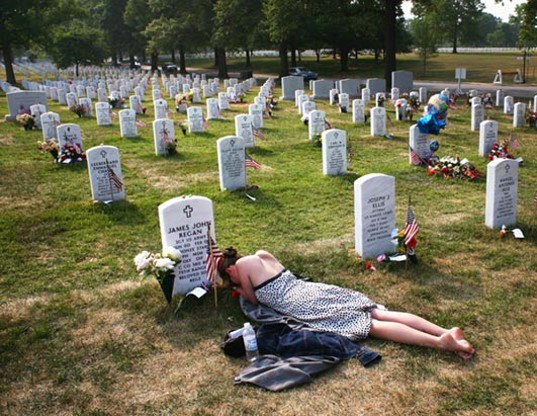
Alex Burgess gets emotional while visiting the gravesite of an old friend who was killed in Iraq, in section 60 at Arlington Cemetery, May 27, 2013 in Arlington, Virginia. For Memorial Day President Obama layed a wreath at the Tomb of the Unknowns, paying tribute to military veterans past and present who have served and sacrificed their lives for their country.  (Photo by Mark Wilson/Getty Images)

This would bring mental health and “brain health” issues to parity with the physical evaluations conducted prior to admittance into the military.

If passed, the law would also include a comprehensive physical and mental and brain health evaluation when the service member comes off of at least 180 days of active duty or separates from the service. This would include screening for Traumatic Brain Injury, recently found to cause most instances of Post Traumatic Stress, which could lead to Post Traumatic Stress Disorder. TBI is a “brain hurt” as opposed to a “mind hurt” issue that is more physiologic than mental.

We are finally addressing TBI issues, the signature issues of our returning heroes. Brain injury is not synonymous with “mental illness,” and the treatments for mental illness are often detrimental to TBI, hence the distinction is very important.

It is estimated that over 400,000 Global War on Terror veterans suffer from TBI, and most go undiagnosed and untreated, which leads to PTS and then possible PTSD.

AP photo.

Veteran and former U.S. Army Military Police non-commissioned officer, Curtis Armstrong was given a routine exit physical which didn’t connect the dots between his symptoms of memory loss, headaches, and thought process problems, since identified as being associated with TBI.

We can all imagine that if you’re not looking for something, and don’t know what it looks like even if you were, you’re not going to find anything. That’s exactly what happened to Curtis, and hundreds of thousands of his comrades.

The Resurrecting Lives Foundation, founded by Dr. Chrisanne Gordon, has been trying to gain the attention of politicians in Washington, D.C., for several years now. They have a panel of experts and have been advocating for the establishment of proper screening and treatment for veterans with TBI. Moving forward, the most encouraging event to date has been the MEPS Act introduction in the Senate.

When I inquired as to the catalyst for Sen. Portman’s introduction of the MEPS bill his staff replied:

“[T]he MEPS Act is a response to the clear need for better monitoring and assessing of service members’ mental health. While recent tragedies like the shootings at Fort Hood and the Navy Yard raised the profile of these issues, the need to address it has been apparent for far too long…Last summer, Senator Portman’s [Homeland Security and Government Affairs Committee] subcommittee held a hearing on improving access to health care, including mental health care, for rural veterans. To help correct this, Sen. Portman introduced an amendment to the FY14 defense authorization bill requiring [the Department of Defense] to report on the current status of telehealth initiatives within [the Department of Defense] and plans to integrate them into the military health care system. Sen. Portman and Sen. Rockefeller also attempted to introduce language requiring mental health screenings for exiting service members. This language is now included as part of the MEPS Act.”

At the risk of seeming too giddy about these latest developments, which bring not just mental health, but “brain health” issues of military personnel into a broader light, it has been far too long that these issues have stayed in the shadows.

Soldiers like Curtis deserve better, and we as a country need to pay close attention to how we can help. Encouraging our own legislators, local, state and national, to support and pass the MEPS Act is just a start; there needs to be more resources allocated to ensuring our best and brightest are also well cared for, especially after their deployment service has ended.

AP

Among the several professional organizations endorsing this bill is the Academy of Physical Medicine and Rehabilitation. According to Dr. Gordon, rehabilitation specialists would be included in the evaluations and in the program of reintegration.

“Sen. Portman did that, inviting collaboration with the private sector – the way to solve the TBI epidemic,” she said.

We can’t afford a legacy of forgotten warriors. We cannot endure the nightmare of neglected veterans. We are better than that. We, each of us, have an obligation to care for those we depended on to protect our ideals and us. Nothing less than a full accounting of every suffering veteran should be acceptable.

The Veterans Administration can be a hero here instead of the villian. If Secretary of Veterans Affairs retired general Eric Shinseki would pay attention to what’s going on in Congress, he could beat legislators to the punch: He could ask for funds to implement the essence of the MEPS Act within VA policy and practice.

Beginning with the new fiscal year in October 2014, he could seize the initiative in the war against mental and brain health issues in the military. You could suggest this to your legislators when you encourage them to sign on as co-sponsors and then pass the MEPS Act.

It’s important to remember that enshrining mental health evaluations for military personnel in law would ensure implementation in a timely manner, but if the MEPS Act gets held up in committee or is defeated, having the VA move forward with policy and practice changes through budgetary requests for fiscal year 2015 would honor the commitment our heroes deserve and should expect.

I am the author of “Saving Grace at Guantanamo Bay: A Memoir of a Citizen Warrior,” and three times mobilized U.S. Army Reserve Major (Retired). Twitter @mjgranger1.

A WELL-ARMED MILITIA: IT’S TIME FOR VETERANS TO TAKE A STAND

The Second Amendment to the Constitution of the United States of America, a document I swore to uphold and defend with my life, states:

“A well regulated militia, being necessary to the security of a free State, the right of the people to keep and bear Arms, shall not be infringed.”

Considering the current government assault on military benefits, and considering the administration’s response to the Benghazi attack, I am wondering just how much consideration some might give to joining our all-volunteer force in the future?

I wonder too, if the Framers imagined a government “Of the People, by the people and for the People” ever reneging on the promises made to those of us who swore our lives to defend this great nation, including its supreme law? Here’s something President Abraham Lincoln said about our commitment to the veteran in his Second Inaugural Address, on March 4, 1865, with the end of the Civil War in sight:

“With malice toward none, with charity for all, with firmness in the right as God gives us to see the right, let us strive on to finish the work we are in, to bind up the nation’s wounds, to care for him who shall have borne the battle and for his widow, and his orphan, to do all which may achieve and cherish a just and lasting peace among ourselves and with all nations.”

This is a promise, borne of a sense of duty and righteousness toward those who bore the burden of supporting this great nation with their blood, sweat and tears. This promise is the legacy of a nation born in blood and preserved in honor.

This promise is the legacy of a nation born in blood and preserved in honor.

Share:

What is happening now in the great halls of our government in Washington, D.C., is a desecration of that promise. A little here, a little there; capping cost of living increases for military; eliminating this benefit for years for retirees,;reducing pension growth for disabled retirees and survivors; preventing Reservists from collecting retirement pay for decades; and reducing retiree benefits by 20 percent. It all adds up to more than $6 billion in “savings” over 10 years.

A Well Armed Militia: ItsTime for Veterans to Take a Stand
Vietnam War veteran Fred Johnson, 73, watches people shop at a yard sale held to benefit Jerral Hancock, a 27-year-old Iraq war veteran who lost his left arm and is paralyzed from the waist down in a bomb explosion in Iraq, on Saturday, Oct. 26, 2013, in Lancaster, Calif. When the seniors in Jamie Goodreau’s high school history class learned Hancock was once stuck in his modest mobile home for months when his handicapped-accessible van broke down, they decided to build him a new house from the ground up. It would be their end-of-the-year project to honor veterans, something Goodreau’s classes have chosen to do every year for the past 15 years. (AP Photo/Jae C. Hong)

Tens of thousands of my fellow returning veterans from the Global War on Terror (still being fought world wide with U.S. troops in over 150 countries) will receive less and less of what we were promised.

Staff Sgt. Alex Jauregui, a double amputee, disabled Army veteran who lost his legs while on his fourth tour in Afghanistan, and who removed a barrier to a military monument in Washington, D.C., during the government shutdown earlier this year using his Segway, said in a “Fox News” interview that he feels “betrayed” by the vote, and that his friends who are still in the Army are considering leaving military service if the government can’t keep the promises it made.

A Well Armed Militia: ItsTime for Veterans to Take a Stand
Photo Credti: Twitter via @andrewbcreech

I don’t own a gun, but I carried and used one in the service of my country in a combat zone. I’ll be damned if anyone tries to infringe on that right for myself or anyone else. It has crossed my mind in the past year or so, with all the writing on the wall about reduction in military benefits, that something is going to give: That something is the relationship between the soldier and the civilian leadership of this country.

I have considered purchasing a gun or two, and not just for self-protection or that of my family, but for the protection of my country and the ideals I swore, and never rescinded, to uphold upon my enlistment into the Army, and then again upon my commissioning as an officer. A well-armed militia contributes to a secure nation, and allows the many hundreds of thousands of veterans to continue to defend the Constitution, against all enemies, foreign and domestic.

That’s a serious situation for serious times. On Dec. 17, the Senate voted through a two year budget package that includes the cuts mentioned previously. The intentions of this government towards its military are clear. Trust no one, believe nothing, and only fools will join the military service. Why pledge your life, livelihood and the protection of your family should they survive you to such a noble cause if everything that was promised to you is a lie?

Our lives are the ultimate sacrifice, sacred, holy and complete. If that’s not good enough to receive basic benefits, promised upon enlistment, then the leadership of this country has surely lost its way. Like Gettysburg, Pearl Harbor, D-Day and 9/11/01; Wednesday, Dec, 17, 2013, should go down as a day of infamy: when Congress voted to renege on solemn promises to the defenders of our freedom and liberty.

We, each of us veterans, is beholden to the promise we made upon swearing in to uphold and defend the Constitution, and now we have to make good on that promise. The question is, will our representatives in Washington listen or will the well-armed militia need to be mobilized?