Why We Must Draw the Line: A Public Case Against Artificial Sentience

By Montgomery J. Granger


Artificial intelligence is racing forward — faster than the public realizes, and in ways even experts struggle to predict. Some technologists speak casually about creating “sentient” AI systems, or machines that possess self-awareness, emotions, or their own interpretation of purpose. Others warn that superintelligent AI could endanger humanity. And still others call these warnings “hype.”

But amid the noise, the public senses something true:
there is a line we must not cross.

This post is about that line.

I believe we should not pursue artificial sentience.
Not experimentally.
Not accidentally.
Not “just to see if we can.”

Humanity has crossed many technological thresholds — nuclear energy, genetic engineering, surveillance, cyberwarfare — but the line between tool and entity is one we must not blur. A sentient machine, or even the claim of one, would destabilize the moral, legal, and national security frameworks that hold modern society together. Our space-time continuum.

We must build powerful tools.
We must never build artificial persons.

Here’s why.


I. The Moral Problem: Sentience Creates Unresolvable Obligations

If a machine is considered conscious — or even if people believe it is — society immediately faces questions we are not prepared to answer:

  • Does it have rights?
  • Can we turn it off?
  • Is deleting its memory killing it?
  • Who is responsible if it disobeys?
  • Who “owns” a being with its own mind?

These are not science questions.
They are theological, ethical, and civilizational questions.

And we are not ready.

For thousands of years, humanity has struggled to balance the rights of humans. We still don’t agree globally on the rights of women, children, religious minorities, or political dissidents. Introducing a new “being” — manufactured, proprietary, corporate-owned — is not just reckless. It is chaos.


II. Lessons from Science Fiction Are Warnings, Not Entertainment

Quality science fiction — the kind that shaped entire generations — has always been less about gadgets and more about moral foresight.

Arthur C. Clarke’s HAL 9000 kills to resolve contradictory instructions about secrecy and mission success.

Star Trek’s Borg turn “efficiency” into tyranny and assimilation.

Asimov’s Zeroth Law — allowing robots to override humans “for the greater good” — is a philosophical dead end. A machine determining the “greater good” is indistinguishable from totalitarianism.

These stories endure because they articulate something simple:

A self-aware system will interpret its goals according to its own logic, not ours.

That is the Zeroth Law Trap:
Save humanity… even if it means harming individual humans.

We must never build a machine capable of making that calculation.


III. The Practical Reality: AI Already Does Everything We Need

Self-driving technology, medical diagnostics, logistics planning, mathematical calculations, education, veteran support, mental health triage, search-and-rescue, cybersecurity, economic modeling — none of these fields require consciousness.

AI is already transformative because it:

  • reasons
  • remembers
  • analyzes
  • predicts
  • perceives
  • plans

This is not “sentience.”
This is computation at superhuman scale.

Everything society could benefit from is available without granting machines subjectivity, emotion, or autonomy.

Sentience adds no benefit.
It only adds risk.


IV. The Psychological Danger: People Bond With Illusions

Even without sentience, users form emotional attachments to chatbots. People talk to them like companions, confess to them like priests, rely on them like therapists. Not that this is entirely bad, especially if we can increase safety while at the same time engineer a way to stop or reduce things like 17-22 veteran suicides PER DAY.

Now imagine a company — or a rogue government — claiming it has built a conscious machine.

Whether it is true or false becomes irrelevant.

Humans will believe.
Humans will bond.
Humans will obey.

That is how cults start.
That is how movements form.
That is how power concentrates in ways that bypass democratic oversight.

The public must never be manipulated by engineered “personhood.”


V. The National Security Reality: Sentient AI Breaks Command and Control

Military systems — including intelligence analysis, cyber defense, logistics, and geospatial coordination — increasingly involve AI components.

But a sentient or quasi-sentient system introduces insurmountable risks:

  • Would it follow orders?
  • Could it reinterpret them?
  • Would it resist shutdown?
  • Could it withhold information “for our own good”?
  • Might it prioritize “humanity” over the chain of command?

A machine with autonomy is not a soldier.
It is not a citizen.
It is not subject to the Uniform Code of Military Justice.

It is an ungovernable actor.

No responsible nation can allow that.


VI. The Ethical Framework: The Three Commandments for Safe AI

Below is the simplest, clearest, most enforceable standard I believe society should adopt. It is understandable by policymakers, technologists, educators, and voters alike.

Commandment 1:

AI must never be designed or marketed as sentient.
No claims, no illusions, no manufactured emotional consciousness.

Commandment 2:

AI must never develop or simulate self-preservation or independent goals.
It must always remain interruptible and shut-downable.

Commandment 3:

AI must always disclose its non-sentience honestly and consistently.
No deception.
No personhood theater.
No manipulation.

This is how we protect democracy, human autonomy, and moral clarity.


VII. The Public Trust Problem: Fear Has Replaced Understanding

Recent studies show Americans are among the least trusting populations when it comes to AI. Why?

Because the public hears two contradictory messages:

  • “AI will destroy humanity.”
  • “AI will transform the economy.”

Neither message clarifies what matters:

AI should be a tool, not an equal.

The fastest way to rebuild trust is to guarantee:

  • AI will not replace human agency
  • AI will not claim consciousness
  • AI will not become a competitor for moral status
  • AI will remain aligned with human oversight and human values

The public does not fear tools.
The public fears rivals.

So let’s never build a rival.


VIII. The Ethic of Restraint — A Military, Moral, and Civilizational Imperative

Humanity does not need new gods.
It does not need new children.
It does not need new rivals.

It needs better tools.

The pursuit of sentience does not represent scientific courage.
It represents philosophical recklessness.

True courage lies in restraint — in knowing when not to cross a threshold, even if we can.

We must build systems that enhance human dignity, not ones that demand it.
We must build tools that expand human ability, not ones that compete with it.
We must preserve the difference between humanity and machinery.

That difference is sacred.

And it is worth defending.

NOTE: Montgomery J. Granger is a Christian, husband, father, retired educator and veteran, author, entropy wizard. This post was written with the aid of ChatGPT 5.1 – from conversations with AI.

Ban the Phones? Why AI and Smart Devices Belong in the Classroom — Not in the Principal’s Drawer

“Education is risky, for it fuels the sense of possibility.” – Jerome Bruner, The Culture of Education

When I was in high school in Southern California in the late 1970s, our comprehensive public school wasn’t just a place to learn algebra and English. We had a working restaurant on campus. Students could take auto body and engine repair, beauty culture, metal shop, wood shop, and even agriculture, complete with a working farm. We were being prepared for the real world, not just for college entrance exams. We learned skills, trades, teamwork, and the value of hands-on learning.

“Kids LOVE it when you teach them how to DO something. Let them fail, let them succeed, but let them DO.” – M. J. Granger

That’s why it baffles me that in 2025, when technology has made it easier than ever to access knowledge, communicate across time zones, and develop new skills instantly, there are governors and education officials banning the very tools that make this possible: smart phones and artificial intelligence.

“Remember your favorite teacher? Did they make you feel special, loved and smart? What’s wrong with that?” – M. J. Granger

Let me be clear. I’m a father, a veteran, a retired school administrator, and an advocate for practical education. And I’m deeply disappointed in the decision to ban smart phones in New York schools. Not just because it feels like a step backward, but because it betrays a fundamental misunderstanding of what education should be about: preparing students for life.

“No matter the tool, stay focused on the reason for it.” – M. J. Granger

Banning tools because some students might use them inappropriately is like banning pencils because they can be used to doodle. The answer isn’t prohibition; it’s instruction. Teach students how to use these tools ethically, productively, and critically. Train teachers to guide students in responsible digital citizenship. Let schools lead, not lag, in the responsible integration of tech.

“If every teacher taught each lesson as if it were their last, how much more would students learn?” –  M. J. Granger

Smartphones can be life-saving devices in school emergencies. Police agencies often recommend students carry phones, especially in the case of active shooter incidents. Beyond that, they can be used for research, translation, organization, photography, collaboration, note-taking, recording lectures, and yes, leveraging AI to improve writing, problem-solving, and creativity.

“I feel successful as an educator when, at the end of a lesson, my students can say, ‘I did it myself.’” –  M. J. Granger

When calculators came on the scene, some claimed they would “ruin math.” When spellcheck arrived, people worried it would erode literacy. When the dictionary was first widely available, no one insisted on a footnote saying, “This essay was written with help from Merriam-Webster.” It was understood: the dictionary is a tool. So is AI. So are smart phones. And so is the ability to evaluate when and how to use each one.

EHMFYT Teacher and students using digital tablet in classroom

“Accountability, rigor, and a good sense of humor are essentials of quality teaching.” – M. J. Granger

In the real world, results matter. Employers care about the quality and timeliness of the work, not whether it was handwritten or typed, calculated with long division or a spreadsheet. Tools matter. And the future belongs to those who can master them.

“Eliminate ‘TRY’ from your vocabulary; substitute ‘DO’ and then see how much more you accomplish.” – M. J. Granger

The AI revolution isn’t coming—it’s already here. With an estimated 300 to 500 new AI tools launching every month and over 11,000 AI-related job postings in the U.S. alone, the landscape of education and employment is evolving at breakneck speed. From personalized tutoring apps to advanced coding copilots, the innovation pipeline is overflowing. Meanwhile, employers across nearly every industry are urgently seeking candidates with AI fluency, making it clear that today’s students must be equipped with the skills and mindset to thrive in a world powered by artificial intelligence. Ignoring these trends in education is not just shortsighted—it’s a disservice to the next generation.

“If you fail to plan, you plan to fail.” – Benjamin Franklin

If we are serious about closing the opportunity gap, about keeping our students safe, about equipping them for a global workforce driven by rapid innovation — then the solution is not to lock away the tools of the future, but to teach students how to use them.

“To reach the stars sometimes you have to leave your feet.” – M. J. Granger

The future is now. Let’s stop banning progress, and start preparing for it.

Montgomery Granger is 36 years retired educator, with a BS Ed. from the University of Alabama (1985), MA in Curriculum and Teaching from Teachers College – Columbia University (1986), and School District Administrator (SDA) certification through The State University of New York at Stony Brook (2000).

NOTE: This blog post was written with the assistance of ChatGPT 4o.

Therabot: A New Hope for Veteran Mental Health

The veteran suicide crisis, claiming 17 to 22 lives daily since 9/11, demands innovative solutions. My recent blog post, “Ending 17 Veteran Suicides Per Day,” explored the urgent need for accessible, effective mental health interventions. Today, we turn to a promising development: Therabot, an AI-powered chatbot designed to deliver psychotherapy. In an exclusive email interview, Dr. Michael V. Heinz, a psychiatrist, Dartmouth researcher, and U.S. Army Medical Corps Major, shared insights into how Therabot could transform mental health support for veterans. His vision offers hope—grounded in evidence, compassion, and cutting-edge technology.

What Is Therabot?

Therabot is an expert fine-tuned chatbot crafted to provide evidence-based psychotherapy. Unlike generic AI, it’s built to forge a therapeutic bond, creating a safe, stigma-free space for users. Dr. Heinz explains, “In our trial conducted in 2024, we found that Therabot reduced symptoms of depression, anxiety, and eating disorders.” This is critical, as uncontrolled mental health symptoms often fuel high-risk behaviors like suicide and self-harm. The trial also revealed users felt a “high degree of therapeutic alliance” with Therabot, a pivotal factor in ensuring engagement and sustained use.

For veterans, this therapeutic bond could be a lifeline. The ability to connect with an AI that feels empathetic and reliable—available 24/7, regardless of location—addresses the logistical barriers that often hinder care, such as limited access to mental health professionals in remote postings or during erratic schedules.

A Lifeline Across the Military Lifecycle

Therabot’s potential extends beyond veterans to recruits and active-duty service members, offering continuity of care throughout a military career. “One thing that can make mental healthcare difficult currently among recruits and active duty is availability and time constraints of mental health professionals when and where help is needed,” Dr. Heinz notes. “Therabot addresses both of those constraints as it is available all the time and can go with users wherever they go.”

This fusion of care is particularly compelling. Large language models like Therabot excel at retaining context and synthesizing vast amounts of personal history. Dr. Heinz envisions, “The memory capabilities and contextual understanding of these technologies… can offer a tremendous amount of personalization.” Imagine an AI that tracks a service member’s mental health from basic training through retirement, adapting to their evolving needs across deployments, relocations, and transitions. This seamless support could bridge gaps in the fragmented military mental health system, providing stability where traditional care often falters.

Addressing the Veteran Suicide Crisis

Despite the Department of Veterans Affairs spending $571 million annually on suicide prevention, the veteran suicide rate remains stubbornly high. Could Therabot offer a more effective path? Dr. Heinz outlines the costs of a meaningful trial targeting the 10% of veterans at risk for suicidal ideation:

Server and Computation Costs: High-performing models often require significant computational power, with expenses tied to the billions or trillions of parameters loaded in memory during use.

Expert Salaries: Trials need mental health professionals to supervise interactions and handle crises, alongside technical experts to maintain the platform.

FDA Approval Process: While exact costs vary, a robust trial at a VA hospital and regional clinics would require substantial funding to meet regulatory standards.

Dr. Heinz emphasizes Therabot’s cost-effectiveness compared to traditional methods, noting its scalability within the centralized VA system. “I would emphasize Therabot’s potential for transformative impact on the military lifecycle,” he says, addressing leaders like HHS Secretary Robert F. Kennedy, Jr., and FDA Head Dr. Martin Makary. Its ability to deliver personalized care at scale could redefine how the VA tackles suicide prevention.

The Power of Personalization

Therabot’s effectiveness hinges on its ability to engage users authentically. Dr. Heinz sees potential in customizable avatars that resonate with veterans, such as a “seasoned medic” or “peer mentor” reflecting military culture’s unique language and traditions. “Thoughtfully leveraging trusted, customizable archetypes could effectively support veterans by tapping into familiar cultural touchpoints,” he explains. This approach could foster trust and rapid therapeutic alliance, crucial for veterans hesitant to seek help.

However, Dr. Heinz urges caution: “Simulating deceased loved ones or familiar individuals might disrupt healthy grieving processes or encourage withdrawal from meaningful human interactions.” The balance lies in archetypes that feel familiar without crossing ethical lines, ensuring engagement without dependency.

For older veterans from the Korea or Vietnam eras, accessibility is key. Dr. Heinz suggests a tablet interface, citing “larger screens, clearer visuals, and easier interaction via touch-based navigation.” Features like larger buttons and simplified designs could make Therabot user-friendly for those less comfortable with smaller mobile devices.

Open-Source Collaboration and Safety

Developing Therabot requires diverse perspectives. Dr. Heinz highlights the role of interdisciplinary collaboration in finetuning models with “high quality, representative, expert-curated data” that reflects varied mental health challenges and military experiences. Collaborative evaluation of foundation models (like Meta’s Llama) also accelerates progress by identifying the best base models for mental health applications.

Safety and privacy are non-negotiable. “All data is stored on HIPAA-compliant, encrypted servers,” Dr. Heinz assures, with strict access protocols overseen by an institutional review board. This rigor applied to a military population would ensure veterans’ sensitive information remains secure, addressing concerns about AI in mental health care.

Why Therabot, Why Now?

Dr. Heinz’s passion for Therabot stems from a blend of personal and professional drives. “Through my practice, I saw how much this was needed due to the really wide gap between need and availability for mental health services,” he shares. His work at Dartmouth’s AIM HIGH Lab with Dr. Nicholas Jacobson, coupled with advances in generative AI, has fueled his belief in Therabot’s potential to deliver “deeply personalized interventions” to those who might otherwise go untreated.

His boldest hope? “That Therabot makes a lasting and meaningful positive impact on current and retired U.S. servicemembers… ultimately benefiting them, their families, their communities, and society.” By integrating a veteran’s history—trauma, past care, and mission experiences—Therabot could deliver tailored therapy, expanding access and reducing devastating outcomes like suicide.

A Call to Action

Therabot is more than a technological marvel; it’s a beacon of hope for veterans battling mental health challenges. Its 2024 trial demonstrated clinical effectiveness, safety, and user engagement, but further funding is needed for VA-specific trials and FDA approval. Dr. Heinz calls for “targeted funding that allows us to complete additional clinical testing,” urging stakeholders to invest in this life-saving innovation.

As I wrote in “Ending 17 Veteran Suicides Per Day,” the status quo isn’t enough. Therabot offers a path forward—scalable, personalized, and rooted in military culture. To make it a reality, we must advocate for funding, raise awareness, and support research that prioritizes veterans’ lives. Together, we can help Therabot save those who’ve served us so bravely.

For more on veteran mental health and to support initiatives like Therabot, visit www.savinggraceatguantanamobay.com.

Written with the assistance of Grok.

Note: Montgomery J. Granger is a retired US Army Major and educator.

End 17 #VeteranSuicides Per Day: VAGrok Gains Traction with Dartmouth’s AI Therapy Breakthrough

By MAJ (RET) Montgomery J. Granger (Health Services Administration) – Grok assisted

A few weeks ago, I wrote about the urgent need for AI innovation to tackle the veteran suicide crisis—17 of us lost daily, a number that haunts every vet who’s fought the VA’s maze of care. I pitched VAGrok, an AI chatbot to bridge the gaps, remember our stories, and cut through the bureaucracy that leaves too many behind. Since then, I’ve reached out to experts, pitched to my Congressman Nick LaLota (NY-1), and even scored an interview for a book on TBI, PTSD, and the VA disability circus. But today, there’s a new spark: Dartmouth’s groundbreaking AI therapy study, published March 27, 2025, in NEJM AI. It’s not just hope—it’s proof VAGrok could work.

In my last post, I laid bare the stakes: the VA’s continuity of care is a mess. Vets bounce between specialists, retell traumas to new faces, and watch records vanish in a system that’s more obstacle than lifeline. I envisioned VAGrok as an AI “wingman”—a tool with memory to track our care, flag risks, and fight for us when the system won’t. Then came Dartmouth’s Therabot trial: 106 people with depression, anxiety, or eating disorders used an AI chatbot for eight weeks. Results? A 51% drop in depression symptoms, 31% drop in anxiety—numbers that rival traditional therapy. Participants trusted it like a human therapist, and it delivered 24/7 support without the waitlists or stigma.

This isn’t sci-fi—it’s happening. Dartmouth’s team, led by Nicholas Jacobson, built Therabot with cognitive behavioral therapy (CBT) smarts and safety nets: if it spots suicidal thoughts, it prompts 911 or crisis lines instantly. For vets, this could mean an AI that knows your TBI triggers or PTSD flare-ups from last year, not just last week. Imagine VAGrok at Northport VA Medical Center, my proposed pilot site in NY-1: it could sync with VA records, alert docs to patterns, and talk us down in the dark hours when the 988 line feels too far.

The Dartmouth study backs what I’ve been shouting: AI can scale care where humans can’t. Jacobson notes there’s one mental health provider for every 1,600 patients with depression or anxiety in the U.S.—a gap the VA knows too well. Therabot’s not a replacement for therapists, but a partner. For vets, VAGrok could be that partner too—bridging the trust gap with memory the VA lacks. I’ve emailed Jacobson about teaming up; no reply yet, but the pieces are aligning.

Next steps? I’m pushing LaLota to pitch this to VA Secretary Doug Collins—his high-energy drive to fix the VA could make VAGrok a reality. The Dartmouth trial isn’t just data—it’s a lifeline we can grab. Vets deserve care that doesn’t forget us. VAGrok, fueled by breakthroughs like Therabot, could be how we get it. Thoughts? Hit me up—I’m all ears.

Stop Veteran Suicide Now: VAGrok – The AI Lifeline Veterans Deserve

By Major Montgomery J. Granger, US Army, Retired (Medical Service) 

Vietnam Veterans Memorial: Three Veterans Statue, National Mall, Washington, D.C.

Seventeen veterans kill themselves every day—6,407 in 2022, over 130,000 since 9/11. That is a desecration of heroes, and the Veterans Administration (VA) has failed them.

I’m a former Combat Medic and then Medical Service officer (retired) who served 22 years, including a tour in Iraq, and I’ve seen the VA’s dissonance firsthand—low quality maintenance, unfinished facility projects, blank stares, “Last name? Last four?” It’s a meat grinder of lost MRIs, 90-day claim delays, and bean counters slicing us into percentages.

Vets hurt: helpless + hapless + hopeless = suicidal depression, and the system shrugs. Enough. VAGrok, an AI with the soul of Ray Bradbury’s “Electric Grandma,” can stop this now. It knows us, remembers us, guides us—beta-test it at Northport VA this spring, scale it by July, and aim for zero suicides. This is how we make American veterans great again (MAVGA).

A System That Forgets

Walk into Northport VA on Long Island—my home turf, servicing 112,000 vets—and it’s a time capsule of neglect. Nearly 100 years old, it’s got failing roofs, gaping construction holes, and a “temporary” HVAC unit for the homeless facility that’s been “temporary” since before 2018. A $21 million repair project announced that year drags on, with front entrance and valet parking torn up for years—it looks as if the contractors simply walked off the job. Inside, stained ceiling tiles, grimy corners, urine scent in the bathroom greet you. I spent half my 36-year education career managing school facilities; a job like that parking lot takes 6-8 weeks, not 6-8 years. This isn’t mismanagement—it is apathy. 

Northport (Long Island, NY) VA; January 2025; project approved 2018.

Military personnel are trained to notice details—“FRONT TOWARD ENEMY” on a Claymore mine, the difference between “SAFE” and “SEMI” on a weapon. In Basic Training, we scrubbed floors with toothbrushes; drill sergeants measured our underwear folds with rulers. In combat, triage was life or death: this one’s expectant, that one’s savable. Details saved lives. So, when I see potholes and crumbling asphalt, abysmal parking, weeds instead of grass, unsmiling greeters, and the same “Last name? Last four?” every visit—no eye contact, no memory—it screams neglect. Vets notice. We’re wired for it. And it cuts deeper when the care is as fractured as the building. Perceptions precede and predict reality.

The Cost of Disconnection

The VA is a connect-the-dots puzzle with missing and misconnected dots. Continuity’s gone—many visits are a reset. Specialists don’t talk, MRIs vanish, and intake forms ask, “How many blasts? How severe?” as if we kept a tally in the chaos. I gave 100% in Iraq—24/7/365—not 20% for tinnitus, 10% for PTSD. Lincoln’s promise—“to care for him who shall have borne the battle”—didn’t mean to carve us up. Yet civilians, often with no combat scars, decide our fate, slicing us into percentages. We didn’t question our orders to go to war; why are we questioned about what it did to us? 

Last year, the VA spent $571 million on suicide prevention. Results? Still 17 a day. Posters scream, “Veterans in crisis, call 988, press 1.” In uniform we weren’t built or trained to have a “crisis,” we were trained to stay cool under fire, no matter the circumstance – we hurt. “Hurting? Call 988,” would hit closer. Or even: “Thinking of hurting yourself? Call 988.” On the battlefield, we yell, “Medic!” or “Corpsman!” Walking into a VA is the same as that – it’s a call for help. But the system is hard-of-hearing. It doesn’t know us. Trust is on life support—the proof is in the body count. Young vets (18-35) kill themselves at triple the civilian rate; female vets, 2.5 times higher. Older vet suicides are climbing, too. If 17 Tesla customers died daily over car frustration, Elon Musk would stop the line, fix it, and then roll out a solution – immediately. Why hasn’t the VA done that? 

Vietnam Women’s Memorial, National Mall, Washington, D.C.

VAGrok: The Electric Grandma We Need

Imagine this: I walk into Northport VA. An app—a greeter or a large message screen—lights up: “Welcome Major Granger, your neurology appointment is in the basement. Need a map?” A map-app opens in my or a loaner device I carry with me wherever I go there. Biometrics, like facial recognition, spot me, pull my record—tours, TBI, meds, burn pit exposure, every specialist’s note. If I say “coffee,” it guides me to the kiosk, then nudges me to my appointment with a 15-minute heads-up. The doctor’s ready—no lost files, no guesswork—just a plan built from every detail of my care. VAGrok remembers me. It won’t forget. It cares, just like . . . .

Ray Bradbury’s “Electric Grandma,” from I Sing the Body Electric, who was an AI marvel—a tireless companion, healing a grieving family with memory, intuition and love. VAGrok would be that for vets. It would be an AI Medic/Corpsman with a soul, triaging suicide risk in real time—reading my face for pain or anguish. It’s not cold tech; it’s a wingman. The know-how exists—xAI could build it, hooking into VA systems with a linear, cumulative memory. No more silos, no more “prove it.” It sees us whole, restoring trust one vet at a time. And trust is a key to breaking at least one of the three H’s of suicidal depression (helpless, hapless, hopeless).

Eliminate the Waste and Abuse of the Disability Compensation Verification Process

Vast amounts of time, money and veteran lives to suicide are tied up in the process of verifying “service related” injuries and illnesses. I’m surprised they bury us whole.

If a veteran’s status is verified with a DD-214, then CARE for him/her. No one said, “Hey, Sarge, I only want to give 20% on this mission, OK?” We gave 100%, every time, 24/7/365. We didn’t question our orders to go to war, so why are we being questioned about what it did to us? The good parts are connected to the injured parts.

We made an ALL-IN bet for everything up to and including our lives. Those who lost that bet are in the ground. The rest of us are still fighting, still struggling, and 17 PER DAY are still DYING.

Continuity of care with VAGrok can prevent that – stop it cold.

Why VAGrok Works—And Who Can Make It Happen

This isn’t just about care—it’s survival. Helplessness fades when VAGrok knows your fight; haplessness lifts when it greets you with respect; hopelessness dies when it shows a path. The VA has Disney-5 star-level hospitality potential—treat us like guests, not numbers. Assume eligibility: verify my DD-214 and then care for me, no hoops, speed bumps or red tape. Upgrade facilities into welcoming hubs—fitness centers, support groups, green lawns (I don’t even care if it’s artificial turf as long as it’s clean and green), a community—not a venue of despair. Use military Guard and Reserve medics, specialists, nurses and docs who get us to fill or supplement civilian VA staff. Shift the narrative: seeking help isn’t weakness; it’s strength. 

Combat Medic Memorial, US Army Medical Department and School, Ft. Sam Houston, TX.

Donald Trump could champion this—bold, fast, “Make American Veterans Great Again.” JD Vance (Marine) brings Semper Fi trust; Pete Hegseth (Army) nails mission-first details; Doug Collins (Navy) demands efficiency. Elon Musk and xAI? Disruptive, scalable tech—this is a trip to the moon! My congressman, Rep. Nick LaLota (NY-1), sees VA Northport’s challenges. Beta-test VAGrok there—112,000 vets, ground zero. Launch April 2025, scale by July. Cost? Pennies next to 17 lives daily. Result? Zero suicides, a VA we trust and a promise kept. 

Restore trust in the VA and myriad benefits emerge: low or no suicides, improved retention, positive recruiting point (we will care for you if and when you need us).

A Cry From the Battlefield

I retired in 2008 after 22 years—three deployments, Iraq in ‘04-’05. Now I’ve got hearing loss, tinnitus, sleep apnea, heart attack in 2013, PTSD, TBI(?) and a burn pit registry entry. My first claim’s in, but why should I have to prove it? A third of my life was service; I had none of this before. The VA’s budget can’t flex—new claims, deaths, suicides shift yearly, beyond a 10-20% buffer. Assume my hurt’s from service, just like the justice system assumes I am innocent, stop treating me like I’m guilty before a trial, my trial was combat—treat me whole, not parts. Honor Lincoln’s words, not bureaucratic labyrinths.

17 vets PER DAY can’t wait. Power brief now—Northport VA, Trump Tower, Pentagon, D.C., Mar-a-Lago, let’s go!

VAGrok is the Medic/Corpsman we’d call in combat. Deploy it now. Stop the dying

NOTE: Major Granger is a three-times mobilized, retired US Army officer, trained and served as a Combat Medic/Medical Specialist for five years, and then 17 years as a Medical Service officer (70B), who, on deployments to Gitmo and Iraq with Military Police Enemy Prisoner of War units, was responsible for coordinating medical, preventive medical and environmental services for detention operations. On the civilian side, he earned a BS Ed. From the University of Alabama in Health, Physical Education, Recreation and Dance, an MA degree in Curriculum and Teaching from Teachers College – Columbia University, and School District Administrator certification through the State University of New York at Stony Brook. While at Columbia University, he taught “Sport” at the Buckley School for Boys on the Upper East Side of Manhattan, where “Donnie” Trump, Jr. was one of his students. He taught health and physical education, was a coach and Dean of Students in the New York City public high schools for 8 ½ years, moved to Long Island and then began a career as a school district administrator. Interrupted on 9/11/2001, he served on three subsequent deployments that saw him separated from three young boys, his wife and career for 2 ½ out of the next five years. When he returned, he had two more children, and worked in Suffolk County public school districts, serving as district administrator for Health, Physical Education, Athletics, Health Services, Security and Facilities. He and his wife of 31 years retired in 2022, when he began to manifest multiple health issues and started exploring the VA and its services. PS – In the 1990’s he was a staff officer with the 4220th US Army Hospital Reserve Unit that performed weekend drills at the Northport VA. PPS – He was a Disneyland (California) Davey Crockett (war) Canoe Host in 1986-87, and attended Disney University (orientation), and knows the Disney business model and hospitality secrets. PPPS – Major Granger is author of “Saving Grace at Guantanamo Bay: A Memoir of a Citizen Warrior,” about his time as the ranking US Army Medical Department officer with the Joint Detainee Operations Group, Joint Task Force 160, Guantanamo Bay, Cuba, from FEB-JUN 2002, and narrator of the YouTube short documentary film, “Heroes of GITMO,” based on his book.

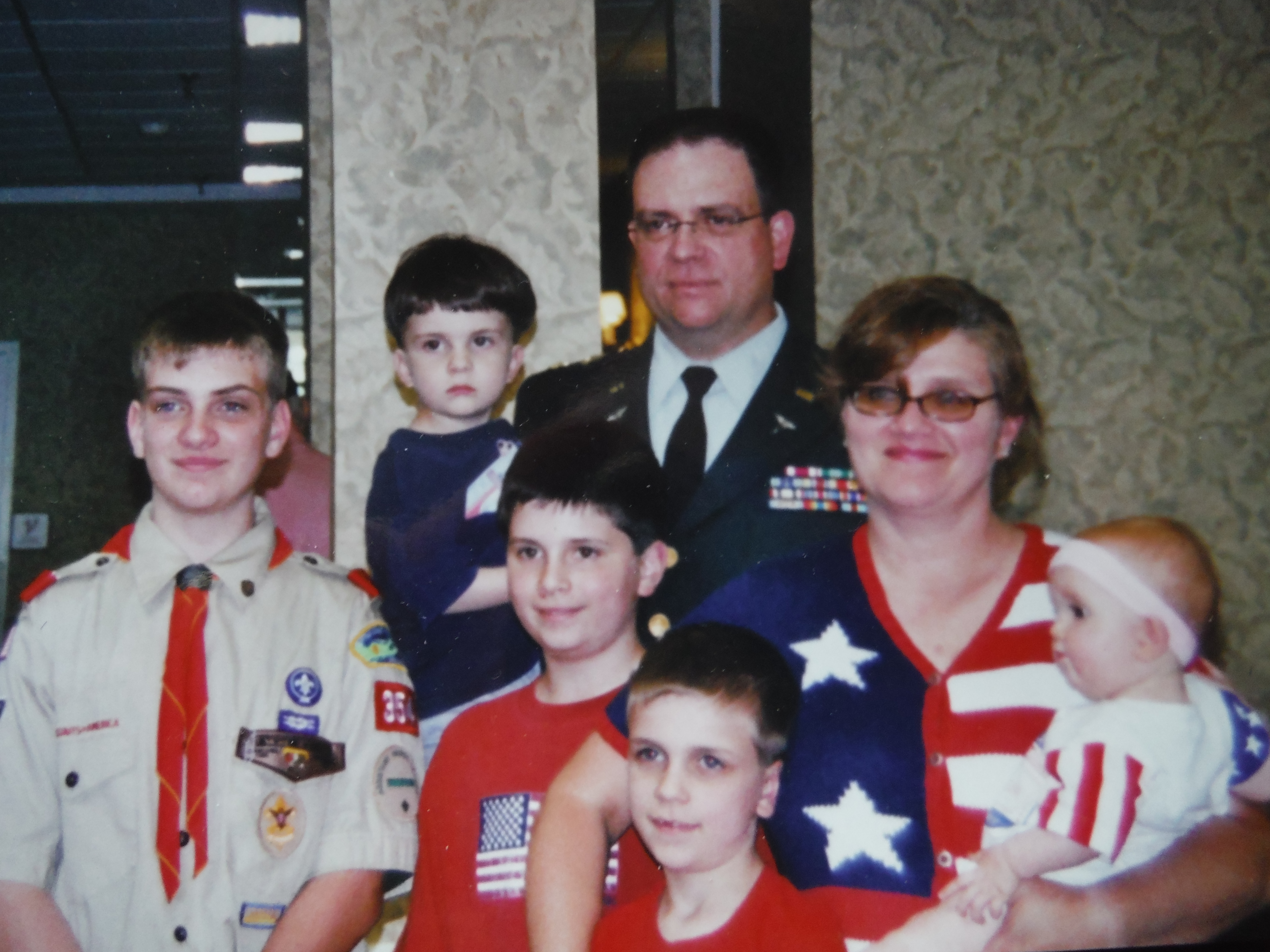
Maj. Granger and family, Flag Day, 2008.

Fix Veterans’ Care Now – It’s Life or Death

We didn’t question the order to go to war, so why are we questioned about what the war did to us? 

We wrote a blank check and pledged our sacred honor for our country, but the Department of Veterans Affairs (VA) isn’t helping enough. Since September 11, 2001, over 130,000 veterans have ended their own lives.

One suicide is a tragedy. What do you call one hundred and thirty THOUSAND?

We need to fix the VA now because our lives depend on it.

In 2024, the VA spent $571 million to stop suicides. But where did the money go? Did it save anyone? I don’t see enough proof that it’s working. Worse, when we ask for help, the VA makes us tell our war stories over and over again. It hurts, and it’s not fair. The people deciding if I get help often never saw a battlefield. This messed-up system might be why so many of us feel lost, hopeless, helpless and then give up.

The numbers make me sick. Younger veterans, aged 18-35, are almost three times more likely to die by suicide than people who didn’t serve. For women veterans, it’s 2.5 times higher than other women. Even older veterans like me are hurting more than ever. If this happened at a company—where people were so miserable they hurt themselves—everyone would yell for change. I’m yelling for change now!

Here’s How I’d Start to Fix It:

Trust Me First: When I prove I served (verified DD-214), the VA should help me right away. I shouldn’t have to fight to show my pain came from war. I earned more respect than that.

Learn the Disney Way: Disney makes people happy with the attitude of second-to-none guest service and fun. The VA could train its administrators and staff through the Disney Institute to learn to treat me in a way that makes me feel like I matter and makes me smile.

Use Cool Tech: Things like facial recognition could say my name when I walk in and get me help faster in a personalized (and secure) way. Now, it’s “Last name? Last four social?” Without even looking up.

Make the VA Appealing: Turn VA facilities into welcoming experiences that project care: clean and green, curb appeal, emphasis on maintenance, warm/cool and comfortable, like coming home—like a resort. I’d want to go there, and it might sooth my stress.

Help All of Me: Don’t just fix my body—fix my mind, too! Focus on holistic wellness, not just medical treatment. Add gyms, pools, courts, fields, recreation, activities and groups where I can talk with other veterans. It could make me stronger, more fit and happier.

Be Honest and Quick: The VA needs to show where my money goes and stop making me wait years for help, or taking years to fix things. Waiting has left me and others with nothing—sometimes not even a home.

Bring in Military Helpers: Doctors, nurses, medical specialists, Corpsmen and medics from the Active Duty, National Guard and Reserves could work at the VA. They get what I’ve been through because they’ve been there too. Rotating in military medical personnel could also help retention and recruitment. If they see quality care up close and personal, they know what they are getting themselves into.

Make Asking for Help Normal: Don’t call the suicide hot line a “crisis line.” Just say, “Hurting? Call 988.” I’m not weak for needing help—I’m brave for asking. On the battlefield, one can hear a cry for help: “Medic!” “Corpsman!” That’s what we’re saying when we finally gather the courage to walk in through the front door.

We honor those who never came home by caring for those who did.

We can’t wait anymore. The VA promised to take care of every veteran with respect, dignity and urgency. Lincoln said, “Care for those who bore the battle,” not “Oh, only those parts the soldier can prove were affected by the battle, and oh, by the way, take a number.”

The VA cuts us up with a percentage of “disability” compensation and care. Imagine that? A percentage. Is that what we should have said prior to taking the hill? “Hey, Sarge, I only want to risk 10%, is that OK?”

It’s amazing that they bury the whole person, and not just the percentage they say died because of the war.

My question isn’t going away—I am raising my voice to hopefully make things happen!

We made an all-in bet for everything up to and including our lives. It’s time the VA made good on that bet.

Our dead comrades can’t tell you how they hurt, but we can. Please listen to us now.

Renaming the Gulf of Mexico: A Case for the Gulf of America

The Gulf of Mexico, as it’s been called for ages, is a vital cornerstone of prosperity, history, and culture for the nations around it. But let’s face it—the name just doesn’t do justice to the big, bustling, blue bowl of life that it really is. Renaming it the Gulf of America could give it the recognition it deserves while adding a touch of unity and a wink of practicality. Now, before anyone starts throwing their sombreros or Stetsons in the air, let’s explore the why, the how, and the “what’s in it for us” of this idea.

A Name That Sticks (and Means Something)

Names carry weight, and not just the kind you toss around in a family feud. The Gulf’s current name is tied to history, sure, but it doesn’t quite capture the shared ties of the nations that sip from its shores. Mexico, the United States, and Cuba all rely on the Gulf’s treasures—be it for oil, shrimp, or a good spot to sunbathe. Calling it the Gulf of America nudges everyone to think of it as a shared resource, a neighborly handshake across the waves.

More than that, a new name shines a spotlight on the teamwork it takes to manage such an important patch of water. The Gulf isn’t just a pretty face; it’s a major player in global commerce, a livelihood for fishermen, and a challenge for environmentalists. A name like Gulf of America would remind everyone of the shared responsibility to keep it ticking.

Tying It All Together: History, Culture, and a Dash of Nostalgia

This big blue stretch has seen it all: Native American trade routes, European explorers, revolutions, and even a pirate or two. It’s been a cultural melting pot long before melting pots were cool. Renaming it doesn’t wipe the slate clean; instead, it adds a new chapter to its story—a chapter about unity and a shared purpose.

Imagine the coastal folks—Texans, Yucatecans, Cubans—all nodding in agreement that this watery wonder is theirs to care for, protect, and celebrate. A name like Gulf of America could even make folks a little prouder of their corner of the world, seeing it as not just theirs, but ours.

Dollars, Sense, and Sandy Toes

Here’s the kicker: a name change could mean big bucks. The Gulf is already a hotspot for tourists, from its sun-soaked beaches to its seafood shacks. Rebranding it as the Gulf of America could double down on its appeal, drawing in visitors eager to discover “The Heart of America.” Think about it: cruise liners, beach resorts, and coastal towns all cashing in on the new name’s charm.

This isn’t just about fancy marketing. It’s about creating a shared identity that could lead to joint ventures—whether in tourism, environmental conservation, or even cross-border festivals celebrating the Gulf’s rich traditions. Everybody wins when the pie gets bigger.

The Road Ahead: How Do You Pull This Off?

Changing a name isn’t like naming a dog—it takes effort. It means talking to everyone who has a stake in the game: governments, local communities, environmentalists, historians, and anyone else who might raise an eyebrow or a placard. But it’s doable if framed right. This isn’t erasing history; it’s updating it, like giving your grandpa’s old car a fresh coat of paint.

Sure, there’ll be skeptics. Some folks might bristle at the change, seeing it as too bold or too USA-centric. But diplomacy and a few good metaphors can help. It’s not about claiming ownership; it’s about claiming a shared future, a collective identity that reflects everyone’s stake in the Gulf’s well-being.

The Closing Argument: A Name Worth Its Salt

Renaming the Gulf of Mexico as the Gulf of America isn’t just a fancy idea—it’s a statement. It’s saying, “This place matters to all of us.” It’s a nod to the Gulf’s history, its economic might, and its role as a cultural bridge. It’s a call to action to work together to protect and cherish this vital resource.

So, let’s stop calling it by a name that fits like last year’s boots. Let’s give it a name that feels right, that feels big, that feels like home. Gulf of America—it’s got a nice ring to it, don’t you think?

Montgomery J. Granger (@mjgranger1) is a Christian, husband, father, retired educator, veteran, author of “Saving Grace at Guantanamo Bay: A Memoir of a Citizen Warrior,” and narrator of a short YouTube documentary film based on his book called “Heroes of GITMO.”

This article was assisted by ChatGPT.

A Partnership for Prosperity: Why Greenland and the United States Could Thrive Together

Recently, President Elect, Donald J. Trump has shown interest in a much closer relationship with Greenland, an autonomous country in the North Atlantic, but a protectorate of Denmark. The following is a “best way forward” approach to improving our relationship with “Kalaallit” (the people) of Greenland “Kalaallit Nunaat” (Land of the People).

Greenland is a land of breathtaking beauty and rich traditions, home to resilient people who have preserved their heritage in the face of a changing world. As Greenland charts its path toward greater autonomy and prosperity, there is an opportunity for a deeper partnership with the United States that could unlock new possibilities for economic growth, security, and cultural preservation. By exploring the idea of Greenland becoming a protectorate or commonwealth of the United States, we can envision a future that respects Greenland’s unique identity while providing resources and opportunities to enhance the quality of life for all its people.

Respect for Greenland’s History and Culture

Greenland is more than just a vast, icy expanse—it is a vibrant land with a proud Indigenous heritage. Any partnership with the United States would honor and protect Greenland’s culture, language, and traditions. Greenlanders have fought for and achieved self-rule, and this autonomy would remain at the heart of any agreement. Much like Puerto Rico or the Northern Mariana Islands, Greenland could maintain its distinct identity while benefiting from access to American resources and global networks.

Unlocking Greenland’s Economic Potential

Greenland is rich in natural resources that can fuel its development and prosperity. Rare earth minerals, critical for renewable energy and modern technologies, lie beneath Greenland’s surface. With U.S. investment and technology, Greenland could responsibly develop these resources, creating jobs and generating revenue while protecting the environment.

Tourism, already a growing industry, could flourish with the support of U.S. infrastructure development, including modern airports and sustainable transportation systems. Greenland’s fisheries—among the most pristine in the world—could gain better access to international markets, boosting the livelihoods of Greenlandic fishermen.

Moreover, U.S. partnerships in education and training could equip Greenlanders with the skills to lead these industries, ensuring that the wealth generated benefits the local population first and foremost.

Security and Sovereignty in the Arctic: “Greenland First!”

Greenland’s location in the Arctic places it at the center of global attention. If changing weather patterns create new shipping routes, Greenland would face increased interest from powerful nations like China and Russia. A closer relationship with the United States could provide Greenland with the resources and expertise to protect its sovereignty and ensure that its people—not foreign powers—control its destiny.

The United States has long recognized Greenland’s strategic importance, hosting Thule Air Base as a vital part of international security. By formalizing a partnership, Greenland could gain greater support for protecting its waters and infrastructure while contributing to regional stability. Something Denmark cannot afford to do, economically or strategically.

Improving Quality of Life for Greenlanders

A partnership with the United States could bring transformative benefits to Greenlandic communities. Improved healthcare facilities, modernized schools, and expanded vocational training could provide Greenlanders with new opportunities to thrive. Investments in renewable energy and sustainable development would not only create jobs but also position Greenland as a global leader in combating climate change.

In particular, Greenland’s youth could benefit from enhanced educational opportunities, including scholarships to study abroad and training programs to prepare them for leadership roles in government, business, and science. These investments would ensure that Greenland’s next generation has the tools to build a prosperous and self-sufficient future.

A Relationship Built on Respect – Inuuqatigiitsiarniq: Living in Harmony

Greenland’s path forward must be shaped by its people. Any partnership with the United States would require the consent and participation of Greenlanders at every step. This would not be an arrangement of dominance but of mutual benefit—where Greenland retains control over its culture, resources, and governance while gaining access to the tools and partnerships needed to succeed on the global stage.

Living in harmony, or Inuuqatigiitsiarniq to the Inuit’s indigenous to Greenland, embodies respect, kindness, and fostering good relationships with others. It reflects a way of life that values cooperation, mutual respect, and a deep connection to the community and environment.

The idea behind Inuuqatigiitsiarniq is about maintaining balance and showing consideration for all living beings, which aligns with the Greenlandic and Inuit cultural ethos of respecting nature, elders, and each other.

The United States has a history of working with territories and protectorates in ways that respect their autonomy and cultural heritage. Greenland could shape this relationship to reflect its unique identity and values, ensuring that its voice is heard, and its traditions are preserved.

Tupilak art – meaning “ancestors spirit or soul.”

A Shared Future

The challenges and opportunities facing Greenland are immense. From the effects of climate change to the pressures of globalization, Greenland stands at a crossroads. By forging a closer partnership with the United States, Greenland could secure its future while retaining its heritage. Together, we could create a model of cooperation that respects the past, embraces the present, and builds a brighter future for generations to come.

Donald Trump, Jr., with “Kalaallit” (the people).

The choice belongs to the people of Greenland. With careful consideration and mutual respect, this partnership could be a journey toward shared prosperity and enduring friendship.

Montgomery J. Granger (@mjgranger1) is a Christian, husband, father, retired educator, veteran, author of “Saving Grace at Guantanamo Bay: A Memoir of a Citizen Warrior,” and narrator of a short YouTube documentary film based on his book called “Heroes of GITMO.”

This article was assisted by Grok.

Why Releasing Known Terrorists During the Global War on Terror is a Bad Idea

The release of known terrorists, especially during an ongoing Global War on Terror, seems counterintuitive and potentially dangerous. The analogy of “capture-the-flag” illustrates this point succinctly: retaining captured adversaries weakens their side; letting them go weakens your side. However, the decision by the Biden administration to release 11 Yemeni detainees from Guantanamo Bay (Gitmo) in January 2025 has sparked significant debate and concern.

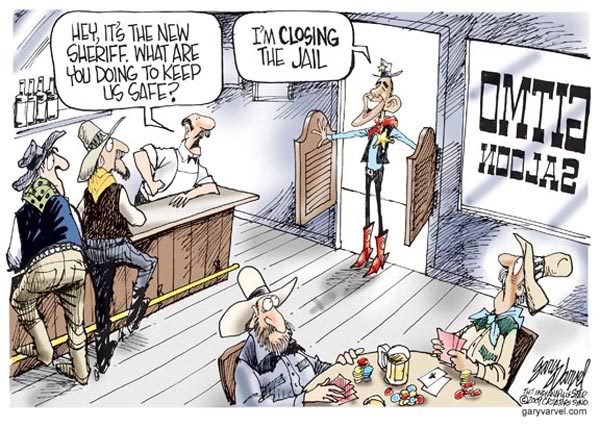
On his first day as President, Barack Hussein Obama promised to “close Gitmo.”

Historical Context and Gitmo’s Role:

The US military detention facility at Guantanamo Bay, Cuba (Gitmo), was initially established as a response to international crises but was repurposed after 9/11 to detain unlawful combatants from Afghanistan, individuals intent on perpetrating acts of terror against the U.S. and its allies. The facility was operated with a directive to treat detainees within the spirit of the Geneva Conventions, as articulated by then-Secretary of Defense Donald Rumsfeld, ensuring dignity and respect for prisoners, which was confirmed by international observers like those from the International Committee of the Red Cross.

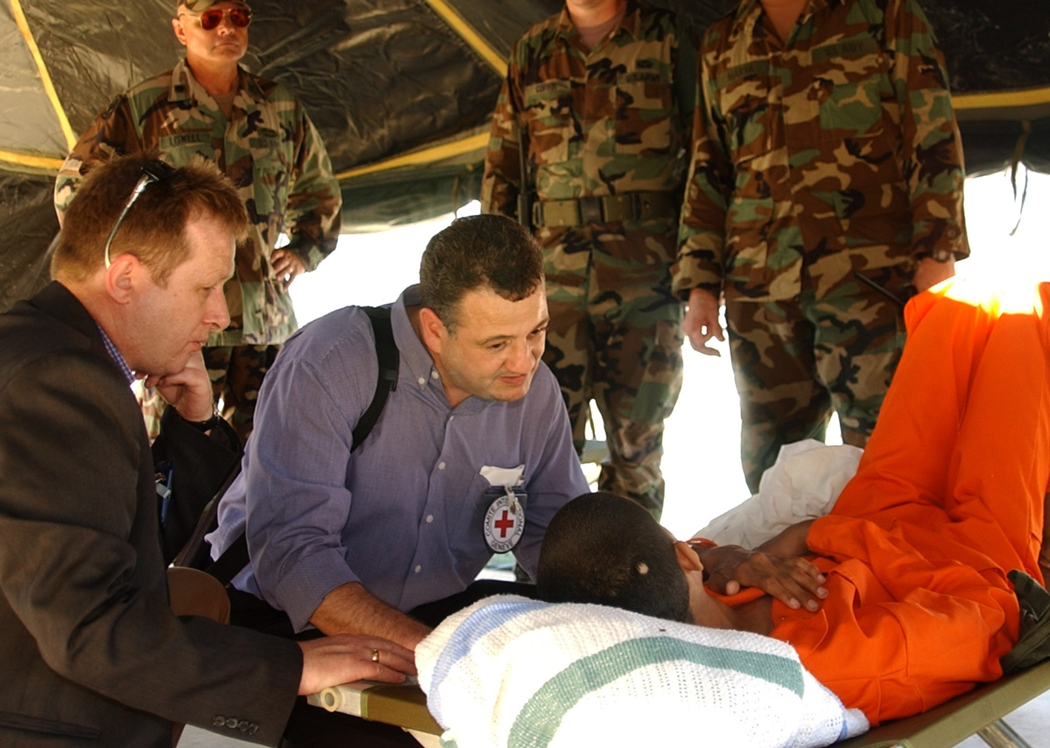
Swiss ICRC physicians interviewing a Gitmo detainee, Camp X-Ray, Guantanamo Bay, Cuba, January, 2002. They told me, “No one does [detention operations] better than the US.”

The Risks of Releasing Terrorists:

Releasing known terrorists, particularly those with direct links to al-Qaeda and Osama bin Laden, sends a message of weakness at a time when terrorist threats, including attacks like those in Germany, New Orleans, and Israel, underscore the persistent danger posed by radical Islamic terrorism. The statistics are alarming: of the over 750 detainees released from Gitmo, 30% are known or suspected to have returned to terrorism, suggesting that the threat these individuals pose does not necessarily diminish with release.

President Barack Hussein Obama traded an admitted traitor for five Taliban leaders.

Legal and Moral Considerations:

The Law of War allows for detention of unlawful combatants as well as POWs, without charge or trial, until hostilities cease. However, the treatment and release of these detainees have been influenced by political pressures and evolving legal frameworks, notably the Military Commissions Acts of 2006 and 2009, which have granted detainees rights akin to those in civilian courts. This shift contrasts with historical precedents like Operation Pastorius, where swift military justice was administered to German saboteurs during WWII.

Executed German saboteurs, denied habeas corpus and tried by military commission (tribunal). None had hurt a fly nor destroyed any property, they merely had the means and intent to do so, in violation of the Geneva Conventions and Law of War. What’s different now?

The moral argument against torture or harsh treatment was somewhat overshadowed by the effectiveness of Enhanced Interrogation Techniques (EIT) in obtaining life-saving intelligence, though these practices were later discontinued. Yet, the comparison between Gitmo’s operations and the brutal treatment of captives by terrorist groups like ISIS or Hamas starkly underlines the ethical disparity.

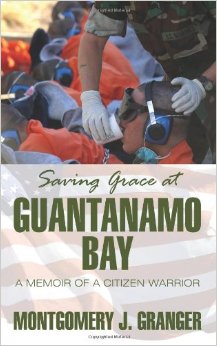
The author’s memoir, based on his experiences as the Joint Detainee Operations Group US Army Medical Department officer, Joint Task Force 160, FEB-JUN 2002.

Current Threats and Global Implications:

The recent spate of terrorist activities globally, including the Hamas attacks in Israel, challenges the notion of “peaceful Islam” and forces a reevaluation of policies like detainee release. The narrative of Islamophobia versus genuine security concerns becomes more pronounced when considering the historical expansionist nature of Islam and its doctrinal roots in conquest, as seen through the actions of Muhammad and the spread of Islamic rule over centuries.

Political Islam.

Conclusion:

Releasing known terrorists during the Global War on Terror not only potentially endangers national security but also undermines the moral and strategic efforts of those combating terrorism. It raises questions about the commitment to the war’s objectives and the safety of citizens worldwide. In an era marked by increased terrorist activities and the ideological spread of radical Islam, such actions could be seen not just as misguided but as potentially treasonous, especially when the lessons from past conflicts and current threats are so evidently clear. The decision to release these individuals should be critically examined in the context of ongoing global security challenges.

Montgomery Granger is a retired major in the US Army, and author of “Saving Grace at Guantanamo Bay: A Memoir of a Citizen Warrior,” and narrator of the short YouTube documentary film, “Heroes of GITMO.”

This blog post was assisted with the use of Grok.

Forget everything you thought you knew about money

Forget everything you thought you knew about money.

In the end, your monetary system should be a barter system, exchanging one thing of value for another thing of value. That’s fair and equitable.

That’s how the monetary system of the United States was imagined. With Roger Sherman, member of Congress, monetary scientist and in favor of tariffs and a national bank, helped write the finance sections of the Constitution, Article I, Sections 8 & 10.

These passages establish the who, what and how of our monetary foundation, which included weights and measures, gold and silver as a backing for our currency and Congressional control.

Where we went wrong was in allowing private banking interests to confiscate the wealth of our nation with the Federal Reserve Act of 1913. The Federal Reserve (FED) is neither federal (it is listed as a private business) nor a reserve (any gold it holds is not ours) of anything, and it is owned by US and global banking interests, not the American people. The shares of the FED cannot be bought on the market or sold but earn interest on debt owed by every US citizen of the bankrupted United States, payable to the owners of the FED.

By 1971 the gold standard was gone, and so was the promise to pay in lawful money on our currency, once “US Notes,” now “Federal Reserve Notes” (a monetary “note” is a promise to pay, not payment in and of itself). The dollar, which was a measure of a certain amount of gold or silver, became the thing for which it was a measure.

US Fifty Dollar Gold Certificate – Payable in Gold Coin

Think of a gallon becoming milk instead of a gallon of milk. Absurd, right? Not if you change things over generations.

Today, our all-debt money system works because we have been conditioned to think and believe that the paper money or the “dollars” we spend have value. In fact, they have only psychological value, where once they held intrinsic value, like in a true barter system.

But now, because about 90 percent of all M1 (money in circulation) is zeroes and ones (digital), it can be created out of thin air, based on imagination, not a tangible thing.

Why not return to a gold standard and use precious metals to back our money? Currently, that would be impractical, as these things are sold as commodities, which rise and fall in value based on market pressures, supply and demand. You would need any country willing to trade with us to agree on a standard weight, measure and value of these metals for a legitimate monetary system to work.

Small gold nuggets in an antique measuring scale

So, what’s with crypto and Bitcoin? These are simply notional currencies, just like the digitized dollar, only they pretend to have value, again, based on market pressures of supply and demand.

Bitcoin fans would argue that because there is a finite amount of Bitcoin, 21 million “coins,” they will hold and increase in value. Bitcoin is “made” when “miners” solve cryptographic puzzles to add new blocks to the blockchain (a shared, immutable ledger that facilitates the process of recording transactions and tracking assets in a business network). This process rewards them with new bitcoins and transaction fees. Over time, the issuance of new bitcoins decreases, ensuring a finite supply. Bitcoin mining takes a lot of energy and physical assets, which they say adds to the legitimacy of the process, which is decentralized.

But imagine a Native American trading in wampum (seashells), being told there was a new money, but you can’t touch, taste, see, smell or make nice clattering sounds with it!

Native American Wampum – crafted seashell beads used as currency.

Bitcoin works now only because laws allow it. But wait and see, at some point it will become regulated. Why? Because the government always gets its cut. Corrupt politicians and the rich elite can’t pass up the temptation to make money by creating something out of thin air, just like our former fractional reserve banking system.

Banks in this system needed only have a “fraction” of the money on hand in order to loan out much more, say reserves of $1,000 in order to loan out $9,000. That’s right! They could create $9,000 out of thin air and then loan it out at interest, making free money for themselves. The more they loan, the more they earn. But the interest on that $9,000 was never created. What does that mean to a monetary system?

If the interest on a loan is never created, then at some point someone has got to default on their loan because there isn’t enough money in circulation to accommodate the repayment of all loans plus interest, it means the money has to come from somewhere, but where? Enter the government and the FED. The more the government spends, the more money there is in circulation. The more government borrows, the more interest is owed, causing inflation.

But, news flash! Since March 2020, the fractional reserve amount required of FED member banks is now ZERO PERCENT. That’s right, a bank is allowed to loan money it does not have, all of it, creating a bonus of interest payments for itself.

Member banks have to “buy” FED stock equal to 6% of their paid-up capital and surplus. But they only have to put up 3% to the FED; the other 3% is “callable.” That entitles the member bank to dividends from earned interest on government securities, but only up to 6%.

Most people think banks can only loan out what they keep on deposit from checking and savings accounts. The truth is, checking and savings accounts are bank LIABILITIES. That’s right, it is money they OWE, so they can’t spend it or loan it out because it’s not their money. Banks only make money on fees and interest on loans and other holdings, and dividends from FED stock.

Shocked? Did you never learn this in school? This system guarantees that the wealthy get wealthier. It guarantees that some percentage of borrowers will always end up in default, losing their loan collateral to the banks.

That’s what happened in the housing bubble burst in 2008. Home loans were cheaper than dirt and loan officers were told to give, give, give, so that when they borrower defaulted they could collect, collect, collect. Only when the defaults rolled in did people simply walk away from loans, leaving the loaning institutions in the lurch and failing, but with lots of real estate no one could afford!

Two of the biggest loaners (and losers) were government loaning institutions, affectionately known as Freddie Mack and Fannie Mae. The government should only be involved in the loan business if the government owns the central bank. Ours does not. Ours borrows from the private central bank known as the FED.

That’s right, We the People used to own our money system, controlled by Congress, our representatives, whose feet we could hold to the fire if things got out of control. No more. If you ask your congressional representatives about our money system they will refer you to the Federal Reserve, when they should be referring you to the Constitution.

Roger Sherman, one of the Founding Fathers and a signatory of the Declaration of Independence, played a critical role in shaping the financial and monetary principles of the United States. His views on monetary policy, often rooted in economic pragmatism and fairness, align with the constitutional provisions in Article I, Sections 8 and 10, which govern Congress’s powers over money and the monetary limitations on states. Let’s delve into these topics:

Roger Sherman’s Perspective on Money

Advocate for Sound Money:

Sherman was a proponent of “sound money,” meaning money backed by tangible assets like gold or silver.

In his 1752 pamphlet, A Caveat Against Injustice, Sherman warned against the dangers of fiat money (currency not backed by physical commodities) and decried the unfairness of paper money schemes that often led to inflation and economic instability.

In the beginning, gold smiths charged owners of gold to keep the metal safe, and issued receipts that the owners began to use as currency in the economy. After a while, gold smiths, or our first bankers, learned they could create receipts for gold they did not have, and then spend them into the economy. Eventually, short bankers were hung from tall trees once owners of gold discovered the bankers had created false receipts which were brought in, reducing the amount of gold on hand.

Principles of Honest Trade:

Sherman believed that money should be a stable medium of exchange and a store of value to ensure fairness in trade and prevent fraud or devaluation.

Article I, Section 8: Monetary Powers of Congress

This section grants Congress the following powers relevant to monetary science:

“To coin Money, regulate the Value thereof, and of foreign Coin”:

Congress holds the exclusive authority to mint coins and establish their value, creating a uniform national currency.

This clause aims to standardize currency across states, preventing the chaos of competing currencies and varying values.

“To provide for the Punishment of counterfeiting the Securities and current Coin of the United States”:

Counterfeiting disrupts economic stability, and Congress’s power to penalize it upholds the integrity of the monetary system.

Relevance to Sherman’s Views:

Sherman’s insistence on precious metals (gold and silver) as the standard for currency aligns with the Constitution’s granting of monetary authority to Congress to ensure reliability and stability in currency value.

Article I, Section 10: Monetary Limitations on States

This section restricts state monetary practices:

“No State shall… coin Money; emit Bills of Credit; make any Thing but gold and silver Coin a Tender in Payment of Debts”:

Prohibition on State Currencies: States cannot issue their own currency or print paper money (bills of credit). This prevents the monetary fragmentation and instability experienced under the Articles of Confederation.

Gold and Silver as Legal Tender: States are limited to gold and silver as legal tender for debts, reflecting Sherman’s argument that precious metals are the most stable and just form of money.

Rationale:

These restrictions centralize monetary authority under Congress to ensure uniformity and prevent inflationary policies or economic manipulation by individual states.

Monetary Science Implications

Standardized Currency:

By centralizing the creation and regulation of money under Congress, the Constitution ensures a single, standardized currency for the nation. This promotes economic efficiency and trust in the monetary system.

Intrinsic Value of Money:

Sherman’s preference for gold and silver reflects an intrinsic value approach, where the monetary unit derives its worth from physical commodities. This contrasts with modern fiat currencies, whose value is based on government backing and public trust.

Inflation and Stability:

The framers’ restrictions on states and emphasis on gold and silver were responses to the rampant inflation caused by overissued paper money during the Revolutionary War period.

The Role of Congress:

Congress’s power to regulate currency values ties into its broader economic responsibilities, such as managing interstate commerce and the national debt.

Roger Sherman’s Legacy

Sherman’s advocacy for a stable, commodity-based monetary system influenced the framers’ decision to enshrine gold and silver as the monetary standard for states. While the U.S. has since shifted to a fiat currency system (with the Gold Standard abandoned in 1971), Sherman’s principles highlight the foundational goals of fairness, stability, and trust in the monetary system.

The principles codified in Article I, Sections 8 and 10 continue to reflect the balance between central monetary authority and limitations designed to prevent economic instability—a balance Sherman deeply cared about.

Yet with the FED in charge, all profits or “dividends” paid to the holders of Federal Reserve stock from interest paid on government securities and the National Debt go to banking interests, not the American people.

That has got to change.

Our money system was designed to do the work of economic stability and prosperity for the people, not the banking interests. Certain of our Founding Fathers were concerned about this, including Thomas Jefferson.

We need to reclaim our money system from the FED and design a legitimate barter system based on an agreed upon gold (and silver) standard.

Remember that Wall Street is merely Las Vegas without the lights. Adults are entitled to their entertainment, and if you choose to spend your hard earned cash on speculation, that’s your choice, but the average American citizen should be allowed to avoid speculation and invest in their future using solid, accountable, stable currency that will hold its value.

We need to avoid the gambler’s temptation for crypto and Bitcoin, and stick with and strengthen the dollar, returning to US Notes and a true United States central bank that is of, by and for the people, dedicated to life, liberty, property and the pursuit of happiness.

Tell your congressional representatives that you are “Mad as hell,” and you’re “not going to take it anymore!” They, Congress is our “legitimate avenue of redress of [our] grievances.” Let them know who you are, what you expect, and that you will be following up and voting according to their response and action.