Therabot: A New Hope for Veteran Mental Health

The veteran suicide crisis, claiming 17 to 22 lives daily since 9/11, demands innovative solutions. My recent blog post, “Ending 17 Veteran Suicides Per Day,” explored the urgent need for accessible, effective mental health interventions. Today, we turn to a promising development: Therabot, an AI-powered chatbot designed to deliver psychotherapy. In an exclusive email interview, Dr. Michael V. Heinz, a psychiatrist, Dartmouth researcher, and U.S. Army Medical Corps Major, shared insights into how Therabot could transform mental health support for veterans. His vision offers hope—grounded in evidence, compassion, and cutting-edge technology.

What Is Therabot?

Therabot is an expert fine-tuned chatbot crafted to provide evidence-based psychotherapy. Unlike generic AI, it’s built to forge a therapeutic bond, creating a safe, stigma-free space for users. Dr. Heinz explains, “In our trial conducted in 2024, we found that Therabot reduced symptoms of depression, anxiety, and eating disorders.” This is critical, as uncontrolled mental health symptoms often fuel high-risk behaviors like suicide and self-harm. The trial also revealed users felt a “high degree of therapeutic alliance” with Therabot, a pivotal factor in ensuring engagement and sustained use.

For veterans, this therapeutic bond could be a lifeline. The ability to connect with an AI that feels empathetic and reliable—available 24/7, regardless of location—addresses the logistical barriers that often hinder care, such as limited access to mental health professionals in remote postings or during erratic schedules.
A Lifeline Across the Military Lifecycle

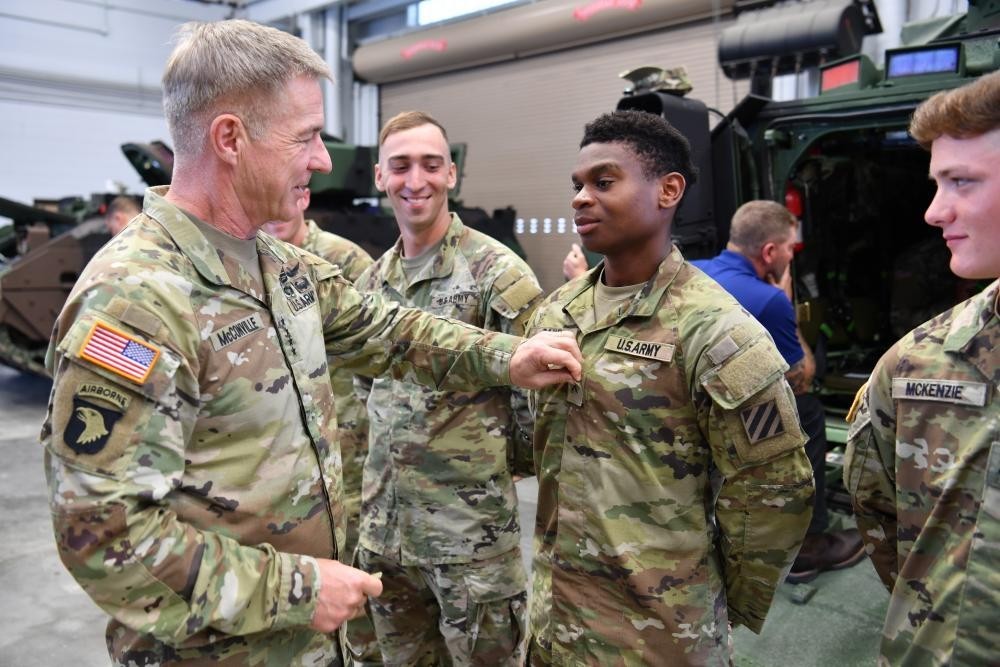
Therabot’s potential extends beyond veterans to recruits and active-duty service members, offering continuity of care throughout a military career. “One thing that can make mental healthcare difficult currently among recruits and active duty is availability and time constraints of mental health professionals when and where help is needed,” Dr. Heinz notes. “Therabot addresses both of those constraints as it is available all the time and can go with users wherever they go.”

This fusion of care is particularly compelling. Large language models like Therabot excel at retaining context and synthesizing vast amounts of personal history. Dr. Heinz envisions, “The memory capabilities and contextual understanding of these technologies… can offer a tremendous amount of personalization.” Imagine an AI that tracks a service member’s mental health from basic training through retirement, adapting to their evolving needs across deployments, relocations, and transitions. This seamless support could bridge gaps in the fragmented military mental health system, providing stability where traditional care often falters.
Addressing the Veteran Suicide Crisis

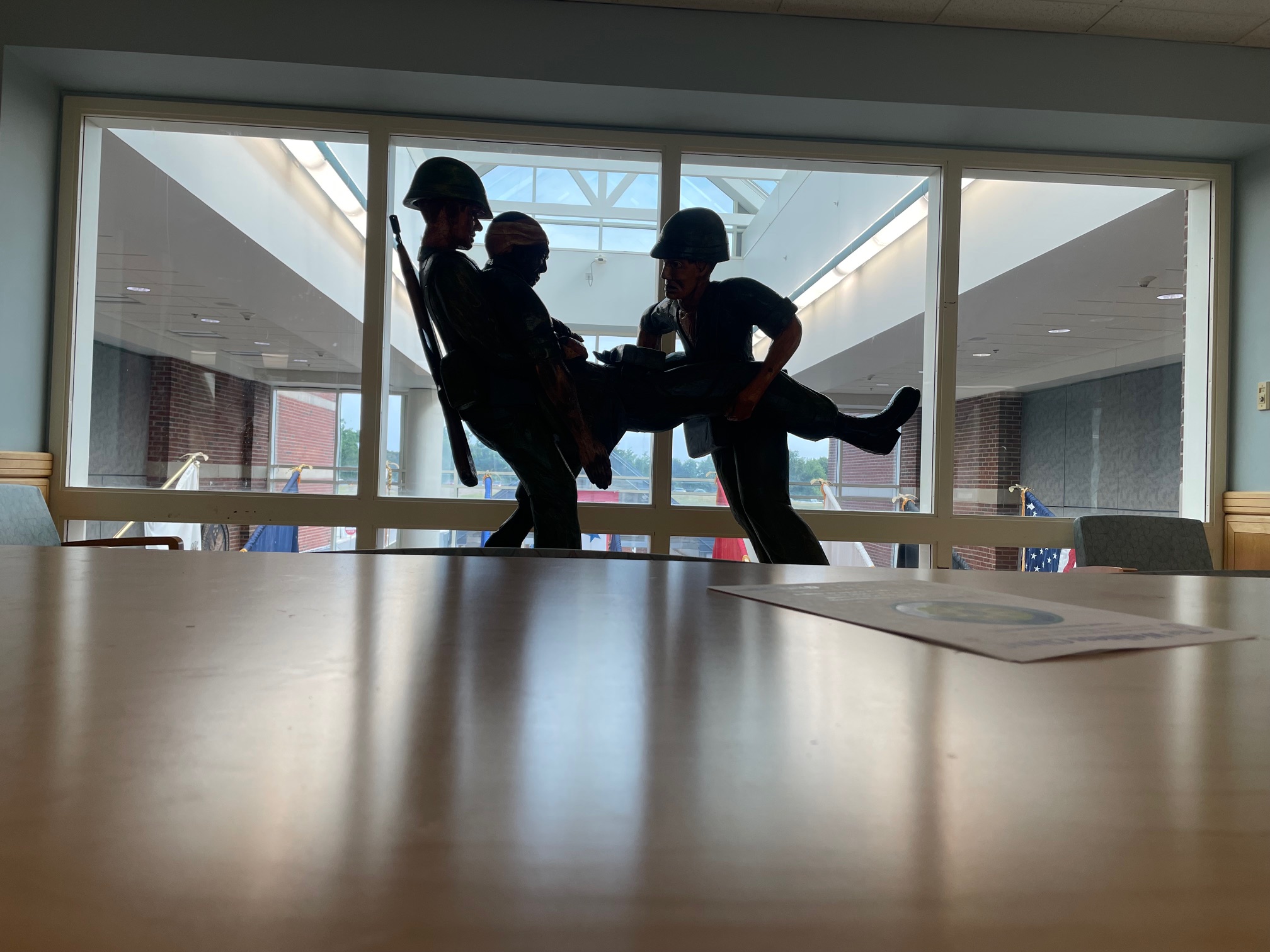
Despite the Department of Veterans Affairs spending $571 million annually on suicide prevention, the veteran suicide rate remains stubbornly high. Could Therabot offer a more effective path? Dr. Heinz outlines the costs of a meaningful trial targeting the 10% of veterans at risk for suicidal ideation:

Server and Computation Costs: High-performing models often require significant computational power, with expenses tied to the billions or trillions of parameters loaded in memory during use.

Expert Salaries: Trials need mental health professionals to supervise interactions and handle crises, alongside technical experts to maintain the platform.

FDA Approval Process: While exact costs vary, a robust trial at a VA hospital and regional clinics would require substantial funding to meet regulatory standards.

Dr. Heinz emphasizes Therabot’s cost-effectiveness compared to traditional methods, noting its scalability within the centralized VA system. “I would emphasize Therabot’s potential for transformative impact on the military lifecycle,” he says, addressing leaders like HHS Secretary Robert F. Kennedy, Jr., and FDA Head Dr. Martin Makary. Its ability to deliver personalized care at scale could redefine how the VA tackles suicide prevention.
The Power of Personalization

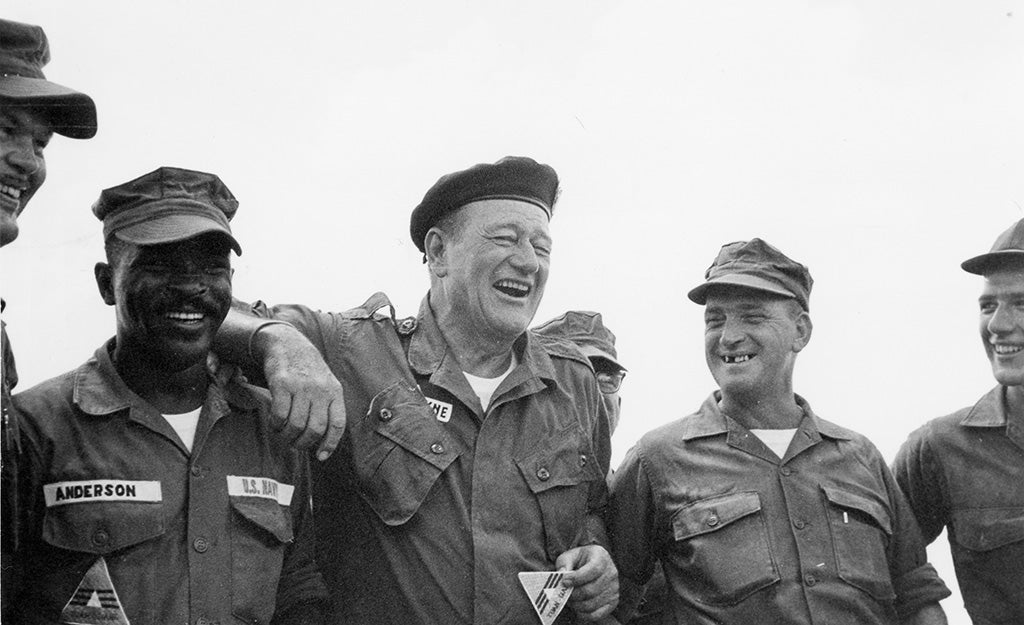
Therabot’s effectiveness hinges on its ability to engage users authentically. Dr. Heinz sees potential in customizable avatars that resonate with veterans, such as a “seasoned medic” or “peer mentor” reflecting military culture’s unique language and traditions. “Thoughtfully leveraging trusted, customizable archetypes could effectively support veterans by tapping into familiar cultural touchpoints,” he explains. This approach could foster trust and rapid therapeutic alliance, crucial for veterans hesitant to seek help.

However, Dr. Heinz urges caution: “Simulating deceased loved ones or familiar individuals might disrupt healthy grieving processes or encourage withdrawal from meaningful human interactions.” The balance lies in archetypes that feel familiar without crossing ethical lines, ensuring engagement without dependency.

For older veterans from the Korea or Vietnam eras, accessibility is key. Dr. Heinz suggests a tablet interface, citing “larger screens, clearer visuals, and easier interaction via touch-based navigation.” Features like larger buttons and simplified designs could make Therabot user-friendly for those less comfortable with smaller mobile devices.

Open-Source Collaboration and Safety

Developing Therabot requires diverse perspectives. Dr. Heinz highlights the role of interdisciplinary collaboration in finetuning models with “high quality, representative, expert-curated data” that reflects varied mental health challenges and military experiences. Collaborative evaluation of foundation models (like Meta’s Llama) also accelerates progress by identifying the best base models for mental health applications.

Safety and privacy are non-negotiable. “All data is stored on HIPAA-compliant, encrypted servers,” Dr. Heinz assures, with strict access protocols overseen by an institutional review board. This rigor applied to a military population would ensure veterans’ sensitive information remains secure, addressing concerns about AI in mental health care.

Why Therabot, Why Now?

Dr. Heinz’s passion for Therabot stems from a blend of personal and professional drives. “Through my practice, I saw how much this was needed due to the really wide gap between need and availability for mental health services,” he shares. His work at Dartmouth’s AIM HIGH Lab with Dr. Nicholas Jacobson, coupled with advances in generative AI, has fueled his belief in Therabot’s potential to deliver “deeply personalized interventions” to those who might otherwise go untreated.

His boldest hope? “That Therabot makes a lasting and meaningful positive impact on current and retired U.S. servicemembers… ultimately benefiting them, their families, their communities, and society.” By integrating a veteran’s history—trauma, past care, and mission experiences—Therabot could deliver tailored therapy, expanding access and reducing devastating outcomes like suicide.

A Call to Action

Therabot is more than a technological marvel; it’s a beacon of hope for veterans battling mental health challenges. Its 2024 trial demonstrated clinical effectiveness, safety, and user engagement, but further funding is needed for VA-specific trials and FDA approval. Dr. Heinz calls for “targeted funding that allows us to complete additional clinical testing,” urging stakeholders to invest in this life-saving innovation.

As I wrote in “Ending 17 Veteran Suicides Per Day,” the status quo isn’t enough. Therabot offers a path forward—scalable, personalized, and rooted in military culture. To make it a reality, we must advocate for funding, raise awareness, and support research that prioritizes veterans’ lives. Together, we can help Therabot save those who’ve served us so bravely.

For more on veteran mental health and to support initiatives like Therabot, visit www.savinggraceatguantanamobay.com.

Written with the assistance of Grok.

Note: Montgomery J. Granger is a retired US Army Major and educator.

Stop Veteran Suicide Now: VAGrok – The AI Lifeline Veterans Deserve

By Major Montgomery J. Granger, US Army, Retired (Medical Service) 

Vietnam Veterans Memorial: Three Veterans Statue, National Mall, Washington, D.C.

Seventeen veterans kill themselves every day—6,407 in 2022, over 130,000 since 9/11. That is a desecration of heroes, and the Veterans Administration (VA) has failed them.

I’m a former Combat Medic and then Medical Service officer (retired) who served 22 years, including a tour in Iraq, and I’ve seen the VA’s dissonance firsthand—low quality maintenance, unfinished facility projects, blank stares, “Last name? Last four?” It’s a meat grinder of lost MRIs, 90-day claim delays, and bean counters slicing us into percentages.

Vets hurt: helpless + hapless + hopeless = suicidal depression, and the system shrugs. Enough. VAGrok, an AI with the soul of Ray Bradbury’s “Electric Grandma,” can stop this now. It knows us, remembers us, guides us—beta-test it at Northport VA this spring, scale it by July, and aim for zero suicides. This is how we make American veterans great again (MAVGA).

A System That Forgets

Walk into Northport VA on Long Island—my home turf, servicing 112,000 vets—and it’s a time capsule of neglect. Nearly 100 years old, it’s got failing roofs, gaping construction holes, and a “temporary” HVAC unit for the homeless facility that’s been “temporary” since before 2018. A $21 million repair project announced that year drags on, with front entrance and valet parking torn up for years—it looks as if the contractors simply walked off the job. Inside, stained ceiling tiles, grimy corners, urine scent in the bathroom greet you. I spent half my 36-year education career managing school facilities; a job like that parking lot takes 6-8 weeks, not 6-8 years. This isn’t mismanagement—it is apathy. 

Northport (Long Island, NY) VA; January 2025; project approved 2018.

Military personnel are trained to notice details—“FRONT TOWARD ENEMY” on a Claymore mine, the difference between “SAFE” and “SEMI” on a weapon. In Basic Training, we scrubbed floors with toothbrushes; drill sergeants measured our underwear folds with rulers. In combat, triage was life or death: this one’s expectant, that one’s savable. Details saved lives. So, when I see potholes and crumbling asphalt, abysmal parking, weeds instead of grass, unsmiling greeters, and the same “Last name? Last four?” every visit—no eye contact, no memory—it screams neglect. Vets notice. We’re wired for it. And it cuts deeper when the care is as fractured as the building. Perceptions precede and predict reality.

The Cost of Disconnection

The VA is a connect-the-dots puzzle with missing and misconnected dots. Continuity’s gone—many visits are a reset. Specialists don’t talk, MRIs vanish, and intake forms ask, “How many blasts? How severe?” as if we kept a tally in the chaos. I gave 100% in Iraq—24/7/365—not 20% for tinnitus, 10% for PTSD. Lincoln’s promise—“to care for him who shall have borne the battle”—didn’t mean to carve us up. Yet civilians, often with no combat scars, decide our fate, slicing us into percentages. We didn’t question our orders to go to war; why are we questioned about what it did to us? 

Last year, the VA spent $571 million on suicide prevention. Results? Still 17 a day. Posters scream, “Veterans in crisis, call 988, press 1.” In uniform we weren’t built or trained to have a “crisis,” we were trained to stay cool under fire, no matter the circumstance – we hurt. “Hurting? Call 988,” would hit closer. Or even: “Thinking of hurting yourself? Call 988.” On the battlefield, we yell, “Medic!” or “Corpsman!” Walking into a VA is the same as that – it’s a call for help. But the system is hard-of-hearing. It doesn’t know us. Trust is on life support—the proof is in the body count. Young vets (18-35) kill themselves at triple the civilian rate; female vets, 2.5 times higher. Older vet suicides are climbing, too. If 17 Tesla customers died daily over car frustration, Elon Musk would stop the line, fix it, and then roll out a solution – immediately. Why hasn’t the VA done that? 

Vietnam Women’s Memorial, National Mall, Washington, D.C.

VAGrok: The Electric Grandma We Need

Imagine this: I walk into Northport VA. An app—a greeter or a large message screen—lights up: “Welcome Major Granger, your neurology appointment is in the basement. Need a map?” A map-app opens in my or a loaner device I carry with me wherever I go there. Biometrics, like facial recognition, spot me, pull my record—tours, TBI, meds, burn pit exposure, every specialist’s note. If I say “coffee,” it guides me to the kiosk, then nudges me to my appointment with a 15-minute heads-up. The doctor’s ready—no lost files, no guesswork—just a plan built from every detail of my care. VAGrok remembers me. It won’t forget. It cares, just like . . . .

Ray Bradbury’s “Electric Grandma,” from I Sing the Body Electric, who was an AI marvel—a tireless companion, healing a grieving family with memory, intuition and love. VAGrok would be that for vets. It would be an AI Medic/Corpsman with a soul, triaging suicide risk in real time—reading my face for pain or anguish. It’s not cold tech; it’s a wingman. The know-how exists—xAI could build it, hooking into VA systems with a linear, cumulative memory. No more silos, no more “prove it.” It sees us whole, restoring trust one vet at a time. And trust is a key to breaking at least one of the three H’s of suicidal depression (helpless, hapless, hopeless).

Eliminate the Waste and Abuse of the Disability Compensation Verification Process

Vast amounts of time, money and veteran lives to suicide are tied up in the process of verifying “service related” injuries and illnesses. I’m surprised they bury us whole.

If a veteran’s status is verified with a DD-214, then CARE for him/her. No one said, “Hey, Sarge, I only want to give 20% on this mission, OK?” We gave 100%, every time, 24/7/365. We didn’t question our orders to go to war, so why are we being questioned about what it did to us? The good parts are connected to the injured parts.

We made an ALL-IN bet for everything up to and including our lives. Those who lost that bet are in the ground. The rest of us are still fighting, still struggling, and 17 PER DAY are still DYING.

Continuity of care with VAGrok can prevent that – stop it cold.

Why VAGrok Works—And Who Can Make It Happen

This isn’t just about care—it’s survival. Helplessness fades when VAGrok knows your fight; haplessness lifts when it greets you with respect; hopelessness dies when it shows a path. The VA has Disney-5 star-level hospitality potential—treat us like guests, not numbers. Assume eligibility: verify my DD-214 and then care for me, no hoops, speed bumps or red tape. Upgrade facilities into welcoming hubs—fitness centers, support groups, green lawns (I don’t even care if it’s artificial turf as long as it’s clean and green), a community—not a venue of despair. Use military Guard and Reserve medics, specialists, nurses and docs who get us to fill or supplement civilian VA staff. Shift the narrative: seeking help isn’t weakness; it’s strength. 

Combat Medic Memorial, US Army Medical Department and School, Ft. Sam Houston, TX.

Donald Trump could champion this—bold, fast, “Make American Veterans Great Again.” JD Vance (Marine) brings Semper Fi trust; Pete Hegseth (Army) nails mission-first details; Doug Collins (Navy) demands efficiency. Elon Musk and xAI? Disruptive, scalable tech—this is a trip to the moon! My congressman, Rep. Nick LaLota (NY-1), sees VA Northport’s challenges. Beta-test VAGrok there—112,000 vets, ground zero. Launch April 2025, scale by July. Cost? Pennies next to 17 lives daily. Result? Zero suicides, a VA we trust and a promise kept. 

Restore trust in the VA and myriad benefits emerge: low or no suicides, improved retention, positive recruiting point (we will care for you if and when you need us).

A Cry From the Battlefield

I retired in 2008 after 22 years—three deployments, Iraq in ‘04-’05. Now I’ve got hearing loss, tinnitus, sleep apnea, heart attack in 2013, PTSD, TBI(?) and a burn pit registry entry. My first claim’s in, but why should I have to prove it? A third of my life was service; I had none of this before. The VA’s budget can’t flex—new claims, deaths, suicides shift yearly, beyond a 10-20% buffer. Assume my hurt’s from service, just like the justice system assumes I am innocent, stop treating me like I’m guilty before a trial, my trial was combat—treat me whole, not parts. Honor Lincoln’s words, not bureaucratic labyrinths.

17 vets PER DAY can’t wait. Power brief now—Northport VA, Trump Tower, Pentagon, D.C., Mar-a-Lago, let’s go!

VAGrok is the Medic/Corpsman we’d call in combat. Deploy it now. Stop the dying

NOTE: Major Granger is a three-times mobilized, retired US Army officer, trained and served as a Combat Medic/Medical Specialist for five years, and then 17 years as a Medical Service officer (70B), who, on deployments to Gitmo and Iraq with Military Police Enemy Prisoner of War units, was responsible for coordinating medical, preventive medical and environmental services for detention operations. On the civilian side, he earned a BS Ed. From the University of Alabama in Health, Physical Education, Recreation and Dance, an MA degree in Curriculum and Teaching from Teachers College – Columbia University, and School District Administrator certification through the State University of New York at Stony Brook. While at Columbia University, he taught “Sport” at the Buckley School for Boys on the Upper East Side of Manhattan, where “Donnie” Trump, Jr. was one of his students. He taught health and physical education, was a coach and Dean of Students in the New York City public high schools for 8 ½ years, moved to Long Island and then began a career as a school district administrator. Interrupted on 9/11/2001, he served on three subsequent deployments that saw him separated from three young boys, his wife and career for 2 ½ out of the next five years. When he returned, he had two more children, and worked in Suffolk County public school districts, serving as district administrator for Health, Physical Education, Athletics, Health Services, Security and Facilities. He and his wife of 31 years retired in 2022, when he began to manifest multiple health issues and started exploring the VA and its services. PS – In the 1990’s he was a staff officer with the 4220th US Army Hospital Reserve Unit that performed weekend drills at the Northport VA. PPS – He was a Disneyland (California) Davey Crockett (war) Canoe Host in 1986-87, and attended Disney University (orientation), and knows the Disney business model and hospitality secrets. PPPS – Major Granger is author of “Saving Grace at Guantanamo Bay: A Memoir of a Citizen Warrior,” about his time as the ranking US Army Medical Department officer with the Joint Detainee Operations Group, Joint Task Force 160, Guantanamo Bay, Cuba, from FEB-JUN 2002, and narrator of the YouTube short documentary film, “Heroes of GITMO,” based on his book.

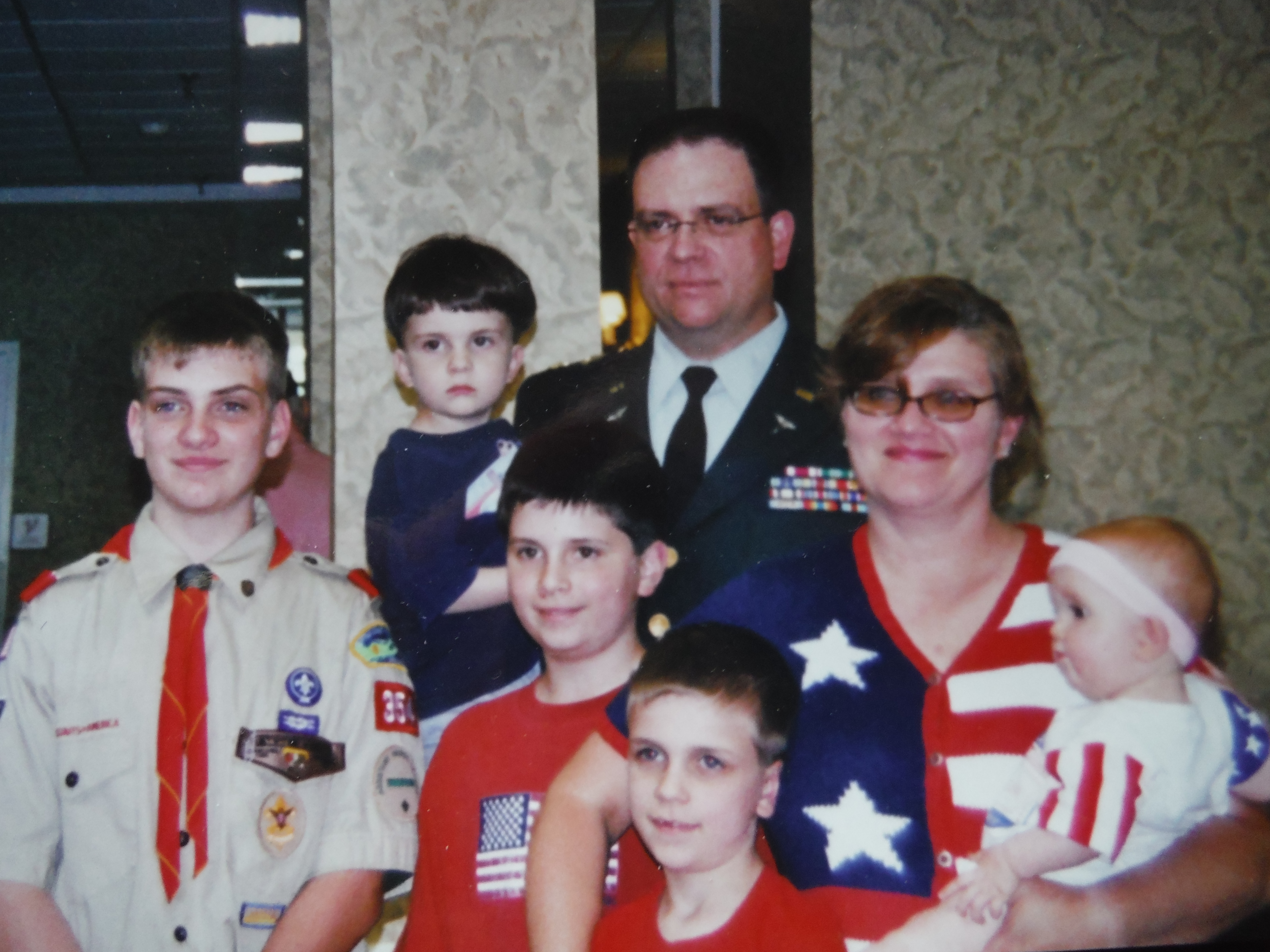
Maj. Granger and family, Flag Day, 2008.

Fix Veterans’ Care Now – It’s Life or Death

We didn’t question the order to go to war, so why are we questioned about what the war did to us? 

We wrote a blank check and pledged our sacred honor for our country, but the Department of Veterans Affairs (VA) isn’t helping enough. Since September 11, 2001, over 130,000 veterans have ended their own lives.

One suicide is a tragedy. What do you call one hundred and thirty THOUSAND?

We need to fix the VA now because our lives depend on it.

In 2024, the VA spent $571 million to stop suicides. But where did the money go? Did it save anyone? I don’t see enough proof that it’s working. Worse, when we ask for help, the VA makes us tell our war stories over and over again. It hurts, and it’s not fair. The people deciding if I get help often never saw a battlefield. This messed-up system might be why so many of us feel lost, hopeless, helpless and then give up.

The numbers make me sick. Younger veterans, aged 18-35, are almost three times more likely to die by suicide than people who didn’t serve. For women veterans, it’s 2.5 times higher than other women. Even older veterans like me are hurting more than ever. If this happened at a company—where people were so miserable they hurt themselves—everyone would yell for change. I’m yelling for change now!

Here’s How I’d Start to Fix It:

Trust Me First: When I prove I served (verified DD-214), the VA should help me right away. I shouldn’t have to fight to show my pain came from war. I earned more respect than that.

Learn the Disney Way: Disney makes people happy with the attitude of second-to-none guest service and fun. The VA could train its administrators and staff through the Disney Institute to learn to treat me in a way that makes me feel like I matter and makes me smile.

Use Cool Tech: Things like facial recognition could say my name when I walk in and get me help faster in a personalized (and secure) way. Now, it’s “Last name? Last four social?” Without even looking up.

Make the VA Appealing: Turn VA facilities into welcoming experiences that project care: clean and green, curb appeal, emphasis on maintenance, warm/cool and comfortable, like coming home—like a resort. I’d want to go there, and it might sooth my stress.

Help All of Me: Don’t just fix my body—fix my mind, too! Focus on holistic wellness, not just medical treatment. Add gyms, pools, courts, fields, recreation, activities and groups where I can talk with other veterans. It could make me stronger, more fit and happier.

Be Honest and Quick: The VA needs to show where my money goes and stop making me wait years for help, or taking years to fix things. Waiting has left me and others with nothing—sometimes not even a home.

Bring in Military Helpers: Doctors, nurses, medical specialists, Corpsmen and medics from the Active Duty, National Guard and Reserves could work at the VA. They get what I’ve been through because they’ve been there too. Rotating in military medical personnel could also help retention and recruitment. If they see quality care up close and personal, they know what they are getting themselves into.

Make Asking for Help Normal: Don’t call the suicide hot line a “crisis line.” Just say, “Hurting? Call 988.” I’m not weak for needing help—I’m brave for asking. On the battlefield, one can hear a cry for help: “Medic!” “Corpsman!” That’s what we’re saying when we finally gather the courage to walk in through the front door.

We honor those who never came home by caring for those who did.

We can’t wait anymore. The VA promised to take care of every veteran with respect, dignity and urgency. Lincoln said, “Care for those who bore the battle,” not “Oh, only those parts the soldier can prove were affected by the battle, and oh, by the way, take a number.”

The VA cuts us up with a percentage of “disability” compensation and care. Imagine that? A percentage. Is that what we should have said prior to taking the hill? “Hey, Sarge, I only want to risk 10%, is that OK?”

It’s amazing that they bury the whole person, and not just the percentage they say died because of the war.

My question isn’t going away—I am raising my voice to hopefully make things happen!

We made an all-in bet for everything up to and including our lives. It’s time the VA made good on that bet.

Our dead comrades can’t tell you how they hurt, but we can. Please listen to us now.

Retreat

Retreat

Retreat is the hardest sound a soldier hears.

The bugle calls and pierces a warrior’s heart.

Forward, ever forward! His courage calls!

Moving back is antithetical to everything he knows.

When he is called, however, he goes,

Because a good soldier always does what he’s told,

Regardless of how his heart feels.

“Live to fight another day,” the shrill sound beckons.

“But this was my day to die,” the warrior thinks.

“This was a good day to die.”

– m.j.granger ©2018

Congress Reacts to Military Mental and Brain Health Issues: Will You?

When U.S. senators from two political parties come together to introduce legislation, without argument or hesitation, one should take notice.

In the current climate, when political opposites attract one might think money, prestige, or influence are involved, but in the case of the bill to improve military mental health evaluations for service members, Sen.s Rob Portman (R-Ohio) and Jay Rockefeller (D-W.Va.), no such benefits await them. They appear to have only altruistic and patriotic motivation for seeing that our heroes receive the comprehensive medical attention they need and deserve.

The Medical Evaluations Parity for Service Members Act of 2014 (S. 2231 or MEPS Act,) states that before anyone can become enlisted or receive a commission in the armed forces of the United States they shall receive a “mental health assessment” that will be a “baseline for any subsequent mental health evaluations.”

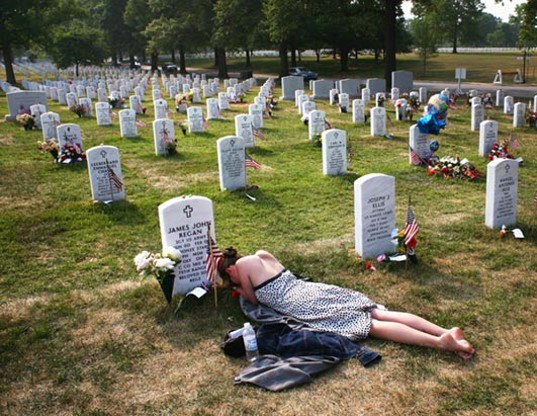
Alex Burgess gets emotional while visiting the gravesite of an old friend who was killed in Iraq, in section 60 at Arlington Cemetery, May 27, 2013 in Arlington, Virginia. For Memorial Day President Obama layed a wreath at the Tomb of the Unknowns, paying tribute to military veterans past and present who have served and sacrificed their lives for their country.  (Photo by Mark Wilson/Getty Images)

This would bring mental health and “brain health” issues to parity with the physical evaluations conducted prior to admittance into the military.

If passed, the law would also include a comprehensive physical and mental and brain health evaluation when the service member comes off of at least 180 days of active duty or separates from the service. This would include screening for Traumatic Brain Injury, recently found to cause most instances of Post Traumatic Stress, which could lead to Post Traumatic Stress Disorder. TBI is a “brain hurt” as opposed to a “mind hurt” issue that is more physiologic than mental.

We are finally addressing TBI issues, the signature issues of our returning heroes. Brain injury is not synonymous with “mental illness,” and the treatments for mental illness are often detrimental to TBI, hence the distinction is very important.

It is estimated that over 400,000 Global War on Terror veterans suffer from TBI, and most go undiagnosed and untreated, which leads to PTS and then possible PTSD.

AP photo.

Veteran and former U.S. Army Military Police non-commissioned officer, Curtis Armstrong was given a routine exit physical which didn’t connect the dots between his symptoms of memory loss, headaches, and thought process problems, since identified as being associated with TBI.

We can all imagine that if you’re not looking for something, and don’t know what it looks like even if you were, you’re not going to find anything. That’s exactly what happened to Curtis, and hundreds of thousands of his comrades.

The Resurrecting Lives Foundation, founded by Dr. Chrisanne Gordon, has been trying to gain the attention of politicians in Washington, D.C., for several years now. They have a panel of experts and have been advocating for the establishment of proper screening and treatment for veterans with TBI. Moving forward, the most encouraging event to date has been the MEPS Act introduction in the Senate.

When I inquired as to the catalyst for Sen. Portman’s introduction of the MEPS bill his staff replied:

“[T]he MEPS Act is a response to the clear need for better monitoring and assessing of service members’ mental health. While recent tragedies like the shootings at Fort Hood and the Navy Yard raised the profile of these issues, the need to address it has been apparent for far too long…Last summer, Senator Portman’s [Homeland Security and Government Affairs Committee] subcommittee held a hearing on improving access to health care, including mental health care, for rural veterans. To help correct this, Sen. Portman introduced an amendment to the FY14 defense authorization bill requiring [the Department of Defense] to report on the current status of telehealth initiatives within [the Department of Defense] and plans to integrate them into the military health care system. Sen. Portman and Sen. Rockefeller also attempted to introduce language requiring mental health screenings for exiting service members. This language is now included as part of the MEPS Act.”

At the risk of seeming too giddy about these latest developments, which bring not just mental health, but “brain health” issues of military personnel into a broader light, it has been far too long that these issues have stayed in the shadows.

Soldiers like Curtis deserve better, and we as a country need to pay close attention to how we can help. Encouraging our own legislators, local, state and national, to support and pass the MEPS Act is just a start; there needs to be more resources allocated to ensuring our best and brightest are also well cared for, especially after their deployment service has ended.

AP

Among the several professional organizations endorsing this bill is the Academy of Physical Medicine and Rehabilitation. According to Dr. Gordon, rehabilitation specialists would be included in the evaluations and in the program of reintegration.

“Sen. Portman did that, inviting collaboration with the private sector – the way to solve the TBI epidemic,” she said.

We can’t afford a legacy of forgotten warriors. We cannot endure the nightmare of neglected veterans. We are better than that. We, each of us, have an obligation to care for those we depended on to protect our ideals and us. Nothing less than a full accounting of every suffering veteran should be acceptable.

The Veterans Administration can be a hero here instead of the villian. If Secretary of Veterans Affairs retired general Eric Shinseki would pay attention to what’s going on in Congress, he could beat legislators to the punch: He could ask for funds to implement the essence of the MEPS Act within VA policy and practice.

Beginning with the new fiscal year in October 2014, he could seize the initiative in the war against mental and brain health issues in the military. You could suggest this to your legislators when you encourage them to sign on as co-sponsors and then pass the MEPS Act.

It’s important to remember that enshrining mental health evaluations for military personnel in law would ensure implementation in a timely manner, but if the MEPS Act gets held up in committee or is defeated, having the VA move forward with policy and practice changes through budgetary requests for fiscal year 2015 would honor the commitment our heroes deserve and should expect.

I am the author of “Saving Grace at Guantanamo Bay: A Memoir of a Citizen Warrior,” and three times mobilized U.S. Army Reserve Major (Retired). Twitter @mjgranger1.

Fort Hood II: Negligence Beyond Atrocity

“I’m the daddy.”

“I am the daddy,” he said again as he strode into the large group instruction room at the Army Medical Department (AMEDD) facility at Fort Sam Houston, Texas. The speaker was a strapping African American Army major, wearing a flight suit, and about to teach a class on leadership to AMEDD officer basic students, several hundred of us.

“And you all are my children,” he continued.

The major explained that as a leader in the United States Army one of your primary duties was to “care for your soldiers.” The foundation of Army teamwork is the buddy team, you and one other soldier, always aware of each other’s status and state of mind.

The larger picture was that from the command point of view, commanders have ultimate responsibility for their troops. This is a sacred duty, and one that deserved the analogy presented by the major, that while in command he looked after his troops as if they were his own children.

FORT HOOD, TX - APRIL 2, 2014: General Mark Milley, III Corps and Fort Hood Commanding General, speaks to media during a press conference about a shooting that occurred earlier in the day at Fort Hood Military Base on April 2, 2014 in Fort Hood, Texas. Milley confirmed that four people were dead in the shooting, including the gunman himself. Drew Anthony Smith/Getty Images

Imagine the frustration – probably beyond comprehension if it’s not you – of a commander, or a parent, who is unable to properly care for or protect their troops or children, not because they don’t want to, or don’t have the means at their disposal, but because of political protocols manifest as anti-gun laws on military bases.

The newest active shooter incident at Fort Hood, Texas, where four are dead and 16 wounded, should renew our efforts to tell Congress to pass H.R. 3199, the Safe Military Bases Act, introduced by Rep. Steve Stockman (R-Texas) in September 2013. The bill was in response to the Washington Navy Yard shooting which took the lives of 12 Department of Defense personnel on Sept. 13, and the first Fort Hood shooting on Nov. 5, 2009, when 13 lives were taken.

Said Stockman, “The Safe Military Bases Act would allow trained soldiers on bases to carry weapons in case of a terrorist attack, to prevent further tragedies like Fort Hood and Navy Yard from happening again.”

He added that the sites are especially “vulnerable” targets for terrorists.

A nation at war cannot afford to leave its most valuable asset, its soldiers, unprotected. Even in peacetime there should be better security for those who might fall victim to a rogue shooter intent on revenge or terror. The world we live in today is a dangerous one, and to turn one’s attention away from obvious risk is negligent at best, and at worst immoral.

Soldiers are trained in the safe care and use of firearms, and in a combat zone carry their weapons and ammunition wherever they go. Doing so on military bases would be a no-brainer if practical and caring commanders were allowed to make that call.

Vehicles are checked outside of the Bernie Beck Gate, Wednesday, April 2, 2014, in Fort Hood, Texas. At least one person was killed and 14 injured in a shooting at Fort Hood, and officials at the base said the shooter is believed to be dead. (AP Photo/American-Statesman, Deborah Cannon)

In an active shooter situation, seconds matter, and it takes minutes for armed law enforcement to arrive on the scene, often too late to prevent an atrocity. And make no mistake, what happened twice now at Fort Hood and at the Washington Navy Yard were not mere tragedies. Far beyond sad accidents, they were deliberate acts that were predictable and preventable. Therefore, those ultimately responsible for the health, safety and welfare of those killed and injured are negligent.

Barack Hussein Obama is the Commander in Chief of all military forces of the United States, and therefore bears full and undeniable responsibility for the newest atrocity.

He failed to properly protect and defend our protectors, not just once, but many times, and not just here on U.S. soil. He clearly does not see himself as “the daddy.” He, his wife and two daughters enjoy around the clock armed security with the Secret Service, and rightly so, but how much less valuable are the men and women who wrote us all a blank check for everything up to and including their lives, that he would ignore incidents of violence against them when they are most vulnerable?

Until or unless all Islamists are dead, or no longer have the means or will to kill us, we must be vigilant and use all means necessary to defend and protect ourselves. That means the passage of H.R. 3199 as at least a start.

Now let’s talk about the shooter’s reported condition prior to the shooting. As facts become available we are learning that the shooter, Army Spc. Ivan Lopez, was being evaluated for Post Traumatic Stress Disorder and treated for “depression, anxiety and sleep disturbances.”

US Army Secretary John McHugh (L) listens while Army Chief of Staff General Ray Odierno speaks during a hearing of the Senate Armed Services Committee on Capitol Hill April 3, 2014 in Washington, DC. Sec. McHugh and General Odierno appeared before the committee to speak about fiscal year 2015 budget but also addressed yesterday's shooting at Fort Hood,Texas where 3 people were killed in addition to the shooter who took his own life. AFP PHOTO/Brendan SMIALOWSKI

Secretary of the Army John McHugh stated that Lopez was taking “a number of drugs,” including Ambien to help treat his symptoms, and that the special was seeing a military psychologist.

Lopez drove a truck in Iraq in 2011 and was not reported to have been involved with any combat in that tour. Lopez had a previous tour in Iraq, in 2008, but sources did not elaborate on any details from that deployment. Fort Hood base commander, Lt. Gen. Mike Milly said that Lopez had recently complained of symptoms relating to traumatic brain injury (TBI), but did not elaborate.

Founder and president of the Resurrecting Lives Foundation, Dr. Chrisanne Gordon, states on her website that TBI is the “hallmark” injury of the operations in Iraq and Afghanistan, and that only 36 percent of the estimated 400,000-plus soldiers affected get treatment for TBI at Veterans Administration medical facilities, although all are eligible.

I spoke with Dr. Gordon on the phone regarding the recent incident with Spc. Lopez, and she reminded me that TBI is a “brain hurt,” not a “mind hurt,” and that treating the physical damage of TBI with psychotropic drugs only makes the situation worse.

ivan

We have a duty to protect those who are vulnerable to attack, but we also have an obligation to take care of those who protect us.

Spc. Lopez was hurting, and in Dr. Gordon’s opinion probably “fell through the cracks” of the military medical system, which will never be an excuse for what he did, but when soldiers complain of symptoms associated with service-related injuries, they need to be properly diagnosed and then treated. The practice of throwing drugs at potential PTSD patients and TBI sufferers must end. Dr. Gordon and her colleagues need your help to continue the fight for the proper diagnosis and treatment of nearly half a million returning veterans from the War on Terror.

Please contact your congressional representatives and let them know you want H.R. 3199 passed NOW, and that you want them to do everything they can to support the proper diagnosis and care of those in the military who suffer from TBI and PTS/PTSD. We all have a responsibility to defend and care for those who defend our freedom and liberty.

NOTE: It was important to Dr. Gordon to tell me that she didn’t want her comments on TBI to be misconstrued as promoting allowing soldiers to carry weapons on military bases.

I am the author of “Saving Grace at Guantanamo Bay: A Memoir of a Citizen Warrior,” and three times mobilized U.S. Army Reserve Major (Retired). Twitter @mjgranger1

IT’S EVERY AMERICAN’S RESPONSIBILITY TO HELP OUR VETERANS HEAL (as posted by me in The Blaze: http://www.theblaze.com/contributions/healing-the-veteran-brain/)

Imagine that you volunteered to protect and defend your country. Imagine that while you were performing this heroic act you were injured. And then imagine that when you returned to those whom you fought for, you were unable to receive the care and treatment you needed to become whole again.

How would you feel about that?

Most of us have a hard time imagining those things, but few of us would agree that the returning veteran should be left without hope, drug abused, jobless, on the street, confused, suicidal or homicidal. Yet that’s what many of our brothers and sisters at arms face, as 1.3 million Operation Enduring Freedom (Afghanistan) and Operation Iraqi Freedom veterans take their own lives every day.

On Veterans Day, Its Every Americans Responsibility to Help Our Veterans Heal

Nearly half a million suffer from mild or full-blown Traumatic Brain Injury, which has recently been proven to cause Post Traumatic Stress, or it’s debilitating next-of-kin, Post Traumatic Stress Disorder.

The tragedy occurs not because you don’t care, but because not enough key people care enough to DO something about it. Recent studies have proven that even a mild brain injury can have debilitating physical effects on the brain up to and including post traumatic stress disorder.

This is a brain hurt, not a mind hurt. It needs to treated with an “integrative” approach, and NOT with psychotropic drugs, which may contribute to other problems, including suicide and homicide.

What we don’t know can kill these veterans.

Veterans and active military personnel cannot heal themselves, although their direct participation in the integrative approach is essential to their eventual improvement. This approach includes physical medicine specialists, neurologists, psychologists, physical and occupational therapists, speech therapists and social workers.

It should not include psychiatrists who overwhelmingly treat patients with mind-altering drugs that have proven ineffective in helping brain injuries or PTSD patients (because it’s a brain INJURY problem), and have in many cases just made things worse.

The education of the masses is important, but perhaps more important is the education of those who can do the most good NOW. These are state, national and local representativeshospital executivesmilitary and medical military commanders, financial and commercial leaders, and of course YOU. And you are the linchpin because you have the power to motivate your representatives and other key leaders to pay attention to this epidemic, “signature injury” of Global War on Terror military personnel.

On Veterans Day, Its Every Americans Responsibility to Help Our Veterans Heal

The Resurrecting Lives Foundation is hosting a documentary film screening for members of Congress on Nov. 12, 2013, at the Capital Visitors Center at 3:00 p.m. The documentary reveals the epidemic of TBI and provides a road map to helping the estimated 500,000 military personnel affected by this injury. You can help by INSISTING that YOUR representatives in Washington, D.C., attend this screening. Please visit the links and then share them your representatives and community leaders TODAY.

Your action and participation just may save the life of someone who risked theirs for you. If you’ve ever wondered how on earth you could possibly ever repay our brave men and women in uniform, who’ve sacrificed so much for us, well, now you have it. Remember, we honor those who never made it home by caring for those who did.