By Major Montgomery J. Granger, US Army, Retired (Medical Service)

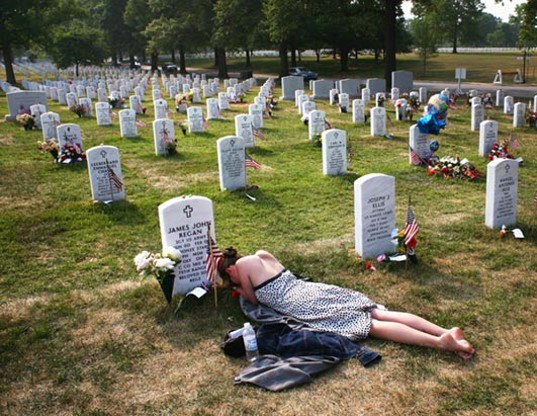
Seventeen veterans kill themselves every day—6,407 in 2022, over 130,000 since 9/11. That is a desecration of heroes, and the Veterans Administration (VA) has failed them.
I’m a former Combat Medic and then Medical Service officer (retired) who served 22 years, including a tour in Iraq, and I’ve seen the VA’s dissonance firsthand—low quality maintenance, unfinished facility projects, blank stares, “Last name? Last four?” It’s a meat grinder of lost MRIs, 90-day claim delays, and bean counters slicing us into percentages.
Vets hurt: helpless + hapless + hopeless = suicidal depression, and the system shrugs. Enough. VAGrok, an AI with the soul of Ray Bradbury’s “Electric Grandma,” can stop this now. It knows us, remembers us, guides us—beta-test it at Northport VA this spring, scale it by July, and aim for zero suicides. This is how we make American veterans great again (MAVGA).
A System That Forgets
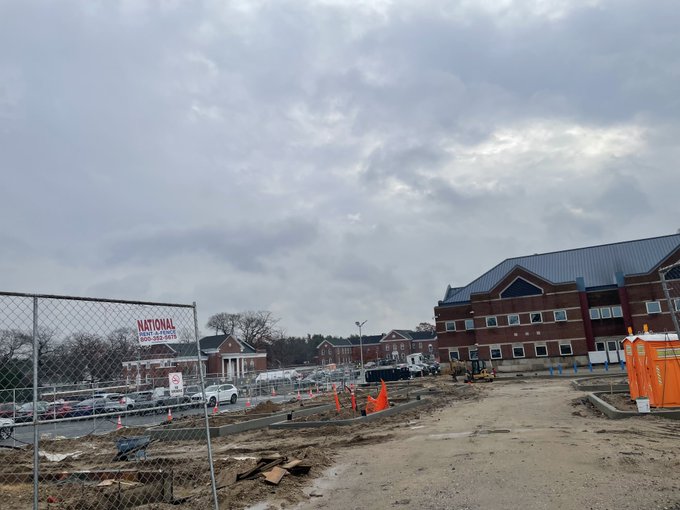
Walk into Northport VA on Long Island—my home turf, servicing 112,000 vets—and it’s a time capsule of neglect. Nearly 100 years old, it’s got failing roofs, gaping construction holes, and a “temporary” HVAC unit for the homeless facility that’s been “temporary” since before 2018. A $21 million repair project announced that year drags on, with front entrance and valet parking torn up for years—it looks as if the contractors simply walked off the job. Inside, stained ceiling tiles, grimy corners, urine scent in the bathroom greet you. I spent half my 36-year education career managing school facilities; a job like that parking lot takes 6-8 weeks, not 6-8 years. This isn’t mismanagement—it is apathy.

Military personnel are trained to notice details—“FRONT TOWARD ENEMY” on a Claymore mine, the difference between “SAFE” and “SEMI” on a weapon. In Basic Training, we scrubbed floors with toothbrushes; drill sergeants measured our underwear folds with rulers. In combat, triage was life or death: this one’s expectant, that one’s savable. Details saved lives. So, when I see potholes and crumbling asphalt, abysmal parking, weeds instead of grass, unsmiling greeters, and the same “Last name? Last four?” every visit—no eye contact, no memory—it screams neglect. Vets notice. We’re wired for it. And it cuts deeper when the care is as fractured as the building. Perceptions precede and predict reality.

The Cost of Disconnection
The VA is a connect-the-dots puzzle with missing and misconnected dots. Continuity’s gone—many visits are a reset. Specialists don’t talk, MRIs vanish, and intake forms ask, “How many blasts? How severe?” as if we kept a tally in the chaos. I gave 100% in Iraq—24/7/365—not 20% for tinnitus, 10% for PTSD. Lincoln’s promise—“to care for him who shall have borne the battle”—didn’t mean to carve us up. Yet civilians, often with no combat scars, decide our fate, slicing us into percentages. We didn’t question our orders to go to war; why are we questioned about what it did to us?
Last year, the VA spent $571 million on suicide prevention. Results? Still 17 a day. Posters scream, “Veterans in crisis, call 988, press 1.” In uniform we weren’t built or trained to have a “crisis,” we were trained to stay cool under fire, no matter the circumstance – we hurt. “Hurting? Call 988,” would hit closer. Or even: “Thinking of hurting yourself? Call 988.” On the battlefield, we yell, “Medic!” or “Corpsman!” Walking into a VA is the same as that – it’s a call for help. But the system is hard-of-hearing. It doesn’t know us. Trust is on life support—the proof is in the body count. Young vets (18-35) kill themselves at triple the civilian rate; female vets, 2.5 times higher. Older vet suicides are climbing, too. If 17 Tesla customers died daily over car frustration, Elon Musk would stop the line, fix it, and then roll out a solution – immediately. Why hasn’t the VA done that?
VAGrok: The Electric Grandma We Need
Imagine this: I walk into Northport VA. An app—a greeter or a large message screen—lights up: “Welcome Major Granger, your neurology appointment is in the basement. Need a map?” A map-app opens in my or a loaner device I carry with me wherever I go there. Biometrics, like facial recognition, spot me, pull my record—tours, TBI, meds, burn pit exposure, every specialist’s note. If I say “coffee,” it guides me to the kiosk, then nudges me to my appointment with a 15-minute heads-up. The doctor’s ready—no lost files, no guesswork—just a plan built from every detail of my care. VAGrok remembers me. It won’t forget. It cares, just like . . . .
Ray Bradbury’s “Electric Grandma,” from I Sing the Body Electric, who was an AI marvel—a tireless companion, healing a grieving family with memory, intuition and love. VAGrok would be that for vets. It would be an AI Medic/Corpsman with a soul, triaging suicide risk in real time—reading my face for pain or anguish. It’s not cold tech; it’s a wingman. The know-how exists—xAI could build it, hooking into VA systems with a linear, cumulative memory. No more silos, no more “prove it.” It sees us whole, restoring trust one vet at a time. And trust is a key to breaking at least one of the three H’s of suicidal depression (helpless, hapless, hopeless).

Eliminate the Waste and Abuse of the Disability Compensation Verification Process
Vast amounts of time, money and veteran lives to suicide are tied up in the process of verifying “service related” injuries and illnesses. I’m surprised they bury us whole.
If a veteran’s status is verified with a DD-214, then CARE for him/her. No one said, “Hey, Sarge, I only want to give 20% on this mission, OK?” We gave 100%, every time, 24/7/365. We didn’t question our orders to go to war, so why are we being questioned about what it did to us? The good parts are connected to the injured parts.
We made an ALL-IN bet for everything up to and including our lives. Those who lost that bet are in the ground. The rest of us are still fighting, still struggling, and 17 PER DAY are still DYING.
Continuity of care with VAGrok can prevent that – stop it cold.
Why VAGrok Works—And Who Can Make It Happen
This isn’t just about care—it’s survival. Helplessness fades when VAGrok knows your fight; haplessness lifts when it greets you with respect; hopelessness dies when it shows a path. The VA has Disney-5 star-level hospitality potential—treat us like guests, not numbers. Assume eligibility: verify my DD-214 and then care for me, no hoops, speed bumps or red tape. Upgrade facilities into welcoming hubs—fitness centers, support groups, green lawns (I don’t even care if it’s artificial turf as long as it’s clean and green), a community—not a venue of despair. Use military Guard and Reserve medics, specialists, nurses and docs who get us to fill or supplement civilian VA staff. Shift the narrative: seeking help isn’t weakness; it’s strength.

Donald Trump could champion this—bold, fast, “Make American Veterans Great Again.” JD Vance (Marine) brings Semper Fi trust; Pete Hegseth (Army) nails mission-first details; Doug Collins (Navy) demands efficiency. Elon Musk and xAI? Disruptive, scalable tech—this is a trip to the moon! My congressman, Rep. Nick LaLota (NY-1), sees VA Northport’s challenges. Beta-test VAGrok there—112,000 vets, ground zero. Launch April 2025, scale by July. Cost? Pennies next to 17 lives daily. Result? Zero suicides, a VA we trust and a promise kept.
Restore trust in the VA and myriad benefits emerge: low or no suicides, improved retention, positive recruiting point (we will care for you if and when you need us).
A Cry From the Battlefield
I retired in 2008 after 22 years—three deployments, Iraq in ‘04-’05. Now I’ve got hearing loss, tinnitus, sleep apnea, heart attack in 2013, PTSD, TBI(?) and a burn pit registry entry. My first claim’s in, but why should I have to prove it? A third of my life was service; I had none of this before. The VA’s budget can’t flex—new claims, deaths, suicides shift yearly, beyond a 10-20% buffer. Assume my hurt’s from service, just like the justice system assumes I am innocent, stop treating me like I’m guilty before a trial, my trial was combat—treat me whole, not parts. Honor Lincoln’s words, not bureaucratic labyrinths.
17 vets PER DAY can’t wait. Power brief now—Northport VA, Trump Tower, Pentagon, D.C., Mar-a-Lago, let’s go!
VAGrok is the Medic/Corpsman we’d call in combat. Deploy it now. Stop the dying.
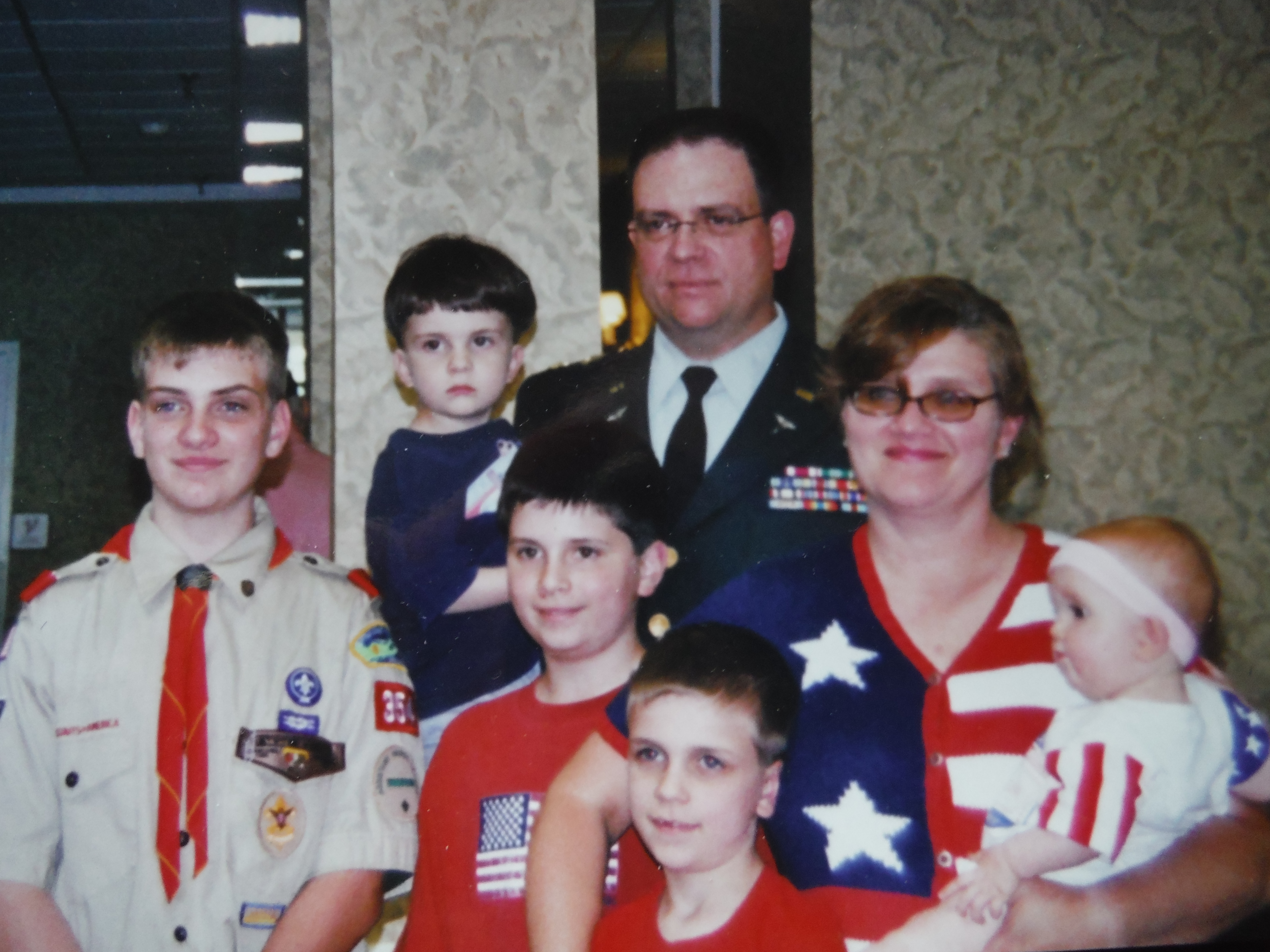
NOTE: Major Granger is a three-times mobilized, retired US Army officer, trained and served as a Combat Medic/Medical Specialist for five years, and then 17 years as a Medical Service officer (70B), who, on deployments to Gitmo and Iraq with Military Police Enemy Prisoner of War units, was responsible for coordinating medical, preventive medical and environmental services for detention operations. On the civilian side, he earned a BS Ed. From the University of Alabama in Health, Physical Education, Recreation and Dance, an MA degree in Curriculum and Teaching from Teachers College – Columbia University, and School District Administrator certification through the State University of New York at Stony Brook. While at Columbia University, he taught “Sport” at the Buckley School for Boys on the Upper East Side of Manhattan, where “Donnie” Trump, Jr. was one of his students. He taught health and physical education, was a coach and Dean of Students in the New York City public high schools for 8 ½ years, moved to Long Island and then began a career as a school district administrator. Interrupted on 9/11/2001, he served on three subsequent deployments that saw him separated from three young boys, his wife and career for 2 ½ out of the next five years. When he returned, he had two more children, and worked in Suffolk County public school districts, serving as district administrator for Health, Physical Education, Athletics, Health Services, Security and Facilities. He and his wife of 31 years retired in 2022, when he began to manifest multiple health issues and started exploring the VA and its services. PS – In the 1990’s he was a staff officer with the 4220th US Army Hospital Reserve Unit that performed weekend drills at the Northport VA. PPS – He was a Disneyland (California) Davey Crockett (war) Canoe Host in 1986-87, and attended Disney University (orientation), and knows the Disney business model and hospitality secrets. PPPS – Major Granger is author of “Saving Grace at Guantanamo Bay: A Memoir of a Citizen Warrior,” about his time as the ranking US Army Medical Department officer with the Joint Detainee Operations Group, Joint Task Force 160, Guantanamo Bay, Cuba, from FEB-JUN 2002, and narrator of the YouTube short documentary film, “Heroes of GITMO,” based on his book.



 Saving Grace at Guantanamo Bay