Renaming the Gulf of Mexico: A Case for the Gulf of America

The Gulf of Mexico, as it’s been called for ages, is a vital cornerstone of prosperity, history, and culture for the nations around it. But let’s face it—the name just doesn’t do justice to the big, bustling, blue bowl of life that it really is. Renaming it the Gulf of America could give it the recognition it deserves while adding a touch of unity and a wink of practicality. Now, before anyone starts throwing their sombreros or Stetsons in the air, let’s explore the why, the how, and the “what’s in it for us” of this idea.

A Name That Sticks (and Means Something)

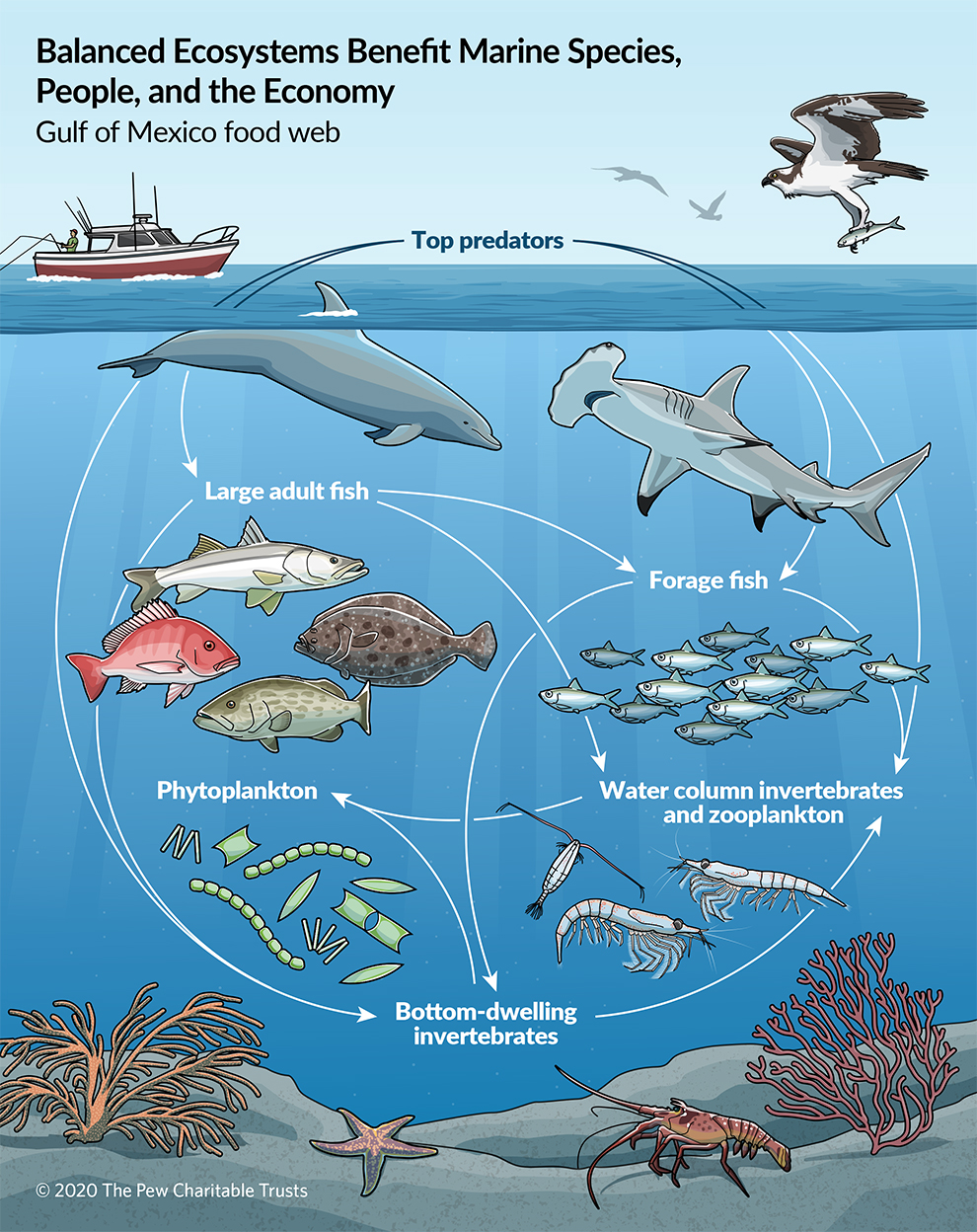
Names carry weight, and not just the kind you toss around in a family feud. The Gulf’s current name is tied to history, sure, but it doesn’t quite capture the shared ties of the nations that sip from its shores. Mexico, the United States, and Cuba all rely on the Gulf’s treasures—be it for oil, shrimp, or a good spot to sunbathe. Calling it the Gulf of America nudges everyone to think of it as a shared resource, a neighborly handshake across the waves.

More than that, a new name shines a spotlight on the teamwork it takes to manage such an important patch of water. The Gulf isn’t just a pretty face; it’s a major player in global commerce, a livelihood for fishermen, and a challenge for environmentalists. A name like Gulf of America would remind everyone of the shared responsibility to keep it ticking.
Tying It All Together: History, Culture, and a Dash of Nostalgia

This big blue stretch has seen it all: Native American trade routes, European explorers, revolutions, and even a pirate or two. It’s been a cultural melting pot long before melting pots were cool. Renaming it doesn’t wipe the slate clean; instead, it adds a new chapter to its story—a chapter about unity and a shared purpose.

Imagine the coastal folks—Texans, Yucatecans, Cubans—all nodding in agreement that this watery wonder is theirs to care for, protect, and celebrate. A name like Gulf of America could even make folks a little prouder of their corner of the world, seeing it as not just theirs, but ours.

Dollars, Sense, and Sandy Toes

Here’s the kicker: a name change could mean big bucks. The Gulf is already a hotspot for tourists, from its sun-soaked beaches to its seafood shacks. Rebranding it as the Gulf of America could double down on its appeal, drawing in visitors eager to discover “The Heart of America.” Think about it: cruise liners, beach resorts, and coastal towns all cashing in on the new name’s charm.

This isn’t just about fancy marketing. It’s about creating a shared identity that could lead to joint ventures—whether in tourism, environmental conservation, or even cross-border festivals celebrating the Gulf’s rich traditions. Everybody wins when the pie gets bigger.

The Road Ahead: How Do You Pull This Off?

Changing a name isn’t like naming a dog—it takes effort. It means talking to everyone who has a stake in the game: governments, local communities, environmentalists, historians, and anyone else who might raise an eyebrow or a placard. But it’s doable if framed right. This isn’t erasing history; it’s updating it, like giving your grandpa’s old car a fresh coat of paint.

Sure, there’ll be skeptics. Some folks might bristle at the change, seeing it as too bold or too USA-centric. But diplomacy and a few good metaphors can help. It’s not about claiming ownership; it’s about claiming a shared future, a collective identity that reflects everyone’s stake in the Gulf’s well-being.

The Closing Argument: A Name Worth Its Salt

Renaming the Gulf of Mexico as the Gulf of America isn’t just a fancy idea—it’s a statement. It’s saying, “This place matters to all of us.” It’s a nod to the Gulf’s history, its economic might, and its role as a cultural bridge. It’s a call to action to work together to protect and cherish this vital resource.

So, let’s stop calling it by a name that fits like last year’s boots. Let’s give it a name that feels right, that feels big, that feels like home. Gulf of America—it’s got a nice ring to it, don’t you think?

Montgomery J. Granger (@mjgranger1) is a Christian, husband, father, retired educator, veteran, author of “Saving Grace at Guantanamo Bay: A Memoir of a Citizen Warrior,” and narrator of a short YouTube documentary film based on his book called “Heroes of GITMO.”

This article was assisted by ChatGPT.

A Partnership for Prosperity: Why Greenland and the United States Could Thrive Together

Recently, President Elect, Donald J. Trump has shown interest in a much closer relationship with Greenland, an autonomous country in the North Atlantic, but a protectorate of Denmark. The following is a “best way forward” approach to improving our relationship with “Kalaallit” (the people) of Greenland “Kalaallit Nunaat” (Land of the People).

Greenland is a land of breathtaking beauty and rich traditions, home to resilient people who have preserved their heritage in the face of a changing world. As Greenland charts its path toward greater autonomy and prosperity, there is an opportunity for a deeper partnership with the United States that could unlock new possibilities for economic growth, security, and cultural preservation. By exploring the idea of Greenland becoming a protectorate or commonwealth of the United States, we can envision a future that respects Greenland’s unique identity while providing resources and opportunities to enhance the quality of life for all its people.

Respect for Greenland’s History and Culture

Greenland is more than just a vast, icy expanse—it is a vibrant land with a proud Indigenous heritage. Any partnership with the United States would honor and protect Greenland’s culture, language, and traditions. Greenlanders have fought for and achieved self-rule, and this autonomy would remain at the heart of any agreement. Much like Puerto Rico or the Northern Mariana Islands, Greenland could maintain its distinct identity while benefiting from access to American resources and global networks.

Unlocking Greenland’s Economic Potential

Greenland is rich in natural resources that can fuel its development and prosperity. Rare earth minerals, critical for renewable energy and modern technologies, lie beneath Greenland’s surface. With U.S. investment and technology, Greenland could responsibly develop these resources, creating jobs and generating revenue while protecting the environment.

Tourism, already a growing industry, could flourish with the support of U.S. infrastructure development, including modern airports and sustainable transportation systems. Greenland’s fisheries—among the most pristine in the world—could gain better access to international markets, boosting the livelihoods of Greenlandic fishermen.

Moreover, U.S. partnerships in education and training could equip Greenlanders with the skills to lead these industries, ensuring that the wealth generated benefits the local population first and foremost.

Security and Sovereignty in the Arctic: “Greenland First!”

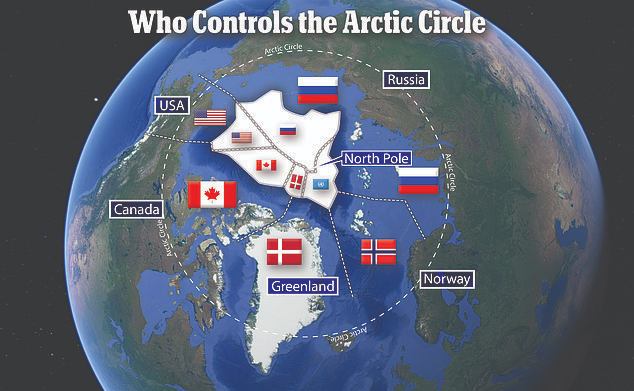
Greenland’s location in the Arctic places it at the center of global attention. If changing weather patterns create new shipping routes, Greenland would face increased interest from powerful nations like China and Russia. A closer relationship with the United States could provide Greenland with the resources and expertise to protect its sovereignty and ensure that its people—not foreign powers—control its destiny.

The United States has long recognized Greenland’s strategic importance, hosting Thule Air Base as a vital part of international security. By formalizing a partnership, Greenland could gain greater support for protecting its waters and infrastructure while contributing to regional stability. Something Denmark cannot afford to do, economically or strategically.

Improving Quality of Life for Greenlanders

A partnership with the United States could bring transformative benefits to Greenlandic communities. Improved healthcare facilities, modernized schools, and expanded vocational training could provide Greenlanders with new opportunities to thrive. Investments in renewable energy and sustainable development would not only create jobs but also position Greenland as a global leader in combating climate change.

In particular, Greenland’s youth could benefit from enhanced educational opportunities, including scholarships to study abroad and training programs to prepare them for leadership roles in government, business, and science. These investments would ensure that Greenland’s next generation has the tools to build a prosperous and self-sufficient future.

A Relationship Built on Respect – Inuuqatigiitsiarniq: Living in Harmony

Greenland’s path forward must be shaped by its people. Any partnership with the United States would require the consent and participation of Greenlanders at every step. This would not be an arrangement of dominance but of mutual benefit—where Greenland retains control over its culture, resources, and governance while gaining access to the tools and partnerships needed to succeed on the global stage.

Living in harmony, or Inuuqatigiitsiarniq to the Inuit’s indigenous to Greenland, embodies respect, kindness, and fostering good relationships with others. It reflects a way of life that values cooperation, mutual respect, and a deep connection to the community and environment.

The idea behind Inuuqatigiitsiarniq is about maintaining balance and showing consideration for all living beings, which aligns with the Greenlandic and Inuit cultural ethos of respecting nature, elders, and each other.

The United States has a history of working with territories and protectorates in ways that respect their autonomy and cultural heritage. Greenland could shape this relationship to reflect its unique identity and values, ensuring that its voice is heard, and its traditions are preserved.

Tupilak art – meaning “ancestors spirit or soul.”

A Shared Future

The challenges and opportunities facing Greenland are immense. From the effects of climate change to the pressures of globalization, Greenland stands at a crossroads. By forging a closer partnership with the United States, Greenland could secure its future while retaining its heritage. Together, we could create a model of cooperation that respects the past, embraces the present, and builds a brighter future for generations to come.

Donald Trump, Jr., with “Kalaallit” (the people).

The choice belongs to the people of Greenland. With careful consideration and mutual respect, this partnership could be a journey toward shared prosperity and enduring friendship.

Montgomery J. Granger (@mjgranger1) is a Christian, husband, father, retired educator, veteran, author of “Saving Grace at Guantanamo Bay: A Memoir of a Citizen Warrior,” and narrator of a short YouTube documentary film based on his book called “Heroes of GITMO.”

This article was assisted by Grok.

Why Releasing Known Terrorists During the Global War on Terror is a Bad Idea

The release of known terrorists, especially during an ongoing Global War on Terror, seems counterintuitive and potentially dangerous. The analogy of “capture-the-flag” illustrates this point succinctly: retaining captured adversaries weakens their side; letting them go weakens your side. However, the decision by the Biden administration to release 11 Yemeni detainees from Guantanamo Bay (Gitmo) in January 2025 has sparked significant debate and concern.

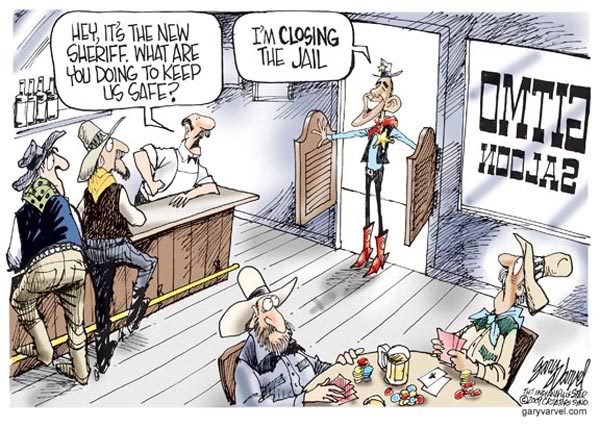
On his first day as President, Barack Hussein Obama promised to “close Gitmo.”

Historical Context and Gitmo’s Role:

The US military detention facility at Guantanamo Bay, Cuba (Gitmo), was initially established as a response to international crises but was repurposed after 9/11 to detain unlawful combatants from Afghanistan, individuals intent on perpetrating acts of terror against the U.S. and its allies. The facility was operated with a directive to treat detainees within the spirit of the Geneva Conventions, as articulated by then-Secretary of Defense Donald Rumsfeld, ensuring dignity and respect for prisoners, which was confirmed by international observers like those from the International Committee of the Red Cross.

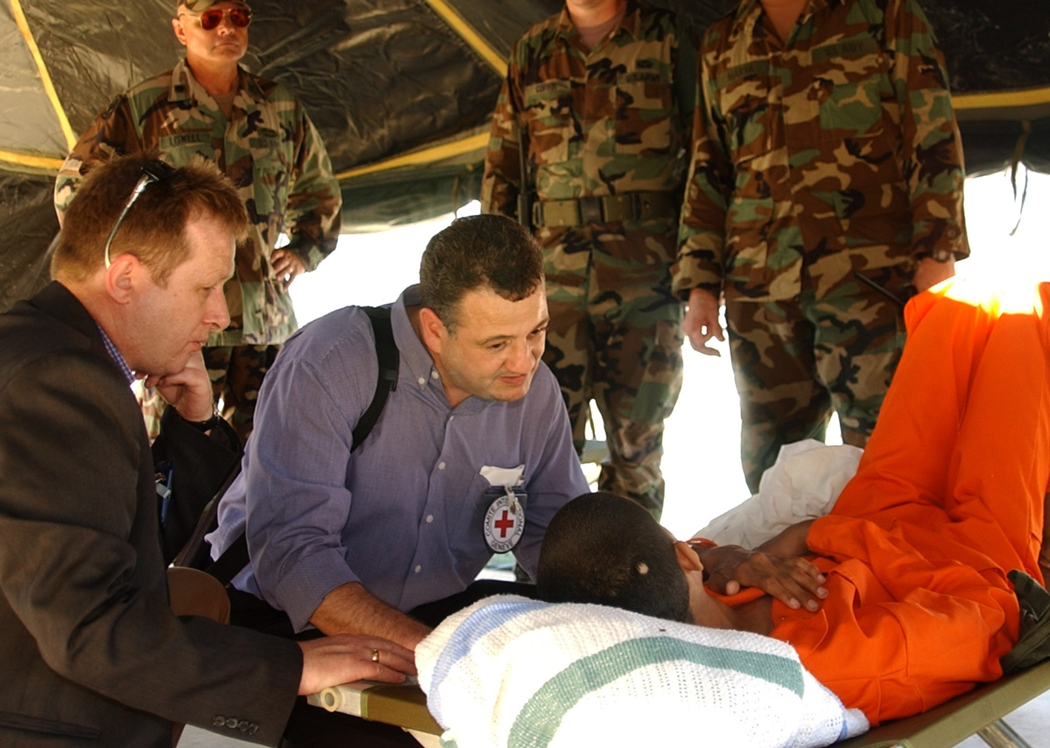
Swiss ICRC physicians interviewing a Gitmo detainee, Camp X-Ray, Guantanamo Bay, Cuba, January, 2002. They told me, “No one does [detention operations] better than the US.”

The Risks of Releasing Terrorists:

Releasing known terrorists, particularly those with direct links to al-Qaeda and Osama bin Laden, sends a message of weakness at a time when terrorist threats, including attacks like those in Germany, New Orleans, and Israel, underscore the persistent danger posed by radical Islamic terrorism. The statistics are alarming: of the over 750 detainees released from Gitmo, 30% are known or suspected to have returned to terrorism, suggesting that the threat these individuals pose does not necessarily diminish with release.

President Barack Hussein Obama traded an admitted traitor for five Taliban leaders.

Legal and Moral Considerations:

The Law of War allows for detention of unlawful combatants as well as POWs, without charge or trial, until hostilities cease. However, the treatment and release of these detainees have been influenced by political pressures and evolving legal frameworks, notably the Military Commissions Acts of 2006 and 2009, which have granted detainees rights akin to those in civilian courts. This shift contrasts with historical precedents like Operation Pastorius, where swift military justice was administered to German saboteurs during WWII.

Executed German saboteurs, denied habeas corpus and tried by military commission (tribunal). None had hurt a fly nor destroyed any property, they merely had the means and intent to do so, in violation of the Geneva Conventions and Law of War. What’s different now?

The moral argument against torture or harsh treatment was somewhat overshadowed by the effectiveness of Enhanced Interrogation Techniques (EIT) in obtaining life-saving intelligence, though these practices were later discontinued. Yet, the comparison between Gitmo’s operations and the brutal treatment of captives by terrorist groups like ISIS or Hamas starkly underlines the ethical disparity.

The author’s memoir, based on his experiences as the Joint Detainee Operations Group US Army Medical Department officer, Joint Task Force 160, FEB-JUN 2002.

Current Threats and Global Implications:

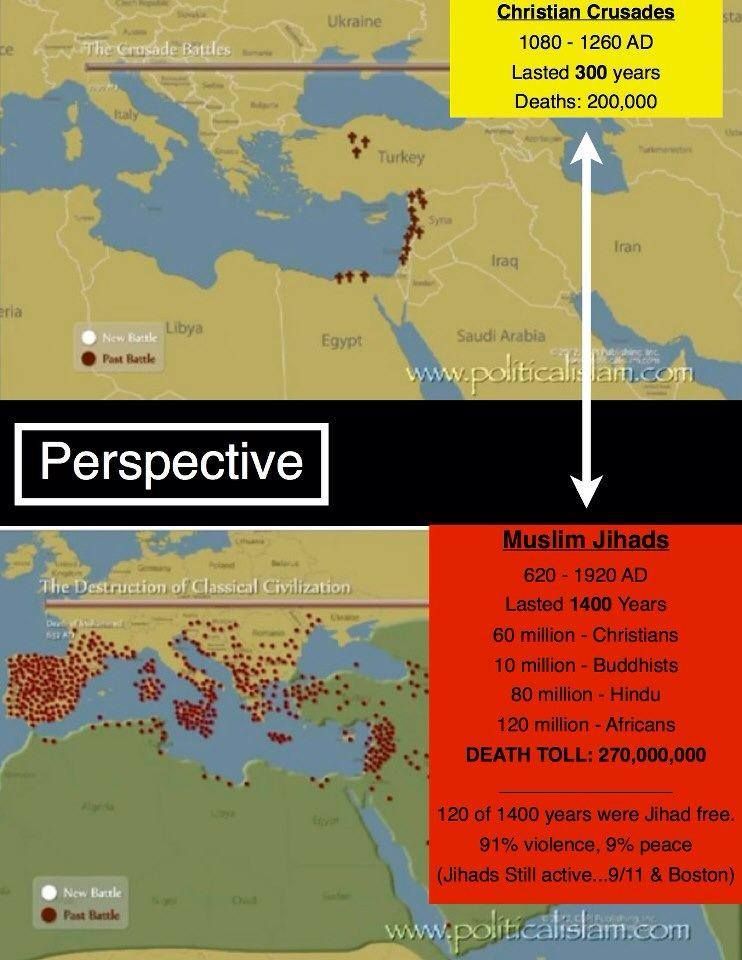
The recent spate of terrorist activities globally, including the Hamas attacks in Israel, challenges the notion of “peaceful Islam” and forces a reevaluation of policies like detainee release. The narrative of Islamophobia versus genuine security concerns becomes more pronounced when considering the historical expansionist nature of Islam and its doctrinal roots in conquest, as seen through the actions of Muhammad and the spread of Islamic rule over centuries.

Political Islam.

Conclusion:

Releasing known terrorists during the Global War on Terror not only potentially endangers national security but also undermines the moral and strategic efforts of those combating terrorism. It raises questions about the commitment to the war’s objectives and the safety of citizens worldwide. In an era marked by increased terrorist activities and the ideological spread of radical Islam, such actions could be seen not just as misguided but as potentially treasonous, especially when the lessons from past conflicts and current threats are so evidently clear. The decision to release these individuals should be critically examined in the context of ongoing global security challenges.

Montgomery Granger is a retired major in the US Army, and author of “Saving Grace at Guantanamo Bay: A Memoir of a Citizen Warrior,” and narrator of the short YouTube documentary film, “Heroes of GITMO.”

This blog post was assisted with the use of Grok.

What the Veterans Administration Should Be: An Open Letter to Donald Trump, Elon Musk, Vivek Ramaswamy, Pete Hegseth, and Rep. Nick LaLota (NY-1)

Gentlemen,

Our justice system operates on the principle that one is innocent until proven guilty. Why, then, does the Veterans Administration (VA) seem to operate under the opposite assumption when it comes to veterans’ care and disability ratings?

Upon verifying service through documents like the DD-214 and issuing an ID card, the VA should immediately assume veterans are entitled to care as promised by the very ethos of our military service: “To care for him who shall have borne the battle, and for his widow, and his orphan.” This statement by Abraham Lincoln in his second inaugural address at the end of the Civil War, carries no qualifiers; it’s a promise to care for all veterans, regardless of where they served or what they endured.

However, the current system is fundamentally flawed. Veterans are forced to spend considerable time and effort proving their ailments are service-related, which contradicts the unconditional service and sacrifices we’ve made. Veterans took an oath without caveats; we committed to follow orders, defend the Constitution, and potentially give our lives. In return, we should receive care without the burden of proof.

The administration of the VA by civilians lacking military or combat experience has been problematic. With Pete Hegseth potentially becoming the new Secretary of Defense, there’s hope for change. This matter should also resonate with President Trump, and I believe the Department of Government Efficiency (DOGE), under the influence of Elon Musk and Vivek Ramaswamy, could address these inefficiencies with common sense and innovation.

A New Philosophy for the VA:

Prioritization: The veteran should be the priority. Upon entering a VA facility, instead of the impersonal request for “Last Name and Last Four,” why not use modern technology like facial recognition and/or other biometrics for both security and personalized greetings? This would not only enhance security but also personalize and streamline the care process.

Efficiency and Technology: Implement integrated, high-tech systems to improve efficiency. Veterans should feel welcomed and valued, much like guests at a Disney resort where the business model is simple: treat every customer as a cherished guest.

Perception and Recruitment: The negative perception of the VA could deter potential recruits. If the VA were seen as a place where veterans are genuinely cared for, it might attract and keep more individuals to military service.

Facility Management and Care:

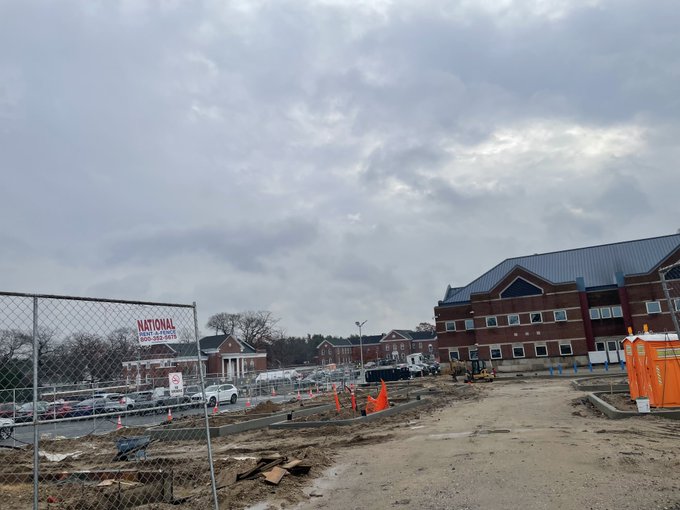
At Northport VA on Long Island, NY, the ongoing disrepair and delays in basic maintenance projects like HVAC systems or parking areas reflect a deeper issue of neglect. A 3-year, $21 million project, started in 2018, is still unfinished. These conditions not only degrade the quality of care but also demoralize veterans who must navigate an environment that seems to have forgotten them. Part of my 36-year career in education and education leadership involved public school facilities management. Some of the jobs in the capital projects plan for the Northport VA could have been completed in 6-8 weeks, rather than the current 6-8 years!

My personal health experience, after 22 years of military service including combat deployments, involves dealing with issues like hearing loss, tinnitus, sleep apnea, and PTSD, yet the process to receive care or compensation feels like an additional battle.

Rethinking VA Budgeting and Care:

The VA’s budgeting must be adaptive to the fluctuating needs of veterans, not constrained by typical government fiscal policies. The number of new claimants cannot be accurately predicted from year-to-year. It’s been over 16 years since I retired, and I am only now applying for a disability rating for the first time. Imagine the savings and improved care if we assumed veterans’ health issues were service-related unless proven otherwise? This shift could redefine the VA from an adversarial entity to one that truly supports and heals those who served.

I understand the current disability application system results in compensation, but what if I don’t need the money, just the care? Because the process is so arduous, complex and full of bureaucratic red tape, it could take months for approval, disapproval, appeals and other delays. Many veterans needlessly pay others to help them through the application process.

Conclusion:

I urge you to consider these changes, to let loose the capabilities of DOGE and the leadership of Pete Hegseth on this broken system. We should treat the whole person, not just the ailments deemed service-connected. A wholistic approach to healthcare is the most effective. Veterans have given much; it’s time the VA reflects this nation’s gratitude and commitment to our well-being by honoring Lincoln’s compassionate vision for veteran care.

Kamala Harris in the eyes of a military combat veteran

The current Vice President, a CIVILIAN, has assumed the role of President of the United States, or, the Commander in Chief. In a way, this is STOLEN VALOR.

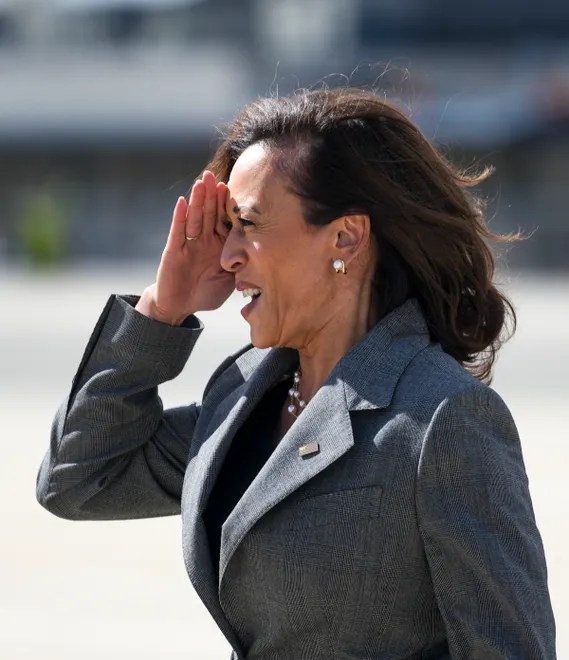
She is consciously saluting military personnel, as if she were in their chain of command. She is not. Civilians do not salute unless they are veterans and it is during an appropriate ceremony or event where saluting the flag or National Anthem are pro forma.

The goal is to promote the illusion that Ms. Harris is already Madame President. She is not. In fact, if Ms. Harris were in the military she would have been fired long ago, if not just from her appointed roles, i.e. Border Czar, then from the position of Vice President.

Recently, while describing gifts she plans to give people if she becomes the next President, she said, “I’m gonna give,” (blank amount) to the people. “I’m gonna give?” As if the money were coming from her personal bank account.

In the military, which used to be a meritocracy, if you don’t perform, you’re fired from your position. Or, you get demoted, or you get kicked out, or you go to jail. Ms. Harris would be in the running for all of these if her record were totally scrutinized by authorities over her (where are the CHECKS and BALANCES I learned about in high school government class?).

As one progresses in one’s military career there are opportunities for promotion, which are mostly based on the quality of one’s periodic professional evaluations. Good evaluations and positive results in one’s endeavors and responsibilities could lead to promotion. Performance and achievement are usually rewarded in the military.

In the case of Ms. Harris, who can tell us what her OER support form would look like? This Officer Evaluation Report support form is completed by the officer seeking promotion, for the superior officer who has the authority to grant or recommend promotion. In it, the promotion candidate details accomplishments and achievements.

Isn’t she up for a public referendum (election) on her performance? After all, she is asking to be promoted, and not just from second lieutenant to first lieutenant, but from the second highest office in the land to the very tip top position – where leadership equals influence and setting the example is paramount. She is asking We the People for this promotion. We are the promoting authority. We need to see the OER support form.

On her support form, we need to see examples of her demonstrated leadership skills, evidence of her professional competence, effective communication skills, demonstrated personal integrity and ethics; examples of teamwork and collaboration; proof of her ability to problem solve, of her adaptability, resilience and resolve; we need to see evidence of her commitment to serve as loyal commander in chief. We need to know whether or not she has been a mentor and is able to develop others. We need to understand the facts pertaining to her ability to form and maintain positive relationships and demonstrated networking skills. And, finally, we need evidence of her accomplishments and performance.

Military officers must show and demonstrate and be able to document their claims, or guess what? No promotion.

If you were to write Ms. Harris’s OER support form, what positive things could you put in it?

The bottom line is that if one wishes to be promoted in a professional environment, military or civilian, one must show demonstrated skill, competence and acumen for the job they are seeking. Kamala Harris has not shown any shred of competence in her current job. Any CEO, HR professional or shop keeper would immediately put her resume in the circular file.

She is not exceptional.

Exceptionalism is the driving force behind achievement, behind progress, behind leadership.

If we elect someone who is not exceptional, we are cheating ourselves out of a brighter future, and we are letting down those who depend on us for good decision making for their future – our children and grandchildren, who, if Ms. Harris is elected, would certainly suffer a far worse future than if another candidate were chosen.

Montgomery Granger is a retired educator and veteran, and can be found in social media under the @mjgranger1 tag.