Fix Veterans’ Care Now – It’s Life or Death

We didn’t question the order to go to war, so why are we questioned about what the war did to us? 
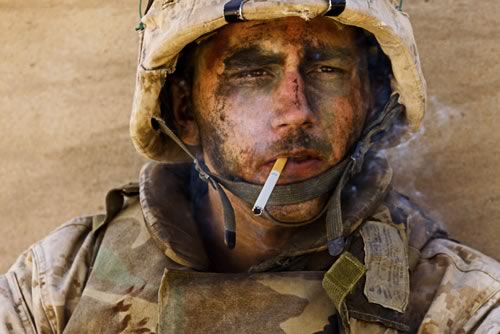
We wrote a blank check and pledged our sacred honor for our country, but the Department of Veterans Affairs (VA) isn’t helping enough. Since September 11, 2001, over 130,000 veterans have ended their own lives.

One suicide is a tragedy. What do you call one hundred and thirty THOUSAND?

We need to fix the VA now because our lives depend on it.

In 2024, the VA spent $571 million to stop suicides. But where did the money go? Did it save anyone? I don’t see enough proof that it’s working. Worse, when we ask for help, the VA makes us tell our war stories over and over again. It hurts, and it’s not fair. The people deciding if I get help often never saw a battlefield. This messed-up system might be why so many of us feel lost, hopeless, helpless and then give up.

The numbers make me sick. Younger veterans, aged 18-35, are almost three times more likely to die by suicide than people who didn’t serve. For women veterans, it’s 2.5 times higher than other women. Even older veterans like me are hurting more than ever. If this happened at a company—where people were so miserable they hurt themselves—everyone would yell for change. I’m yelling for change now!

Here’s How I’d Start to Fix It:

Trust Me First: When I prove I served (verified DD-214), the VA should help me right away. I shouldn’t have to fight to show my pain came from war. I earned more respect than that.

Learn the Disney Way: Disney makes people happy with the attitude of second-to-none guest service and fun. The VA could train its administrators and staff through the Disney Institute to learn to treat me in a way that makes me feel like I matter and makes me smile.

Use Cool Tech: Things like facial recognition could say my name when I walk in and get me help faster in a personalized (and secure) way. Now, it’s “Last name? Last four social?” Without even looking up.

Make the VA Appealing: Turn VA facilities into welcoming experiences that project care: clean and green, curb appeal, emphasis on maintenance, warm/cool and comfortable, like coming home—like a resort. I’d want to go there, and it might sooth my stress.

Help All of Me: Don’t just fix my body—fix my mind, too! Focus on holistic wellness, not just medical treatment. Add gyms, pools, courts, fields, recreation, activities and groups where I can talk with other veterans. It could make me stronger, more fit and happier.
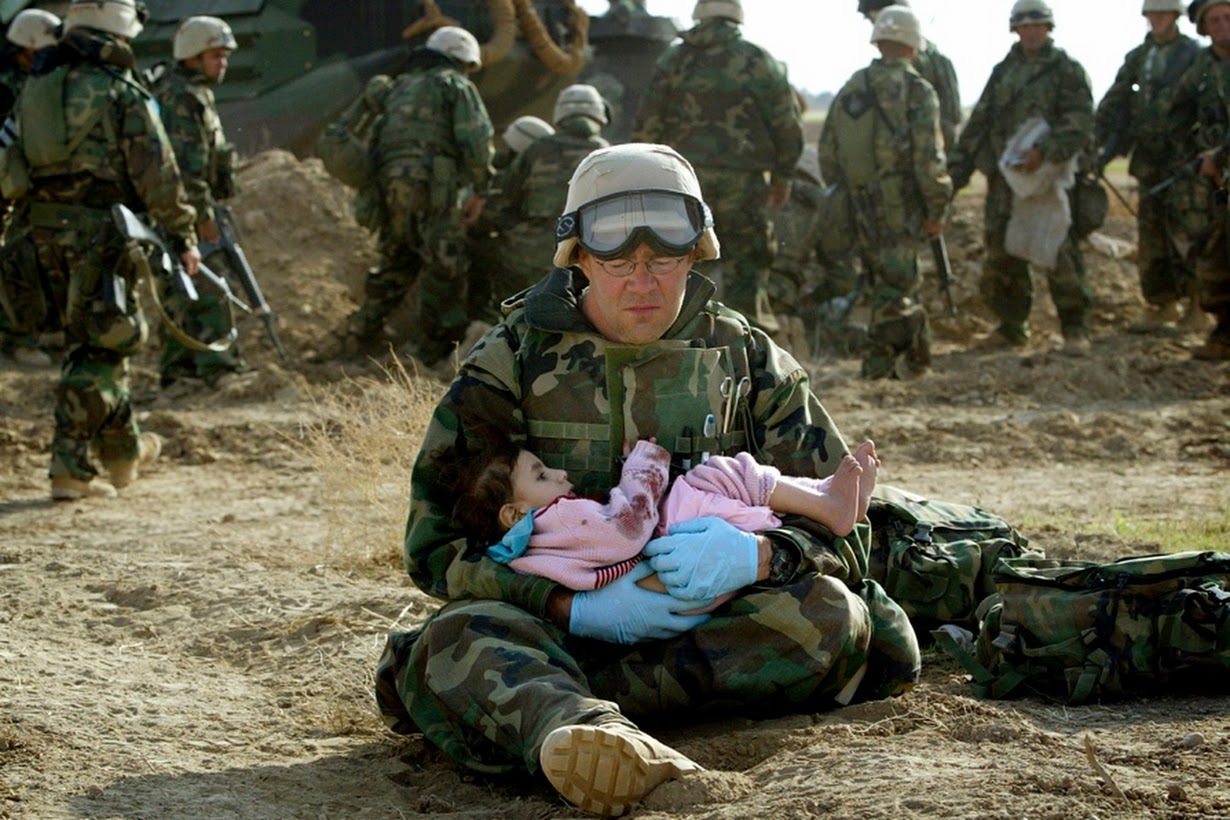
Be Honest and Quick: The VA needs to show where my money goes and stop making me wait years for help, or taking years to fix things. Waiting has left me and others with nothing—sometimes not even a home.

Bring in Military Helpers: Doctors, nurses, medical specialists, Corpsmen and medics from the Active Duty, National Guard and Reserves could work at the VA. They get what I’ve been through because they’ve been there too. Rotating in military medical personnel could also help retention and recruitment. If they see quality care up close and personal, they know what they are getting themselves into.

Make Asking for Help Normal: Don’t call the suicide hot line a “crisis line.” Just say, “Hurting? Call 988.” I’m not weak for needing help—I’m brave for asking. On the battlefield, one can hear a cry for help: “Medic!” “Corpsman!” That’s what we’re saying when we finally gather the courage to walk in through the front door.

We honor those who never came home by caring for those who did.

We can’t wait anymore. The VA promised to take care of every veteran with respect, dignity and urgency. Lincoln said, “Care for those who bore the battle,” not “Oh, only those parts the soldier can prove were affected by the battle, and oh, by the way, take a number.”

The VA cuts us up with a percentage of “disability” compensation and care. Imagine that? A percentage. Is that what we should have said prior to taking the hill? “Hey, Sarge, I only want to risk 10%, is that OK?”

It’s amazing that they bury the whole person, and not just the percentage they say died because of the war.
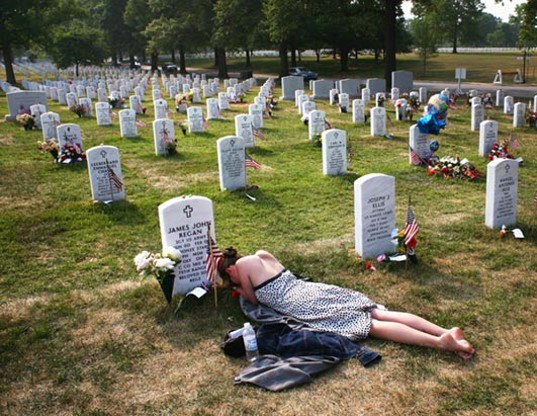
My question isn’t going away—I am raising my voice to hopefully make things happen!

We made an all-in bet for everything up to and including our lives. It’s time the VA made good on that bet.

Our dead comrades can’t tell you how they hurt, but we can. Please listen to us now.

The Best Way to Honor Those Who Never Came Home: Take Care of Those Who Did

Michelle Obama, in her Open Letter to Veterans, published on Sept. 30, 2013, says, “If you are a veteran who is uninsured and hasn’t applied for [Veteran’s Administration] coverage, you may be eligible for [Obama] care through the VA.”

Yet the VA states if you have non-service related ailments or injuries, you don’t qualify for free coverage with the VA, fees and co-pays would apply.

The HealthCare.gov website Mrs. Obama recommends veterans go to stipulates that veterans who are enrolled in the VA system are considered “covered” and therefore do not qualify for care under the new health care law. Similarly, veterans who may be enrolled in Tri-Care, the military health care system, do not qualify to use the new Health Insurance Marketplace.

It’s no secret that “there are an estimated 1.3 million uninsured veterans,” according to Mrs. Obama’s letter. What may be a secret are the estimated 400,000 veterans suffering from Traumatic Brain Injury (TBI) – a leading cause of Post Traumatic Stress Disorder (PTSD), which can lead to social, physical, mental and emotional health complications, including suicide – which claims the lives of 22 veterans every day based on the VA’s own data reported by 21 states from 1999 through 2011. That’s one veteran every 65 minutes.

Mrs. Obama doesn’t even mention these two devastating conditions for veterans, their families and loved ones. The VA backlog and ill-equipped and trained VA service providers barely make a dent in helping those afflicted with TBI and PTSD.

What is the best way to honor our fallen heroes?

“Take care of those who came home,” is the answer given by Dr. Chrisanne Gordon, founder and chairwoman of the Resurrecting Lives Foundation and physical and rehabilitation physician. Who could disagree with making sure veterans, our most noble of citizens, who write a blank check to every man, woman and child in America for everything up to and including their lives, are cared for when they make it home alive?

Dr. Gordon, on her website, states that, “It is estimated that only 36 percent of the veterans returning from the Iraq & Afghanistan wars actually receive treatment through the Veterans Administration, although all are eligible.”

That’s only 792,000 out of 2.2 million returning veterans.

How will the Affordable Care Act provide relief for veterans if the VA can’t do it? How can Obamacare hope to even scratch the surface of treating ailments the government already can’t get out of its own way on?

The HealthCare.gov website claims that if a veteran can’t afford private health care coverage they “may be eligible for Medicaid.” The website also says that “if you’re a veteran who isn’t enrolled in VA benefits or other veteran’s health coverage, you can get coverage through the Health Insurance Marketplace.”

But is the Marketplace ready for these special needs patients? And if they are, can the veteran not enrolled in VA health care afford it?

“Getting coverage,” means “paying” for coverage through the Obama Care Marketplace. Why would a veteran, who qualifies for VA coverage, not go to the VA? It doesn’t make sense.

It’s as if Michelle Obama is trying to get “caring for veterans” points with a health care merry-go-round that will deposit the veteran exactly where s/he got on!

Veterans need to be directed to the VA, and then some need to have their hands held to even get them to sign up. Medicaid should cover the non-service related costs should the poor veteran not be able to afford these costs, however, because the Supreme Court ruled last year it would be up to the states to decide whether or not to implement Medicaid expansion, an estimated 284,000 poor veterans, who would have qualified for Medicaid under the expansion, will not be able to access it.

Obamacare has NOTHING for the veteran, nor should it. But why the smoke and mirrors towards those who already are faced with a daunting, bureaucratic labyrinth and well deserved mistrust of the efficiency of a government program?

It’s a shame that in this age of returning veterans with complex health care issues we can’t find a better way to address their needs than with just a confusing “open letter” to them about something that can do nothing for them.

What we need is to allow veterans to seek out treatment at any municipal health care facility, just like Medicaid patients can do. Restricting care for veterans only through the ridiculous bottleneck of Veterans Administration facilities, which are inaccessible to most veterans who tend to live far from these facilities, for an estimated 400,000 suffering the effects of service-related TBI alone, is trite, myopic, unnecessary and a dishonor to their sacrifice.

I am the author of “Saving Grace at Guantanamo Bay: A Memoir of a Citizen Warrior,” and three times mobilized U.S. Army Reserve Major (Retired). Author web page: http://sbpra.com/montgomeryjgranger/ Twitter @mjgranger1