Therabot: A New Hope for Veteran Mental Health

The veteran suicide crisis, claiming 17 to 22 lives daily since 9/11, demands innovative solutions. My recent blog post, “Ending 17 Veteran Suicides Per Day,” explored the urgent need for accessible, effective mental health interventions. Today, we turn to a promising development: Therabot, an AI-powered chatbot designed to deliver psychotherapy. In an exclusive email interview, Dr. Michael V. Heinz, a psychiatrist, Dartmouth researcher, and U.S. Army Medical Corps Major, shared insights into how Therabot could transform mental health support for veterans. His vision offers hope—grounded in evidence, compassion, and cutting-edge technology.

What Is Therabot?

Therabot is an expert fine-tuned chatbot crafted to provide evidence-based psychotherapy. Unlike generic AI, it’s built to forge a therapeutic bond, creating a safe, stigma-free space for users. Dr. Heinz explains, “In our trial conducted in 2024, we found that Therabot reduced symptoms of depression, anxiety, and eating disorders.” This is critical, as uncontrolled mental health symptoms often fuel high-risk behaviors like suicide and self-harm. The trial also revealed users felt a “high degree of therapeutic alliance” with Therabot, a pivotal factor in ensuring engagement and sustained use.

For veterans, this therapeutic bond could be a lifeline. The ability to connect with an AI that feels empathetic and reliable—available 24/7, regardless of location—addresses the logistical barriers that often hinder care, such as limited access to mental health professionals in remote postings or during erratic schedules.
A Lifeline Across the Military Lifecycle

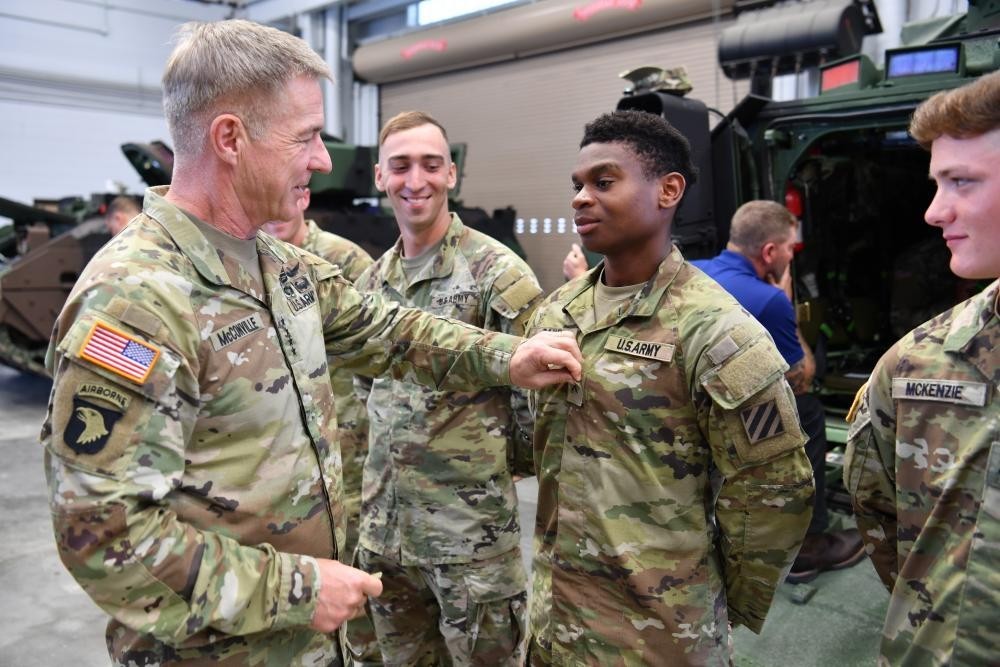
Therabot’s potential extends beyond veterans to recruits and active-duty service members, offering continuity of care throughout a military career. “One thing that can make mental healthcare difficult currently among recruits and active duty is availability and time constraints of mental health professionals when and where help is needed,” Dr. Heinz notes. “Therabot addresses both of those constraints as it is available all the time and can go with users wherever they go.”

This fusion of care is particularly compelling. Large language models like Therabot excel at retaining context and synthesizing vast amounts of personal history. Dr. Heinz envisions, “The memory capabilities and contextual understanding of these technologies… can offer a tremendous amount of personalization.” Imagine an AI that tracks a service member’s mental health from basic training through retirement, adapting to their evolving needs across deployments, relocations, and transitions. This seamless support could bridge gaps in the fragmented military mental health system, providing stability where traditional care often falters.
Addressing the Veteran Suicide Crisis

Despite the Department of Veterans Affairs spending $571 million annually on suicide prevention, the veteran suicide rate remains stubbornly high. Could Therabot offer a more effective path? Dr. Heinz outlines the costs of a meaningful trial targeting the 10% of veterans at risk for suicidal ideation:

Server and Computation Costs: High-performing models often require significant computational power, with expenses tied to the billions or trillions of parameters loaded in memory during use.

Expert Salaries: Trials need mental health professionals to supervise interactions and handle crises, alongside technical experts to maintain the platform.

FDA Approval Process: While exact costs vary, a robust trial at a VA hospital and regional clinics would require substantial funding to meet regulatory standards.

Dr. Heinz emphasizes Therabot’s cost-effectiveness compared to traditional methods, noting its scalability within the centralized VA system. “I would emphasize Therabot’s potential for transformative impact on the military lifecycle,” he says, addressing leaders like HHS Secretary Robert F. Kennedy, Jr., and FDA Head Dr. Martin Makary. Its ability to deliver personalized care at scale could redefine how the VA tackles suicide prevention.
The Power of Personalization

Therabot’s effectiveness hinges on its ability to engage users authentically. Dr. Heinz sees potential in customizable avatars that resonate with veterans, such as a “seasoned medic” or “peer mentor” reflecting military culture’s unique language and traditions. “Thoughtfully leveraging trusted, customizable archetypes could effectively support veterans by tapping into familiar cultural touchpoints,” he explains. This approach could foster trust and rapid therapeutic alliance, crucial for veterans hesitant to seek help.

However, Dr. Heinz urges caution: “Simulating deceased loved ones or familiar individuals might disrupt healthy grieving processes or encourage withdrawal from meaningful human interactions.” The balance lies in archetypes that feel familiar without crossing ethical lines, ensuring engagement without dependency.

For older veterans from the Korea or Vietnam eras, accessibility is key. Dr. Heinz suggests a tablet interface, citing “larger screens, clearer visuals, and easier interaction via touch-based navigation.” Features like larger buttons and simplified designs could make Therabot user-friendly for those less comfortable with smaller mobile devices.

Open-Source Collaboration and Safety

Developing Therabot requires diverse perspectives. Dr. Heinz highlights the role of interdisciplinary collaboration in finetuning models with “high quality, representative, expert-curated data” that reflects varied mental health challenges and military experiences. Collaborative evaluation of foundation models (like Meta’s Llama) also accelerates progress by identifying the best base models for mental health applications.

Safety and privacy are non-negotiable. “All data is stored on HIPAA-compliant, encrypted servers,” Dr. Heinz assures, with strict access protocols overseen by an institutional review board. This rigor applied to a military population would ensure veterans’ sensitive information remains secure, addressing concerns about AI in mental health care.

Why Therabot, Why Now?

Dr. Heinz’s passion for Therabot stems from a blend of personal and professional drives. “Through my practice, I saw how much this was needed due to the really wide gap between need and availability for mental health services,” he shares. His work at Dartmouth’s AIM HIGH Lab with Dr. Nicholas Jacobson, coupled with advances in generative AI, has fueled his belief in Therabot’s potential to deliver “deeply personalized interventions” to those who might otherwise go untreated.

His boldest hope? “That Therabot makes a lasting and meaningful positive impact on current and retired U.S. servicemembers… ultimately benefiting them, their families, their communities, and society.” By integrating a veteran’s history—trauma, past care, and mission experiences—Therabot could deliver tailored therapy, expanding access and reducing devastating outcomes like suicide.

A Call to Action

Therabot is more than a technological marvel; it’s a beacon of hope for veterans battling mental health challenges. Its 2024 trial demonstrated clinical effectiveness, safety, and user engagement, but further funding is needed for VA-specific trials and FDA approval. Dr. Heinz calls for “targeted funding that allows us to complete additional clinical testing,” urging stakeholders to invest in this life-saving innovation.

As I wrote in “Ending 17 Veteran Suicides Per Day,” the status quo isn’t enough. Therabot offers a path forward—scalable, personalized, and rooted in military culture. To make it a reality, we must advocate for funding, raise awareness, and support research that prioritizes veterans’ lives. Together, we can help Therabot save those who’ve served us so bravely.

For more on veteran mental health and to support initiatives like Therabot, visit www.savinggraceatguantanamobay.com.

Written with the assistance of Grok.

Note: Montgomery J. Granger is a retired US Army Major and educator.
Fix Veterans’ Care Now – It’s Life or Death

We didn’t question the order to go to war, so why are we questioned about what the war did to us? 

We wrote a blank check and pledged our sacred honor for our country, but the Department of Veterans Affairs (VA) isn’t helping enough. Since September 11, 2001, over 130,000 veterans have ended their own lives.

One suicide is a tragedy. What do you call one hundred and thirty THOUSAND?

We need to fix the VA now because our lives depend on it.

In 2024, the VA spent $571 million to stop suicides. But where did the money go? Did it save anyone? I don’t see enough proof that it’s working. Worse, when we ask for help, the VA makes us tell our war stories over and over again. It hurts, and it’s not fair. The people deciding if I get help often never saw a battlefield. This messed-up system might be why so many of us feel lost, hopeless, helpless and then give up.

The numbers make me sick. Younger veterans, aged 18-35, are almost three times more likely to die by suicide than people who didn’t serve. For women veterans, it’s 2.5 times higher than other women. Even older veterans like me are hurting more than ever. If this happened at a company—where people were so miserable they hurt themselves—everyone would yell for change. I’m yelling for change now!

Here’s How I’d Start to Fix It:

Trust Me First: When I prove I served (verified DD-214), the VA should help me right away. I shouldn’t have to fight to show my pain came from war. I earned more respect than that.

Learn the Disney Way: Disney makes people happy with the attitude of second-to-none guest service and fun. The VA could train its administrators and staff through the Disney Institute to learn to treat me in a way that makes me feel like I matter and makes me smile.

Use Cool Tech: Things like facial recognition could say my name when I walk in and get me help faster in a personalized (and secure) way. Now, it’s “Last name? Last four social?” Without even looking up.

Make the VA Appealing: Turn VA facilities into welcoming experiences that project care: clean and green, curb appeal, emphasis on maintenance, warm/cool and comfortable, like coming home—like a resort. I’d want to go there, and it might sooth my stress.

Help All of Me: Don’t just fix my body—fix my mind, too! Focus on holistic wellness, not just medical treatment. Add gyms, pools, courts, fields, recreation, activities and groups where I can talk with other veterans. It could make me stronger, more fit and happier.

Be Honest and Quick: The VA needs to show where my money goes and stop making me wait years for help, or taking years to fix things. Waiting has left me and others with nothing—sometimes not even a home.

Bring in Military Helpers: Doctors, nurses, medical specialists, Corpsmen and medics from the Active Duty, National Guard and Reserves could work at the VA. They get what I’ve been through because they’ve been there too. Rotating in military medical personnel could also help retention and recruitment. If they see quality care up close and personal, they know what they are getting themselves into.

Make Asking for Help Normal: Don’t call the suicide hot line a “crisis line.” Just say, “Hurting? Call 988.” I’m not weak for needing help—I’m brave for asking. On the battlefield, one can hear a cry for help: “Medic!” “Corpsman!” That’s what we’re saying when we finally gather the courage to walk in through the front door.

We honor those who never came home by caring for those who did.

We can’t wait anymore. The VA promised to take care of every veteran with respect, dignity and urgency. Lincoln said, “Care for those who bore the battle,” not “Oh, only those parts the soldier can prove were affected by the battle, and oh, by the way, take a number.”

The VA cuts us up with a percentage of “disability” compensation and care. Imagine that? A percentage. Is that what we should have said prior to taking the hill? “Hey, Sarge, I only want to risk 10%, is that OK?”

It’s amazing that they bury the whole person, and not just the percentage they say died because of the war.

My question isn’t going away—I am raising my voice to hopefully make things happen!

We made an all-in bet for everything up to and including our lives. It’s time the VA made good on that bet.

Our dead comrades can’t tell you how they hurt, but we can. Please listen to us now.

What the Veterans Administration Should Be: An Open Letter to Donald Trump, Elon Musk, Vivek Ramaswamy, Pete Hegseth, and Rep. Nick LaLota (NY-1)

Gentlemen,

Our justice system operates on the principle that one is innocent until proven guilty. Why, then, does the Veterans Administration (VA) seem to operate under the opposite assumption when it comes to veterans’ care and disability ratings?

Upon verifying service through documents like the DD-214 and issuing an ID card, the VA should immediately assume veterans are entitled to care as promised by the very ethos of our military service: “To care for him who shall have borne the battle, and for his widow, and his orphan.” This statement by Abraham Lincoln in his second inaugural address at the end of the Civil War, carries no qualifiers; it’s a promise to care for all veterans, regardless of where they served or what they endured.

However, the current system is fundamentally flawed. Veterans are forced to spend considerable time and effort proving their ailments are service-related, which contradicts the unconditional service and sacrifices we’ve made. Veterans took an oath without caveats; we committed to follow orders, defend the Constitution, and potentially give our lives. In return, we should receive care without the burden of proof.

The administration of the VA by civilians lacking military or combat experience has been problematic. With Pete Hegseth potentially becoming the new Secretary of Defense, there’s hope for change. This matter should also resonate with President Trump, and I believe the Department of Government Efficiency (DOGE), under the influence of Elon Musk and Vivek Ramaswamy, could address these inefficiencies with common sense and innovation.

A New Philosophy for the VA:

Prioritization: The veteran should be the priority. Upon entering a VA facility, instead of the impersonal request for “Last Name and Last Four,” why not use modern technology like facial recognition and/or other biometrics for both security and personalized greetings? This would not only enhance security but also personalize and streamline the care process.

Efficiency and Technology: Implement integrated, high-tech systems to improve efficiency. Veterans should feel welcomed and valued, much like guests at a Disney resort where the business model is simple: treat every customer as a cherished guest.

Perception and Recruitment: The negative perception of the VA could deter potential recruits. If the VA were seen as a place where veterans are genuinely cared for, it might attract and keep more individuals to military service.

Facility Management and Care:

At Northport VA on Long Island, NY, the ongoing disrepair and delays in basic maintenance projects like HVAC systems or parking areas reflect a deeper issue of neglect. A 3-year, $21 million project, started in 2018, is still unfinished. These conditions not only degrade the quality of care but also demoralize veterans who must navigate an environment that seems to have forgotten them. Part of my 36-year career in education and education leadership involved public school facilities management. Some of the jobs in the capital projects plan for the Northport VA could have been completed in 6-8 weeks, rather than the current 6-8 years!

My personal health experience, after 22 years of military service including combat deployments, involves dealing with issues like hearing loss, tinnitus, sleep apnea, and PTSD, yet the process to receive care or compensation feels like an additional battle.

Rethinking VA Budgeting and Care:

The VA’s budgeting must be adaptive to the fluctuating needs of veterans, not constrained by typical government fiscal policies. The number of new claimants cannot be accurately predicted from year-to-year. It’s been over 16 years since I retired, and I am only now applying for a disability rating for the first time. Imagine the savings and improved care if we assumed veterans’ health issues were service-related unless proven otherwise? This shift could redefine the VA from an adversarial entity to one that truly supports and heals those who served.

I understand the current disability application system results in compensation, but what if I don’t need the money, just the care? Because the process is so arduous, complex and full of bureaucratic red tape, it could take months for approval, disapproval, appeals and other delays. Many veterans needlessly pay others to help them through the application process.

Conclusion:

I urge you to consider these changes, to let loose the capabilities of DOGE and the leadership of Pete Hegseth on this broken system. We should treat the whole person, not just the ailments deemed service-connected. A wholistic approach to healthcare is the most effective. Veterans have given much; it’s time the VA reflects this nation’s gratitude and commitment to our well-being by honoring Lincoln’s compassionate vision for veteran care.