Fix Veterans’ Care Now – It’s Life or Death

We didn’t question the order to go to war, so why are we questioned about what the war did to us? 
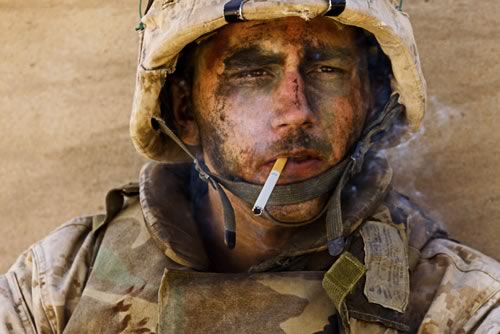
We wrote a blank check and pledged our sacred honor for our country, but the Department of Veterans Affairs (VA) isn’t helping enough. Since September 11, 2001, over 130,000 veterans have ended their own lives.

One suicide is a tragedy. What do you call one hundred and thirty THOUSAND?

We need to fix the VA now because our lives depend on it.

In 2024, the VA spent $571 million to stop suicides. But where did the money go? Did it save anyone? I don’t see enough proof that it’s working. Worse, when we ask for help, the VA makes us tell our war stories over and over again. It hurts, and it’s not fair. The people deciding if I get help often never saw a battlefield. This messed-up system might be why so many of us feel lost, hopeless, helpless and then give up.

The numbers make me sick. Younger veterans, aged 18-35, are almost three times more likely to die by suicide than people who didn’t serve. For women veterans, it’s 2.5 times higher than other women. Even older veterans like me are hurting more than ever. If this happened at a company—where people were so miserable they hurt themselves—everyone would yell for change. I’m yelling for change now!

Here’s How I’d Start to Fix It:

Trust Me First: When I prove I served (verified DD-214), the VA should help me right away. I shouldn’t have to fight to show my pain came from war. I earned more respect than that.

Learn the Disney Way: Disney makes people happy with the attitude of second-to-none guest service and fun. The VA could train its administrators and staff through the Disney Institute to learn to treat me in a way that makes me feel like I matter and makes me smile.

Use Cool Tech: Things like facial recognition could say my name when I walk in and get me help faster in a personalized (and secure) way. Now, it’s “Last name? Last four social?” Without even looking up.

Make the VA Appealing: Turn VA facilities into welcoming experiences that project care: clean and green, curb appeal, emphasis on maintenance, warm/cool and comfortable, like coming home—like a resort. I’d want to go there, and it might sooth my stress.

Help All of Me: Don’t just fix my body—fix my mind, too! Focus on holistic wellness, not just medical treatment. Add gyms, pools, courts, fields, recreation, activities and groups where I can talk with other veterans. It could make me stronger, more fit and happier.
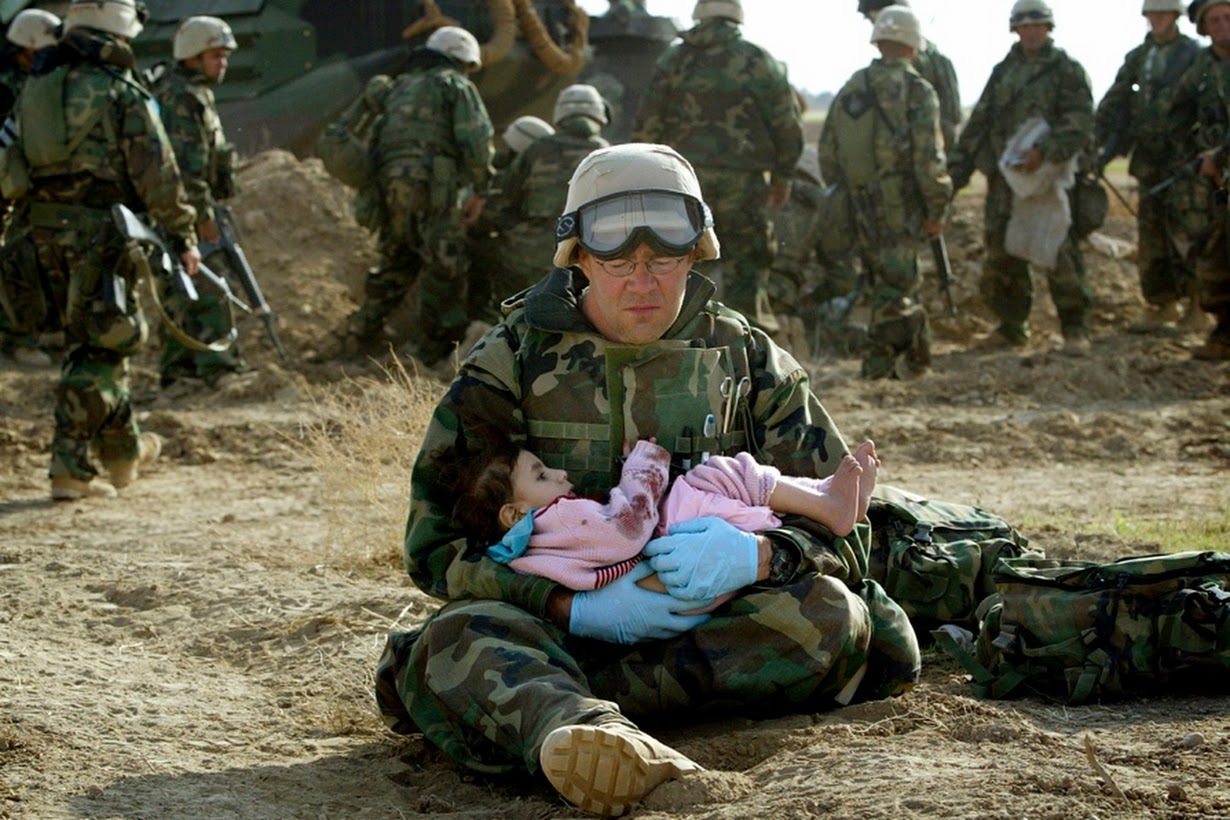
Be Honest and Quick: The VA needs to show where my money goes and stop making me wait years for help, or taking years to fix things. Waiting has left me and others with nothing—sometimes not even a home.

Bring in Military Helpers: Doctors, nurses, medical specialists, Corpsmen and medics from the Active Duty, National Guard and Reserves could work at the VA. They get what I’ve been through because they’ve been there too. Rotating in military medical personnel could also help retention and recruitment. If they see quality care up close and personal, they know what they are getting themselves into.

Make Asking for Help Normal: Don’t call the suicide hot line a “crisis line.” Just say, “Hurting? Call 988.” I’m not weak for needing help—I’m brave for asking. On the battlefield, one can hear a cry for help: “Medic!” “Corpsman!” That’s what we’re saying when we finally gather the courage to walk in through the front door.

We honor those who never came home by caring for those who did.

We can’t wait anymore. The VA promised to take care of every veteran with respect, dignity and urgency. Lincoln said, “Care for those who bore the battle,” not “Oh, only those parts the soldier can prove were affected by the battle, and oh, by the way, take a number.”

The VA cuts us up with a percentage of “disability” compensation and care. Imagine that? A percentage. Is that what we should have said prior to taking the hill? “Hey, Sarge, I only want to risk 10%, is that OK?”

It’s amazing that they bury the whole person, and not just the percentage they say died because of the war.
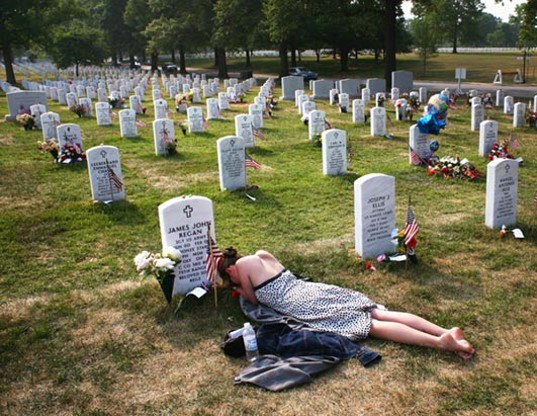
My question isn’t going away—I am raising my voice to hopefully make things happen!

We made an all-in bet for everything up to and including our lives. It’s time the VA made good on that bet.

Our dead comrades can’t tell you how they hurt, but we can. Please listen to us now.

Fixing the VA: What a Disney Approach Could Do

UPDATED: 6 February 2025

Drastic measures need to be taken with the VA, and the Disney Way may be a great approach.

Beyond the comical mouse & friends, lies a pinnacle of business acumen. Individuals and companies spend big bucks each year to learn the secrets of Disney customer service, management, logistics, maintenance and more at Disney Institute, aka, Disney University.

SaluteMickey

Everything about the Disney Company is special, and mostly successful. Of course, it’s all about the people, but then there’s the rub, isn’t it? The people make Disney special as much as the methods do.

I remember my father telling me repeatedly, as he would frequently stop a project to head to Sears for yet another Craftsman tool, “Right tool for the right job,” he would say.

One could easily say the same about people, or more specifically, employees. I could say, “Right person, right job saves time and money.”

Disney invests in the person. Disney invests training, health care, benefits, frequent raises and vertical movement. Disney means quality. Disney means care. Disney means success.

What part of this does the Veterans Administration not need?

Exactly, they need all of it and more, fast.

Sending VA executives, managers, health care professionals, technicians, clerical and volunteers to Disney Institute may seem unnecessary and overkill, but why shouldn’t our veterans receive five star treatment and customer service? Remember, it’s about people.

Disney could help in other ways as well. The whole VA experience could be Disneyfied, from upgrading automated appointment making, to streamlined pharmacy operations; smartbands and housekeeping, parking, cuisine and yes, even entertainment. If the point is to get the veteran to the VA, then why not make it into a place that they want to be?

Short of having Disney characters in costumes at VA hospitals, Disney could infuse a little magic into the experience with state-of-the-art technology, from entertainment opportunities, moving walkways, fresh fruit and vegetable kiosks, petting places (where small mammals could be handled by vets for stress reduction), fitness centers, fitness pools, Jacuzzi’s, spa’s, bowling alleys, art and dance studios, movie theaters, restaurants and coffee joints. OK, and maybe a meet & greet here and there?

Too frivolous, you say? Too expensive? How about the honorable veteran who wrote a blank check for everything up to and including his or her life so that you can stay at home with your family and maybe take a trip to Disney World while he or she was out in the boonies getting blown up? Too risky, too dangerous, you say? Well, that’s why we honor them, especially the fallen and severely injured. We honor them by taking care of all those who survive.

Zippity-Do-Dah!

How do you infuse a quick fix while we rotate VA staff through Disney University? You activate medical National Guard and Reserve troops. Most medical personnel in the military are Guard and Reserve personnel. These part-time warriors are full time civilian health care professionals and workers, and could easily assimilate into the world of the VA medical system.

In fact, years ago, when I was serving with a US Army Hospital Reserve unit, we worked our drill weekends in the local VA hospital, and sometimes at the local state university hospital. Like fish in water, these reservists would fit right in, like one big military family.

National Guard and Reserves typically do one weekend of service each month and then two weeks of training in the summer to meet minimum participation requirements. Why can’t this service be done in VA hospitals and medical facilities?

When I was hired by Disney back in the mid 1980’s for my dream job as a Davy Crockett Canoe ride attraction host at Disneyland in California, I went through Disney University (orientation). I will never forget the speech we got after watching the Disney Story in a small screening room. The lights came up and the trainer said, “So, what product does Disney sell?” Silence. “We sell happiness!” came the answer. “How do we sell happiness? By treating each person who walks through the front gates as if they were a guest in your own home.”

That was it. That was the secret to the Disney Way.

So, what’s so wrong with giving vets a little something they really deserve? A little happiness along with their health care. Vets have already paid for their E ticket, park hopper and annual pass; what’s left is a little TLC.

A holistic approach to health is always the best approach. A happy patient is a patient that has an exponentially better chance at recovery than an unhappy or depressed patient.

Even Disney has a dark side, and the dark side about the reality of the VA is that suicides amount to nearly 22 lives per day.

Let that sink in.

What business could survive if their customers committed suicide at a rate of 22 per day? The publicity alone would put them out of business.

My wife and family and I have been Disney Vacation Club owners since August 2001. We take a yearly pilgrimage to the House of Mouse and enjoy resort style living for a week or so. Occasionally, we will find ourselves at another amusement park or two here or there. And as soon as we walk through the front gates we think out loud to ourselves, that “It may be nice, but it ain’t Disney.”

The VA ain’t Disney.

But it could be.

Rethink the whole experience being mindful of the goal: health, wellness and happiness. That’s already part of the American way, with life liberty and the pursuit of happiness from our founding documents.  Did President Lincoln mean something less when he famously said we should, “Bind up the nation’s wounds; to care for him who shall have borne the battle, and for his widow, and his orphan,” pronouns notwithstanding.

We should think of “care for” in the broadest possible meaning. Whatever has been done in the past, and whatever is going on now, is not working. The bodies are piling up, and it’s time to think out of the government bureaucracy box and think more like the happy, successful people we should be.

Wrangle some VA Imagineers, seriously, and then let them run loose among the halls, walls and campuses of VA institutions and then turn them into resort and concierge style health care and beyond. They deserve it, and we can do it.

“It’s kind of fun to do the impossible.” – Walt Disney

NOTE: The author, Montgomery J. Granger is a retired educator of 36 years. He earned a BS Ed. from the University of Alabama in Health, Physical Education, Recreation and Dance in 1985, and earned an MA from Teachers College – Columbia University in Curriculum and Teaching in 1986. He substitute taught, K-12, in his home district in Southern California in 1986-87, when he worked weekends and holidays at Disneyland. He joined the US Army National Guard as a Combat Medic/Medical Specialist in 1986, and in 1991 became a Second Lieutenant in the US Army Medical Service Corps via Officer Candidate School, and spent the remaining 17 years as a Health Services officer. He retired from the Army Reserves in 2008 at the rank of Major, having served at Guantanamo Bay, Cuba, Ft. Dix, NJ, and in Iraq, on deployments in support of the Global War on Terror after 9/11/2001. He taught at various schools in New York City, including the Buckley School for Boys, where Donald Trump, Jr., and Richard Nixon’s grandson, Nicholas Cox were two of his students. He taught at Brandeis HS on the Upper West side of Manhattan, and then at the Bayard Rustin High School for Humanities in the Chelsea section of Manhattan, teaching health and physical education, coaching and serving as a Dean of Students. He became a school administrator in 1998 and attended the State University of New York at Stony Brook for School District Administrator certification. At various times and school districts in Suffolk County, Long Island, NY, he was Director of Health, Physical Education, Athletics, Health Services, Facilities and Security. He retired from education in 2022. He lives on Long Island with his wife of 31 years, also a retired educator, and his five children, now ages 29-16.