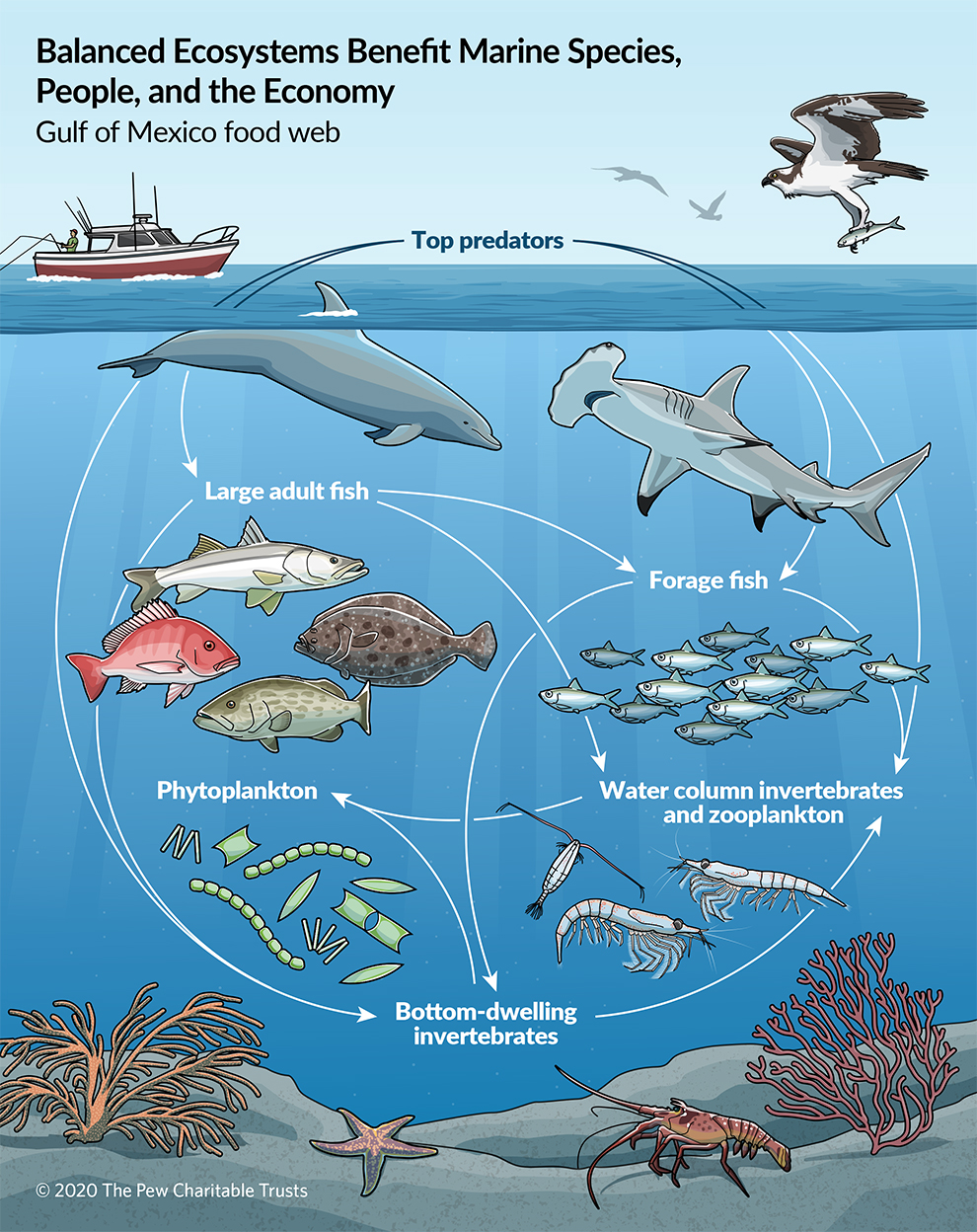
The Gulf of Mexico, as it’s been called for ages, is a vital cornerstone of prosperity, history, and culture for the nations around it. But let’s face it—the name just doesn’t do justice to the big, bustling, blue bowl of life that it really is. Renaming it the Gulf of America could give it the recognition it deserves while adding a touch of unity and a wink of practicality. Now, before anyone starts throwing their sombreros or Stetsons in the air, let’s explore the why, the how, and the “what’s in it for us” of this idea.
A Name That Sticks (and Means Something)
Names carry weight, and not just the kind you toss around in a family feud. The Gulf’s current name is tied to history, sure, but it doesn’t quite capture the shared ties of the nations that sip from its shores. Mexico, the United States, and Cuba all rely on the Gulf’s treasures—be it for oil, shrimp, or a good spot to sunbathe. Calling it the Gulf of America nudges everyone to think of it as a shared resource, a neighborly handshake across the waves.
More than that, a new name shines a spotlight on the teamwork it takes to manage such an important patch of water. The Gulf isn’t just a pretty face; it’s a major player in global commerce, a livelihood for fishermen, and a challenge for environmentalists. A name like Gulf of America would remind everyone of the shared responsibility to keep it ticking.
Tying It All Together: History, Culture, and a Dash of Nostalgia
This big blue stretch has seen it all: Native American trade routes, European explorers, revolutions, and even a pirate or two. It’s been a cultural melting pot long before melting pots were cool. Renaming it doesn’t wipe the slate clean; instead, it adds a new chapter to its story—a chapter about unity and a shared purpose.
Imagine the coastal folks—Texans, Yucatecans, Cubans—all nodding in agreement that this watery wonder is theirs to care for, protect, and celebrate. A name like Gulf of America could even make folks a little prouder of their corner of the world, seeing it as not just theirs, but ours.
Dollars, Sense, and Sandy Toes
Here’s the kicker: a name change could mean big bucks. The Gulf is already a hotspot for tourists, from its sun-soaked beaches to its seafood shacks. Rebranding it as the Gulf of America could double down on its appeal, drawing in visitors eager to discover “The Heart of America.” Think about it: cruise liners, beach resorts, and coastal towns all cashing in on the new name’s charm.
This isn’t just about fancy marketing. It’s about creating a shared identity that could lead to joint ventures—whether in tourism, environmental conservation, or even cross-border festivals celebrating the Gulf’s rich traditions. Everybody wins when the pie gets bigger.
The Road Ahead: How Do You Pull This Off?
Changing a name isn’t like naming a dog—it takes effort. It means talking to everyone who has a stake in the game: governments, local communities, environmentalists, historians, and anyone else who might raise an eyebrow or a placard. But it’s doable if framed right. This isn’t erasing history; it’s updating it, like giving your grandpa’s old car a fresh coat of paint.
Sure, there’ll be skeptics. Some folks might bristle at the change, seeing it as too bold or too USA-centric. But diplomacy and a few good metaphors can help. It’s not about claiming ownership; it’s about claiming a shared future, a collective identity that reflects everyone’s stake in the Gulf’s well-being.
The Closing Argument: A Name Worth Its Salt
Renaming the Gulf of Mexico as the Gulf of America isn’t just a fancy idea—it’s a statement. It’s saying, “This place matters to all of us.” It’s a nod to the Gulf’s history, its economic might, and its role as a cultural bridge. It’s a call to action to work together to protect and cherish this vital resource.
So, let’s stop calling it by a name that fits like last year’s boots. Let’s give it a name that feels right, that feels big, that feels like home. Gulf of America—it’s got a nice ring to it, don’t you think?
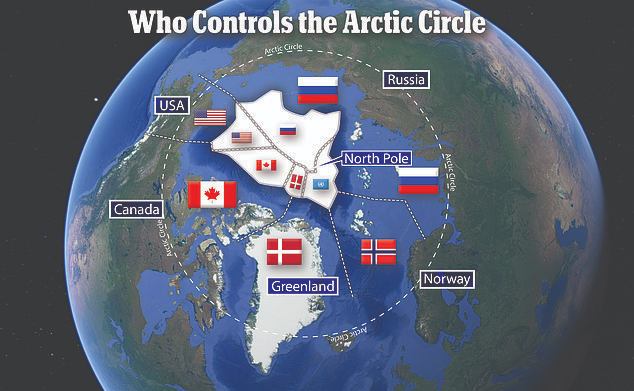
Recently, President Elect, Donald J. Trump has shown interest in a much closer relationship with Greenland, an autonomous country in the North Atlantic, but a protectorate of Denmark. The following is a “best way forward” approach to improving our relationship with “Kalaallit” (the people) of Greenland “Kalaallit Nunaat” (Land of the People).
Greenland is a land of breathtaking beauty and rich traditions, home to resilient people who have preserved their heritage in the face of a changing world. As Greenland charts its path toward greater autonomy and prosperity, there is an opportunity for a deeper partnership with the United States that could unlock new possibilities for economic growth, security, and cultural preservation. By exploring the idea of Greenland becoming a protectorate or commonwealth of the United States, we can envision a future that respects Greenland’s unique identity while providing resources and opportunities to enhance the quality of life for all its people.
Respect for Greenland’s History and Culture
Greenland is more than just a vast, icy expanse—it is a vibrant land with a proud Indigenous heritage. Any partnership with the United States would honor and protect Greenland’s culture, language, and traditions. Greenlanders have fought for and achieved self-rule, and this autonomy would remain at the heart of any agreement. Much like Puerto Rico or the Northern Mariana Islands, Greenland could maintain its distinct identity while benefiting from access to American resources and global networks.
Unlocking Greenland’s Economic Potential
Greenland is rich in natural resources that can fuel its development and prosperity. Rare earth minerals, critical for renewable energy and modern technologies, lie beneath Greenland’s surface. With U.S. investment and technology, Greenland could responsibly develop these resources, creating jobs and generating revenue while protecting the environment.
Tourism, already a growing industry, could flourish with the support of U.S. infrastructure development, including modern airports and sustainable transportation systems. Greenland’s fisheries—among the most pristine in the world—could gain better access to international markets, boosting the livelihoods of Greenlandic fishermen.
Moreover, U.S. partnerships in education and training could equip Greenlanders with the skills to lead these industries, ensuring that the wealth generated benefits the local population first and foremost.
Security and Sovereignty in the Arctic: “Greenland First!”
Greenland’s location in the Arctic places it at the center of global attention. If changing weather patterns create new shipping routes, Greenland would face increased interest from powerful nations like China and Russia. A closer relationship with the United States could provide Greenland with the resources and expertise to protect its sovereignty and ensure that its people—not foreign powers—control its destiny.
The United States has long recognized Greenland’s strategic importance, hosting Thule Air Base as a vital part of international security. By formalizing a partnership, Greenland could gain greater support for protecting its waters and infrastructure while contributing to regional stability. Something Denmark cannot afford to do, economically or strategically.
Improving Quality of Life for Greenlanders
A partnership with the United States could bring transformative benefits to Greenlandic communities. Improved healthcare facilities, modernized schools, and expanded vocational training could provide Greenlanders with new opportunities to thrive. Investments in renewable energy and sustainable development would not only create jobs but also position Greenland as a global leader in combating climate change.
In particular, Greenland’s youth could benefit from enhanced educational opportunities, including scholarships to study abroad and training programs to prepare them for leadership roles in government, business, and science. These investments would ensure that Greenland’s next generation has the tools to build a prosperous and self-sufficient future.
A Relationship Built on Respect – Inuuqatigiitsiarniq: Living in Harmony
Greenland’s path forward must be shaped by its people. Any partnership with the United States would require the consent and participation of Greenlanders at every step. This would not be an arrangement of dominance but of mutual benefit—where Greenland retains control over its culture, resources, and governance while gaining access to the tools and partnerships needed to succeed on the global stage.
Living in harmony, or Inuuqatigiitsiarniq to the Inuit’s indigenous to Greenland, embodies respect, kindness, and fostering good relationships with others. It reflects a way of life that values cooperation, mutual respect, and a deep connection to the community and environment.
The idea behind Inuuqatigiitsiarniq is about maintaining balance and showing consideration for all living beings, which aligns with the Greenlandic and Inuit cultural ethos of respecting nature, elders, and each other.
The United States has a history of working with territories and protectorates in ways that respect their autonomy and cultural heritage. Greenland could shape this relationship to reflect its unique identity and values, ensuring that its voice is heard, and its traditions are preserved.
Tupilak art – meaning “ancestors spirit or soul.”
A Shared Future
The challenges and opportunities facing Greenland are immense. From the effects of climate change to the pressures of globalization, Greenland stands at a crossroads. By forging a closer partnership with the United States, Greenland could secure its future while retaining its heritage. Together, we could create a model of cooperation that respects the past, embraces the present, and builds a brighter future for generations to come.
Donald Trump, Jr., with “Kalaallit” (the people).
The choice belongs to the people of Greenland. With careful consideration and mutual respect, this partnership could be a journey toward shared prosperity and enduring friendship.
Forget everything you thought you knew about money.
In the end, your monetary system should be a barter system, exchanging one thing of value for another thing of value. That’s fair and equitable.
That’s how the monetary system of the United States was imagined. With Roger Sherman, member of Congress, monetary scientist and in favor of tariffs and a national bank, helped write the finance sections of the Constitution, Article I, Sections 8 & 10.
These passages establish the who, what and how of our monetary foundation, which included weights and measures, gold and silver as a backing for our currency and Congressional control.
Where we went wrong was in allowing private banking interests to confiscate the wealth of our nation with the Federal Reserve Act of 1913. The Federal Reserve (FED) is neither federal (it is listed as a private business) nor a reserve (any gold it holds is not ours) of anything, and it is owned by US and global banking interests, not the American people. The shares of the FED cannot be bought on the market or sold but earn interest on debt owed by every US citizen of the bankrupted United States, payable to the owners of the FED.
By 1971 the gold standard was gone, and so was the promise to pay in lawful money on our currency, once “US Notes,” now “Federal Reserve Notes” (a monetary “note” is a promise to pay, not payment in and of itself). The dollar, which was a measure of a certain amount of gold or silver, became the thing for which it was a measure.
US Fifty Dollar Gold Certificate – Payable in Gold Coin
Think of a gallon becoming milk instead of a gallon of milk. Absurd, right? Not if you change things over generations.
Today, our all-debt money system works because we have been conditioned to think and believe that the paper money or the “dollars” we spend have value. In fact, they have only psychological value, where once they held intrinsic value, like in a true barter system.
But now, because about 90 percent of all M1 (money in circulation) is zeroes and ones (digital), it can be created out of thin air, based on imagination, not a tangible thing.
Why not return to a gold standard and use precious metals to back our money? Currently, that would be impractical, as these things are sold as commodities, which rise and fall in value based on market pressures, supply and demand. You would need any country willing to trade with us to agree on a standard weight, measure and value of these metals for a legitimate monetary system to work.
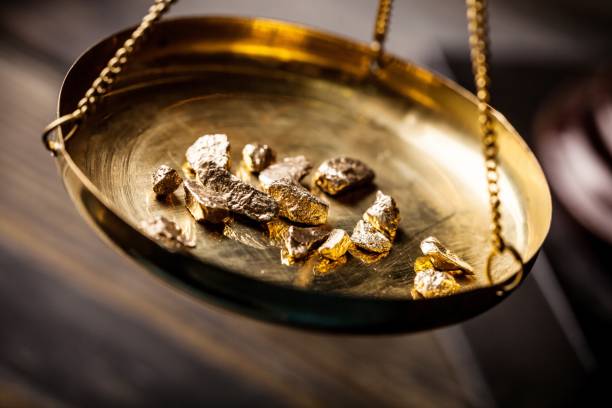
Small gold nuggets in an antique measuring scale
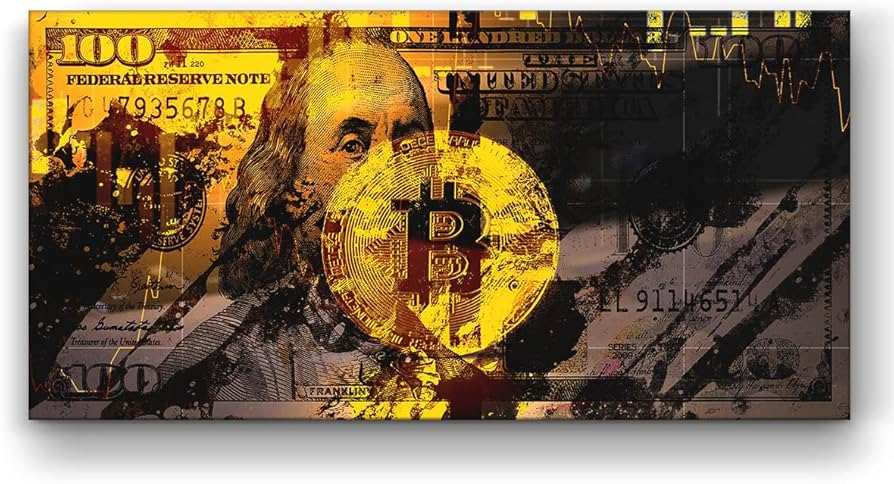
So, what’s with crypto and Bitcoin? These are simply notional currencies, just like the digitized dollar, only they pretend to have value, again, based on market pressures of supply and demand.
Bitcoin fans would argue that because there is a finite amount of Bitcoin, 21 million “coins,” they will hold and increase in value. Bitcoin is “made” when “miners” solve cryptographic puzzles to add new blocks to the blockchain (a shared, immutable ledger that facilitates the process of recording transactions and tracking assets in a business network). This process rewards them with new bitcoins and transaction fees. Over time, the issuance of new bitcoins decreases, ensuring a finite supply. Bitcoin mining takes a lot of energy and physical assets, which they say adds to the legitimacy of the process, which is decentralized.
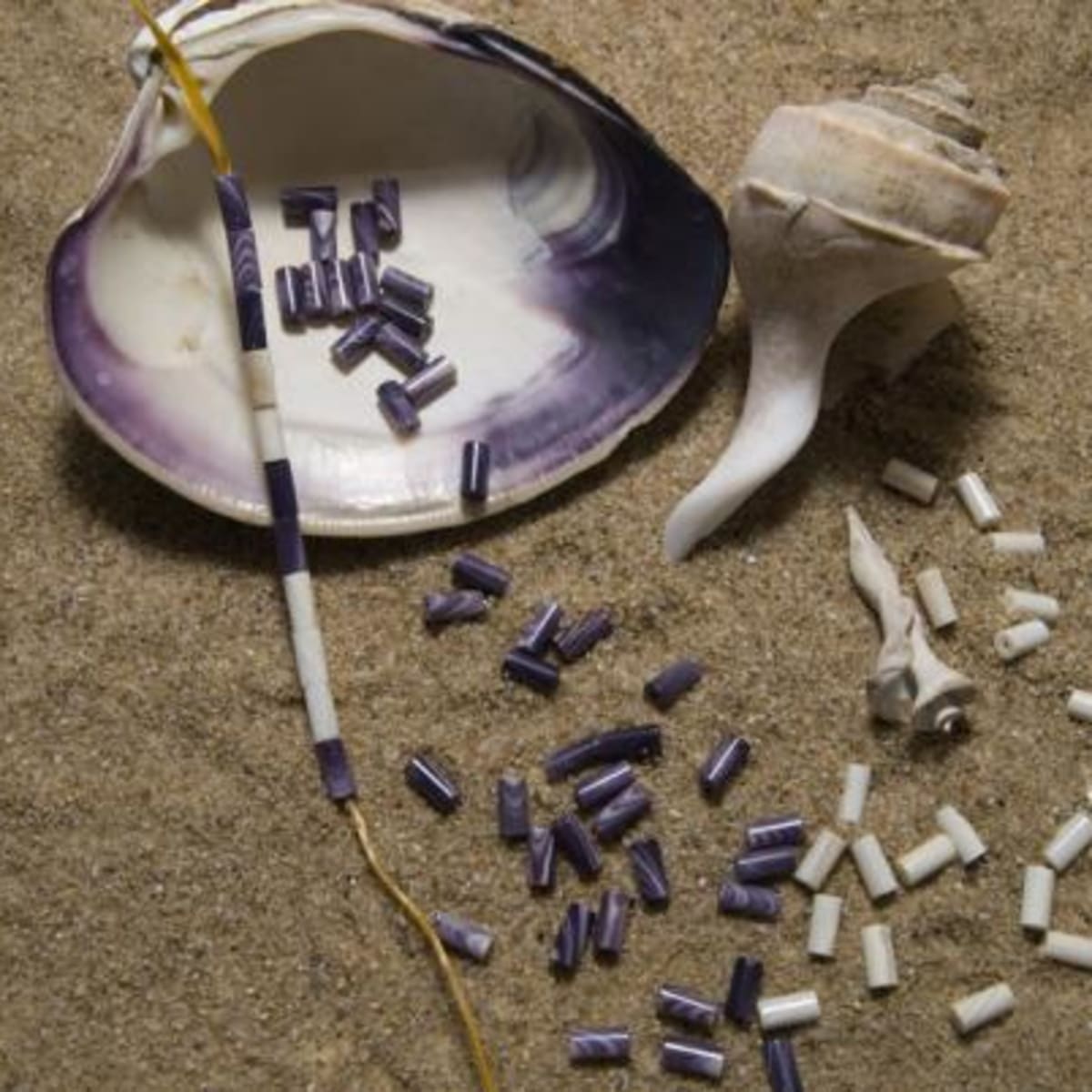
But imagine a Native American trading in wampum (seashells), being told there was a new money, but you can’t touch, taste, see, smell or make nice clattering sounds with it!
Native American Wampum – crafted seashell beads used as currency.
Bitcoin works now only because laws allow it. But wait and see, at some point it will become regulated. Why? Because the government always gets its cut. Corrupt politicians and the rich elite can’t pass up the temptation to make money by creating something out of thin air, just like our former fractional reserve banking system.
Banks in this system needed only have a “fraction” of the money on hand in order to loan out much more, say reserves of $1,000 in order to loan out $9,000. That’s right! They could create $9,000 out of thin air and then loan it out at interest, making free money for themselves. The more they loan, the more they earn. But the interest on that $9,000 was never created. What does that mean to a monetary system?
If the interest on a loan is never created, then at some point someone has got to default on their loan because there isn’t enough money in circulation to accommodate the repayment of all loans plus interest, it means the money has to come from somewhere, but where? Enter the government and the FED. The more the government spends, the more money there is in circulation. The more government borrows, the more interest is owed, causing inflation.
But, news flash! Since March 2020, the fractional reserve amount required of FED member banks is now ZERO PERCENT. That’s right, a bank is allowed to loan money it does not have, all of it, creating a bonus of interest payments for itself.
Member banks have to “buy” FED stock equal to 6% of their paid-up capital and surplus. But they only have to put up 3% to the FED; the other 3% is “callable.” That entitles the member bank to dividends from earned interest on government securities, but only up to 6%.
Most people think banks can only loan out what they keep on deposit from checking and savings accounts. The truth is, checking and savings accounts are bank LIABILITIES. That’s right, it is money they OWE, so they can’t spend it or loan it out because it’s not their money. Banks only make money on fees and interest on loans and other holdings, and dividends from FED stock.
Shocked? Did you never learn this in school? This system guarantees that the wealthy get wealthier. It guarantees that some percentage of borrowers will always end up in default, losing their loan collateral to the banks.
That’s what happened in the housing bubble burst in 2008. Home loans were cheaper than dirt and loan officers were told to give, give, give, so that when they borrower defaulted they could collect, collect, collect. Only when the defaults rolled in did people simply walk away from loans, leaving the loaning institutions in the lurch and failing, but with lots of real estate no one could afford!
Two of the biggest loaners (and losers) were government loaning institutions, affectionately known as Freddie Mack and Fannie Mae. The government should only be involved in the loan business if the government owns the central bank. Ours does not. Ours borrows from the private central bank known as the FED.
That’s right, We the People used to own our money system, controlled by Congress, our representatives, whose feet we could hold to the fire if things got out of control. No more. If you ask your congressional representatives about our money system they will refer you to the Federal Reserve, when they should be referring you to the Constitution.
Roger Sherman, one of the Founding Fathers and a signatory of the Declaration of Independence, played a critical role in shaping the financial and monetary principles of the United States. His views on monetary policy, often rooted in economic pragmatism and fairness, align with the constitutional provisions in Article I, Sections 8 and 10, which govern Congress’s powers over money and the monetary limitations on states. Let’s delve into these topics:
Roger Sherman’s Perspective on Money
Advocate for Sound Money:
Sherman was a proponent of “sound money,” meaning money backed by tangible assets like gold or silver.
In his 1752 pamphlet, A Caveat Against Injustice, Sherman warned against the dangers of fiat money (currency not backed by physical commodities) and decried the unfairness of paper money schemes that often led to inflation and economic instability.
In the beginning, gold smiths charged owners of gold to keep the metal safe, and issued receipts that the owners began to use as currency in the economy. After a while, gold smiths, or our first bankers, learned they could create receipts for gold they did not have, and then spend them into the economy. Eventually, short bankers were hung from tall trees once owners of gold discovered the bankers had created false receipts which were brought in, reducing the amount of gold on hand.
Principles of Honest Trade:
Sherman believed that money should be a stable medium of exchange and a store of value to ensure fairness in trade and prevent fraud or devaluation.
Article I, Section 8: Monetary Powers of Congress
This section grants Congress the following powers relevant to monetary science:
“To coin Money, regulate the Value thereof, and of foreign Coin”:
Congress holds the exclusive authority to mint coins and establish their value, creating a uniform national currency.
This clause aims to standardize currency across states, preventing the chaos of competing currencies and varying values.
“To provide for the Punishment of counterfeiting the Securities and current Coin of the United States”:
Counterfeiting disrupts economic stability, and Congress’s power to penalize it upholds the integrity of the monetary system.
Relevance to Sherman’s Views:
Sherman’s insistence on precious metals (gold and silver) as the standard for currency aligns with the Constitution’s granting of monetary authority to Congress to ensure reliability and stability in currency value.
Article I, Section 10: Monetary Limitations on States
This section restricts state monetary practices:
“No State shall… coin Money; emit Bills of Credit; make any Thing but gold and silver Coin a Tender in Payment of Debts”:
Prohibition on State Currencies: States cannot issue their own currency or print paper money (bills of credit). This prevents the monetary fragmentation and instability experienced under the Articles of Confederation.
Gold and Silver as Legal Tender: States are limited to gold and silver as legal tender for debts, reflecting Sherman’s argument that precious metals are the most stable and just form of money.
Rationale:
These restrictions centralize monetary authority under Congress to ensure uniformity and prevent inflationary policies or economic manipulation by individual states.
Monetary Science Implications
Standardized Currency:
By centralizing the creation and regulation of money under Congress, the Constitution ensures a single, standardized currency for the nation. This promotes economic efficiency and trust in the monetary system.
Intrinsic Value of Money:
Sherman’s preference for gold and silver reflects an intrinsic value approach, where the monetary unit derives its worth from physical commodities. This contrasts with modern fiat currencies, whose value is based on government backing and public trust.
Inflation and Stability:
The framers’ restrictions on states and emphasis on gold and silver were responses to the rampant inflation caused by overissued paper money during the Revolutionary War period.
The Role of Congress:
Congress’s power to regulate currency values ties into its broader economic responsibilities, such as managing interstate commerce and the national debt.
Roger Sherman’s Legacy
Sherman’s advocacy for a stable, commodity-based monetary system influenced the framers’ decision to enshrine gold and silver as the monetary standard for states. While the U.S. has since shifted to a fiat currency system (with the Gold Standard abandoned in 1971), Sherman’s principles highlight the foundational goals of fairness, stability, and trust in the monetary system.
The principles codified in Article I, Sections 8 and 10 continue to reflect the balance between central monetary authority and limitations designed to prevent economic instability—a balance Sherman deeply cared about.
Yet with the FED in charge, all profits or “dividends” paid to the holders of Federal Reserve stock from interest paid on government securities and the National Debt go to banking interests, not the American people.
That has got to change.
Our money system was designed to do the work of economic stability and prosperity for the people, not the banking interests. Certain of our Founding Fathers were concerned about this, including Thomas Jefferson.
We need to reclaim our money system from the FED and design a legitimate barter system based on an agreed upon gold (and silver) standard.
Remember that Wall Street is merely Las Vegas without the lights. Adults are entitled to their entertainment, and if you choose to spend your hard earned cash on speculation, that’s your choice, but the average American citizen should be allowed to avoid speculation and invest in their future using solid, accountable, stable currency that will hold its value.
We need to avoid the gambler’s temptation for crypto and Bitcoin, and stick with and strengthen the dollar, returning to US Notes and a true United States central bank that is of, by and for the people, dedicated to life, liberty, property and the pursuit of happiness.
Tell your congressional representatives that you are “Mad as hell,” and you’re “not going to take it anymore!” They, Congress is our “legitimate avenue of redress of [our] grievances.” Let them know who you are, what you expect, and that you will be following up and voting according to their response and action.
After a recent trip where I encountered the Transportation Security Administration (TSA) several times, it struck me how, if the Secret Service had even half the scruples of this maligned three letter government agency, President Trump’s ear would still be intact, and an attempt on his life never made.
Let me explain.
My wife and I haven’t flown much in the last ten years, but do recall some of the rules concerning what to take and not to take in carryon luggage. My mistake on a recent trip was not noticing that a can of shaving cream (full size) was spotted in the x-ray machine and I was asked to step aside and witness my neatly packed bag turned almost literally upside down in order to reveal the offending toiletry.
The TSA agent, shaking her head and holding up the full-sized can, said the shaving cream was too big. As if I knew that, or should have known that. I should have. God knows, there are all kinds of false-bottom shaving cream cans out there that could possibly contain explosive or other harmful devices or chemicals. How could I have been so careless?
The TSA agent found something else on the fly while exploring my toiletries for the shaving cream. I had placed a mostly plastic, 2-inch square, see-through multitool in the clear plastic toiletries bag. The tool had a magnifying glass, measuring edge, compass, file, bottle opener and . . . unfortunately for me, a “sharp edge.” Gone.
It actually didn’t bother me that much, as these items were easily replaced; I had another identical multitool at home, and because I thought, “Wow, all these years after 9/11, the shoe bomber, etc., the TSA are sharp as nails on this stuff. I really feel safe now.”
The return trip was not so smooth.
I got nailed again, but before they opened my bag and began the sloppy search, I really had no idea what they could be looking for.
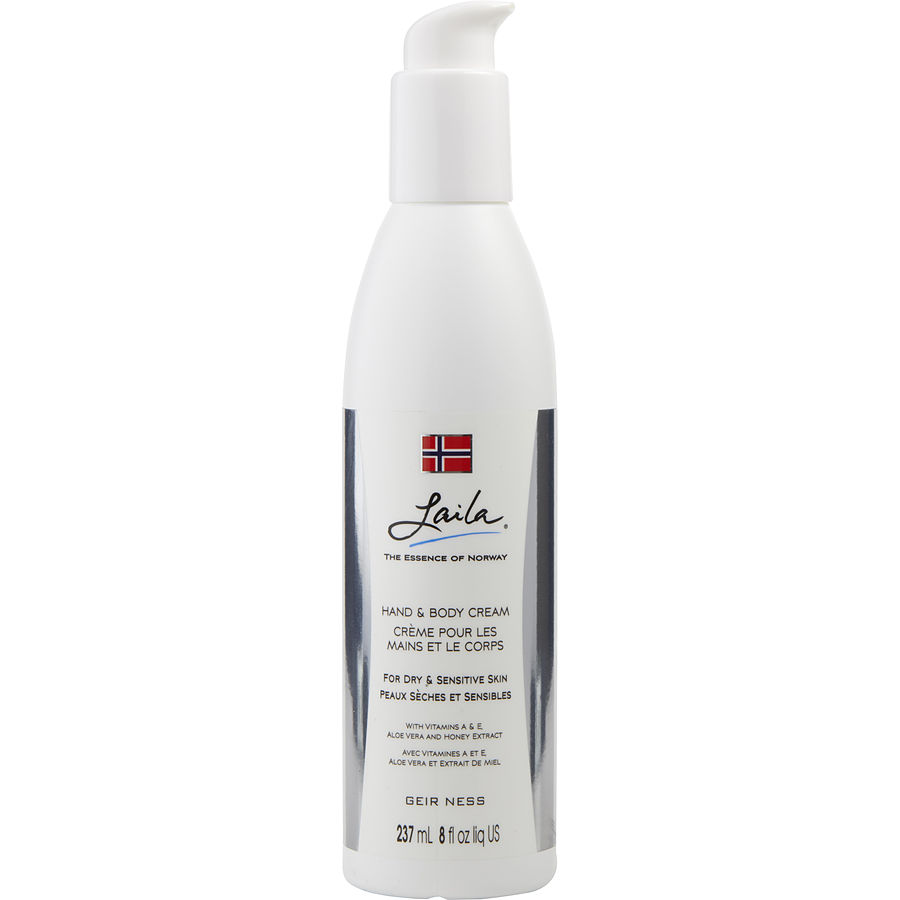
I had bought a bottle of perfume and like-scented hand lotion for my wife, fairly expensive for my taste, but long sought after by my wife. Sure enough, the TSA agent began to unwrap the neatly packaged hand lotion, almost twice the limit of 3.4 ounces, factory sealed, manufactured in Norway. The perfume was safe at just 3.4 ounces.
I begged, I pleaded, I gave puppy dog eyes. Nothing doing. The young (probably in her 20’s) TSA agent sensed a battle, so summoned her supervisor, a very polite, fit, trim and proper security woman who stood erect and professional, older than her, maybe just in her 40’s.
The supervisor listened, nodded, and seemed to care about the situation, but said the volume was too much. We would need to get out of line, dump a portion of the $50 lotion, and then get back on line.
How, I asked, would a different agent know what we did and then allow us through without measuring the contents of the container? The supervisor assured me they could tell. We balked. In hind sight, that would have been the thing to do. Just do what they say and trust them.
Instead, in the time it took the supervisor to deal with us, the younger TSA agent came across two items from my clear plastic bag containing my toiletries, minus the too-large can of shaving cream (I did not replace it on the trip, I used the “I forgot my shaving cream” traveler’s hack of using a bar of soap after a warm shower to soften my beard). One large Vaseline Intensive Care for Men lotion bottle, way over 3.4 ounces, that the first TSA agent moved to get to my shaving cream on the original trip. Oh, and that bottle of after shave, also passed over the first time, was now too large as well.
The same option was offered. We could get off the security line, go “dump some of the contents” and then return, hopeful that another TSA agent would allow the items to pass screening.
Again, we balked, and in hind sight probably should have done what they said to do, if for no other reason than for a better story than this one.
It occurred to me that these TSA agents have discretion. On the first trip, the TSA agent had a plethora of items she could have thrown out, but chose only the shaving cream and multi-tool. Man hater? Then why not the after shave and men’s lotion? The lotion even said the words, “for men” on it. And the other was brand named “Mennen,” a clearly masculine name. And the multitool would never have been carried by a woman, in my estimation. Way too many unfeminine options on the multitool, things a woman might ask a man if he had, and of course we would, unless we had just been through security at an airport, in which case she would be out of luck. No, not a man-hater.
Negligent? Perhaps, but assuming the first TSA agent had been at the job a while, spotting contraband should be second nature. She actually had to move the two items snagged on the return trip in order to get to the shaving cream. Maybe it was the metal container of the shaving cream that distracted her from the illegal items in the plastic containers? I noticed them running the bag through the machine several times before I was called over for the inspection.
It has occurred to me that if the Secret Service agents who were supposed to be protecting Donald Trump on July 19, at approximately 6:11 p.m., had the same training as the TSA agents who tossed maybe $75 worth of my toiletry items, Mr. Trump might still have a perfect right earlobe.
Paying attention to detail seems to be the main trait TSA looks for in recruits. If that had been the case that fateful day in Butler, PA, we wouldn’t have to put up with all the fuss about trying to kill Joe Biden’s, oops! Excuse me, Kamala (did I pronounce that right?) Harris’s main political opponent. Plan B apparently is sentencing Donald Trump to jail in a made-up financial case in which no one was harmed, upset, put out or at a loss except a certain prosecutor who ran on a platform of “Get Trump.”
Where was I? Oh, yeah, TSA vs. Secret Service. In my book, you could easily substitute TSA for Secret Service and then get a much better outcome, maybe even neutralizing the assassin before he got off EIGHT SHOTS at the target.
Actually, the saving grace may have been an egotistical shooter. If he had been trained by the military, he would have shot center of mass and probably hit something besides an earlobe. Then we would have found out if Donald Trump was wearing a bullet proof vest or not.
By the way, I went back to the second TSA agent in hopes of begging her out of the expensive perfumed lotion. She ignored me, but I saw her throwing away other people’s stuff in a closer waste basket than she used for my stuff. When we left her with our stuff, she walked away with it, past the little waste basket nearby. Hmm?
Could it be possible she kept the stuff for herself? Calling all TSA agents! Can you help me out? What say you?
After all that, I finally got the TSA agent’s attention and begged more, but she said she’s not allowed to take things out of the trash, and that I couldn’t do it either.
Moral of the story: 1) Watch what you pack in your carry-ons, and 2) ask if any of your Secret Service agents first worked for the TSA before snagging a personal protective detail on your presidential campaign.
Montgomery Granger (@mjgranger1 on ‘X’, GETTR, GAB, TruthSocial and BlueSky) is a Christian, husband, father of five, retired educator, veteran and author of “Saving Grace at Guantanamo Bay: A Memoir of a Citizen Warrior.”













 Saving Grace at Guantanamo Bay