Renaming the Gulf of Mexico: A Case for the Gulf of America

The Gulf of Mexico, as it’s been called for ages, is a vital cornerstone of prosperity, history, and culture for the nations around it. But let’s face it—the name just doesn’t do justice to the big, bustling, blue bowl of life that it really is. Renaming it the Gulf of America could give it the recognition it deserves while adding a touch of unity and a wink of practicality. Now, before anyone starts throwing their sombreros or Stetsons in the air, let’s explore the why, the how, and the “what’s in it for us” of this idea.

A Name That Sticks (and Means Something)

Names carry weight, and not just the kind you toss around in a family feud. The Gulf’s current name is tied to history, sure, but it doesn’t quite capture the shared ties of the nations that sip from its shores. Mexico, the United States, and Cuba all rely on the Gulf’s treasures—be it for oil, shrimp, or a good spot to sunbathe. Calling it the Gulf of America nudges everyone to think of it as a shared resource, a neighborly handshake across the waves.

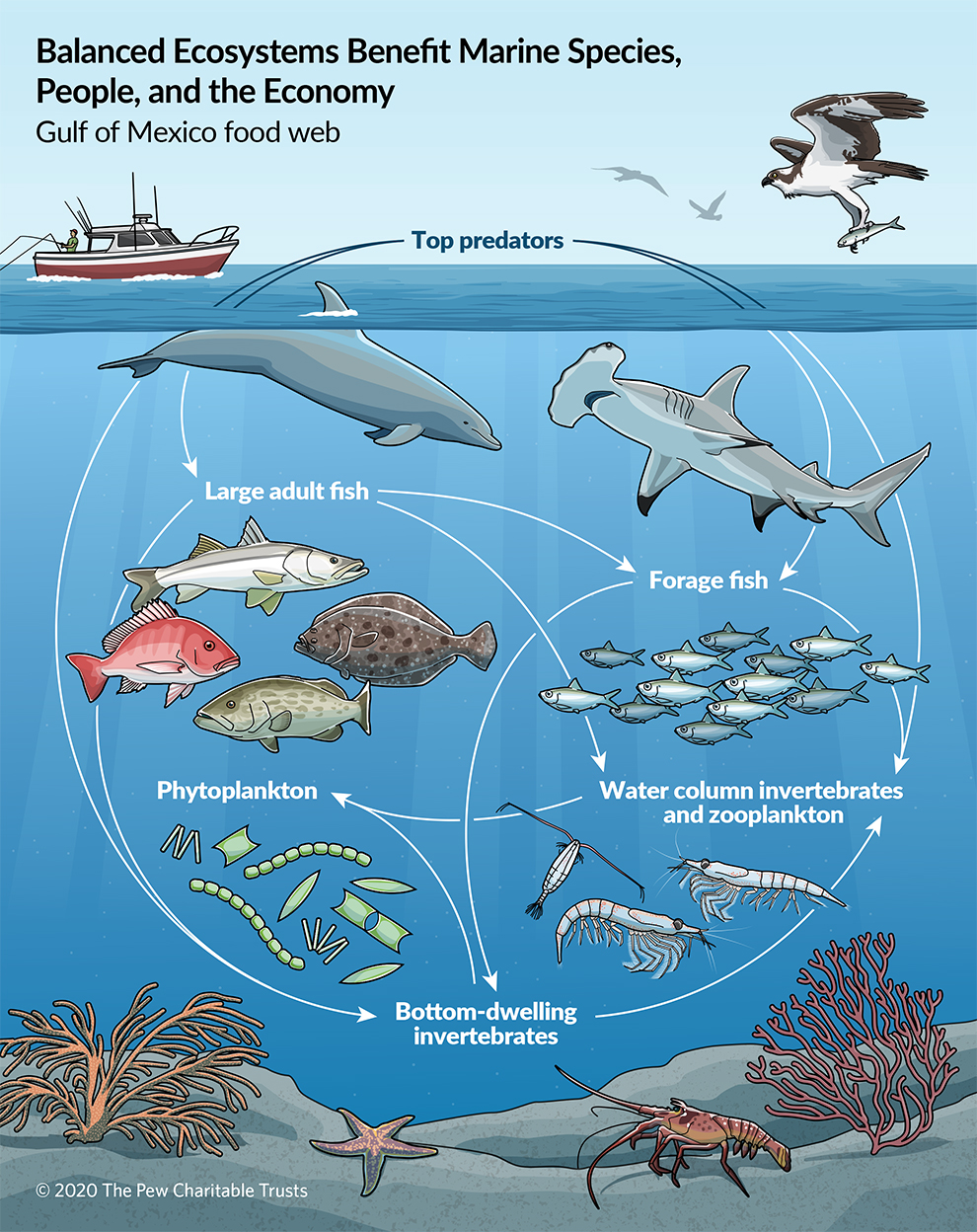
More than that, a new name shines a spotlight on the teamwork it takes to manage such an important patch of water. The Gulf isn’t just a pretty face; it’s a major player in global commerce, a livelihood for fishermen, and a challenge for environmentalists. A name like Gulf of America would remind everyone of the shared responsibility to keep it ticking.
Tying It All Together: History, Culture, and a Dash of Nostalgia

This big blue stretch has seen it all: Native American trade routes, European explorers, revolutions, and even a pirate or two. It’s been a cultural melting pot long before melting pots were cool. Renaming it doesn’t wipe the slate clean; instead, it adds a new chapter to its story—a chapter about unity and a shared purpose.

Imagine the coastal folks—Texans, Yucatecans, Cubans—all nodding in agreement that this watery wonder is theirs to care for, protect, and celebrate. A name like Gulf of America could even make folks a little prouder of their corner of the world, seeing it as not just theirs, but ours.
Dollars, Sense, and Sandy Toes

Here’s the kicker: a name change could mean big bucks. The Gulf is already a hotspot for tourists, from its sun-soaked beaches to its seafood shacks. Rebranding it as the Gulf of America could double down on its appeal, drawing in visitors eager to discover “The Heart of America.” Think about it: cruise liners, beach resorts, and coastal towns all cashing in on the new name’s charm.

This isn’t just about fancy marketing. It’s about creating a shared identity that could lead to joint ventures—whether in tourism, environmental conservation, or even cross-border festivals celebrating the Gulf’s rich traditions. Everybody wins when the pie gets bigger.

The Road Ahead: How Do You Pull This Off?

Changing a name isn’t like naming a dog—it takes effort. It means talking to everyone who has a stake in the game: governments, local communities, environmentalists, historians, and anyone else who might raise an eyebrow or a placard. But it’s doable if framed right. This isn’t erasing history; it’s updating it, like giving your grandpa’s old car a fresh coat of paint.

Sure, there’ll be skeptics. Some folks might bristle at the change, seeing it as too bold or too USA-centric. But diplomacy and a few good metaphors can help. It’s not about claiming ownership; it’s about claiming a shared future, a collective identity that reflects everyone’s stake in the Gulf’s well-being.

The Closing Argument: A Name Worth Its Salt

Renaming the Gulf of Mexico as the Gulf of America isn’t just a fancy idea—it’s a statement. It’s saying, “This place matters to all of us.” It’s a nod to the Gulf’s history, its economic might, and its role as a cultural bridge. It’s a call to action to work together to protect and cherish this vital resource.

So, let’s stop calling it by a name that fits like last year’s boots. Let’s give it a name that feels right, that feels big, that feels like home. Gulf of America—it’s got a nice ring to it, don’t you think?

Montgomery J. Granger (@mjgranger1) is a Christian, husband, father, retired educator, veteran, author of “Saving Grace at Guantanamo Bay: A Memoir of a Citizen Warrior,” and narrator of a short YouTube documentary film based on his book called “Heroes of GITMO.”

This article was assisted by ChatGPT.

Trump needs to get Gitmo right

President Donald J. Trump has said “We are fighting sneaky rats right now that are sick and demented,” “We’re going to win,” and it would be “fine” if US terror suspects were sent to the U.S. military detention facility at Guantanamo Bay, Cuba, for trial.

img_41081

One of the President’s first actions then should be to shred the 2009 Military Commissions Act and then proceed using the military commissions’ guidelines from Army Field Manual (FM) 27-10 (a.k.a. The Law of Land Warfare), which is the U.S. adaptation of the Geneva Conventions. By that law, those accused of committing war crimes would receive the SAME rights as U.S. soldiers covered by the Uniform Code of Military Justice (UCMJ). This would be fair, just and speedy.

img_4189

Currently, the Military Commissions Act of 2009, hastily written by then President Barack Hussein Obama and Department of Justice head Eric Holder, and then passed by a Democrat majority Congress, gives detainees accused of war crimes virtually the SAME rights as you or I would enjoy in a Federal court of law. Outrageous!

According to FM 27-10 and Geneva, by NOT following the rules for lawful combatants, unlawful combatant detainees actually earn ZERO extra legal privileges. That’s why these detainees are not considered Prisoners of War, they didn’t EARN the status, which carries many privileges.

img_4190

In 2009, Congress provided these Islamists-who-want-to-kill-us with the full blessing of the “lawfare” they were seeking. Captured al Qaeda training manuals we read at Gitmo back in 2002, identified strategies the “Brothers” should use if captured. “Lie about your treatment.” “Claim you were abused and tortured.” “Demand a lawyer.” The bad guys know that once allowed into the American justice system they could use lawfare to their advantage and either delay punishment, or get early release. Both have come to pass for virtually all detainees.

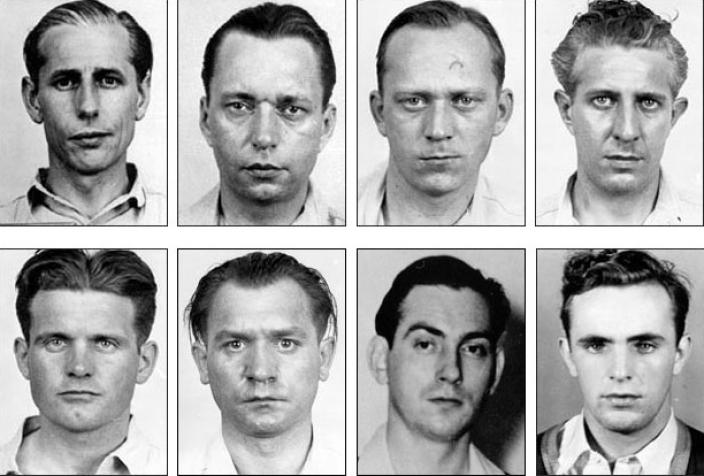
In WWII six of eight German saboteurs caught dry foot on U.S. soil were executed within eight weeks of their capture. They had hurt no one, nor had they destroyed any property. However, they were not wearing uniforms, did not carry their weapons openly, and had the means, motivation and intent to kill Americans and to destroy U.S. property. Two of the eight captured saboteurs flipped on the others and were spared the electric chair.

germanspies_4

Remember, those six German saboteurs who were executed had not hurt a fly nor blown anything up. They were deemed spies and in violation of the Geneva Conventions. After being denied habeas corpus, they were tried by military commission unanimously approved by the U.S. Supreme Court. Spies caught on the WWII battlefield could expect summary executions ordered by field grade officers and above. Every detainee brought to Gitmo could have been lawfully shot dead on the battlefield.

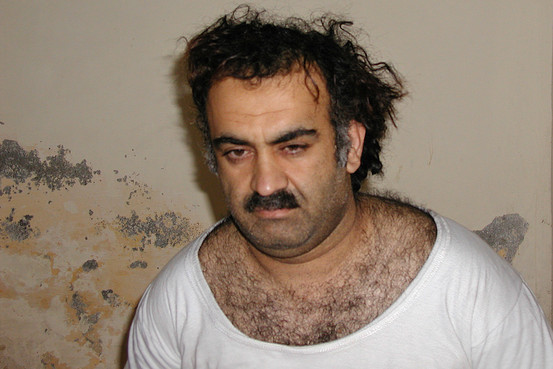
Instead, they were taken to Gitmo for interrogation to “obtain valuable information” that would “save many lives,” according to President George W. Bush, in his memoir, “Decision Points.”

ksm

What’s different now? Why did we release at least 730 known/suspected terrorists? Why are we allowing foot dragging in the court room? Why are we allowing religious garb, prayer time, Qurans, prayer rugs/beads, directions to Mecca on guard towers, use of U.S. military chaplains, halal and special holy holiday meals to known enemies?

directionsign-toe

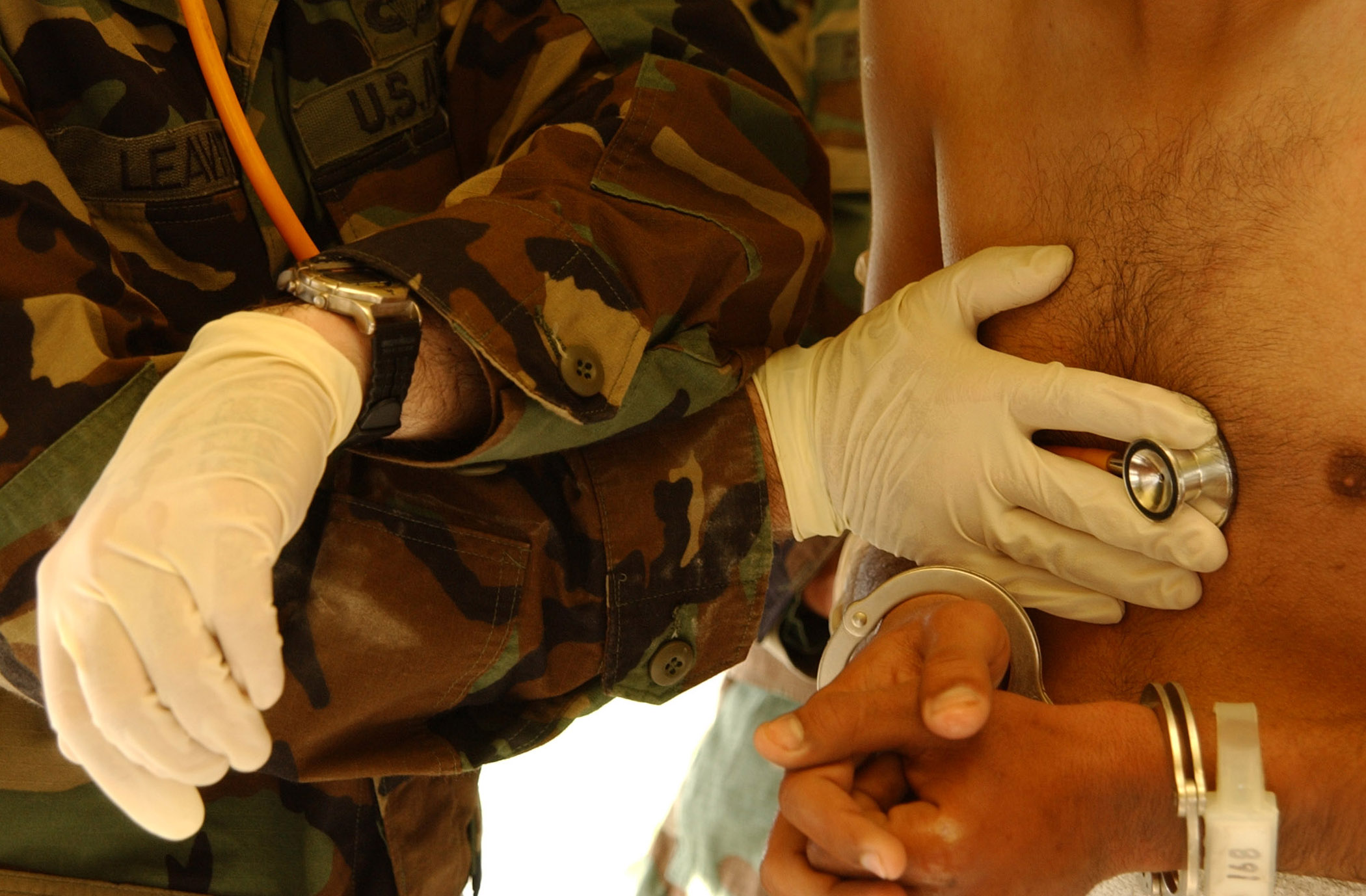
The moniker “Club Gitmo” certainly applies. In the early days, when I was the ranking U.S. Army Medical Department officer with the Joint Detainee Operations Group, Joint Task Force 160, tasked with overall monitoring of bad guy and good guy care, I was appalled at the difference between how we treated the detainees medically and how we treated our own soldiers. The detainees had immediate and full medical attention and care. Daily visits from an Army medical Non-Commissioned Officer, who collected medical intelligence that I would scrub and then utilize for reports to the Army incarceration command and Navy medical command, provided insight into how the enemy was trying to take advantage of the system.

In the end, each detainee received the highest quality medical care available in the U.S. military. If a specialist or special equipment were needed, they would be flow in from the States. If U.S. personnel required specialized treatment, they were sent home, a medical re-tread.

Sick-call for detainees was 24/7/365. All they had to do was cry and complain about this thing or that and then ZIP! Into the internal medical facility. Signs and symptoms of an illness or disease and BINGO! Off to the JTF detention medical facility. All air conditioned, and doting-over by Navy medical personnel who did not leave their bedside manner at the door.

Operation Enduring Freedom

If U.S. military personnel needed medical attention they could NOT be taken to the Naval Station GTMO medical facility (Navy Hospital), which was reserved for permanent party military and civilian residents. JTF personnel had to first see their organic unit medical personnel (medics), then wait to see someone with more medical expertise if necessary and available. Most U.S. personnel could not find adequate transportation to take them to an authorized medical facility, as most Army units guarding the detainees had to leave their organic vehicles behind in the continental U.S. Many walked or had to take the base shuttle bus, sometimes waiting hours between buses.

This doting behavior towards detainees must stop. Detainees should never receive better care than our own troops. The goal was of course to keep them alive, but the pandering and doting was difficult to witness.

Now, the detainees are allowed to wear white robes and long beards. In the beginning, for hygiene reasons, all detainees were clean shaven and had shaved heads. I think we need to go back to orange jumpsuits and no beards or head hair. It’s cooler in the hot climate of the Caribbean and more fitting for unlawful combatant Islamists who want to kill us.

President Trump, who said he would fill Gitmo up “with some bad dudes,” could turn all of this around. He now has the chance to get it right. Let’s hope and pray that he does.

Cuba: 51st US State

I don’t believe in dancing on graves, but if I did, I would dance on Fidel Castro’s. The dictator, 90 years old, recently died, and now vast memories of oppression and brutality rush to the surface.

castro-1

The death of Fidel Castro is a tremor before the quake – Raul is next, and then (peaceful) revolution to make Cuba the 51st US state.

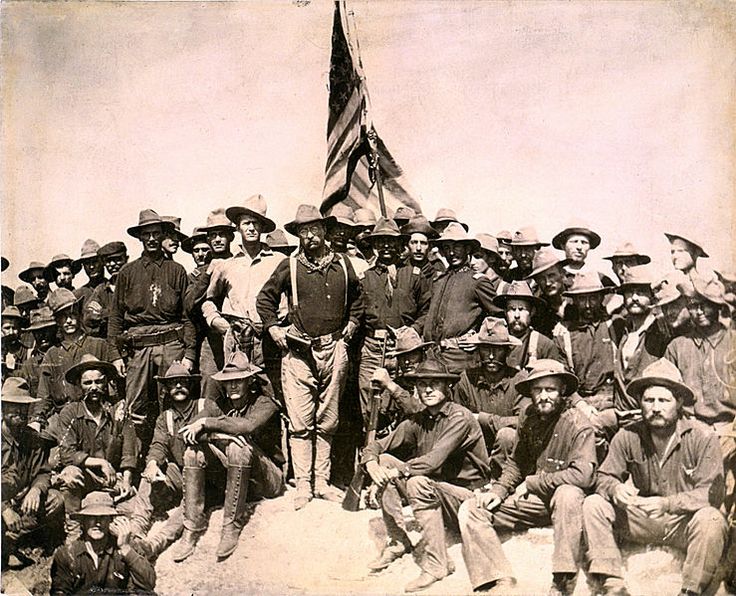
Go ahead and laugh, scoff and make fun, but Cuba was once a US possession. The 1898 Treaty of Paris, which officially ended the Spanish American War, awarded Cuba, Guam, the Philippines and Puerto Rico to the United States from Spain.

rough-riders

Guam is still a US possession, and Puerto Rico is a US commonwealth, the residents of which are all US citizens. The Philippines were granted independence in 1946, after being liberated by the US from the Imperial Japanese at the end of WWII.

Cuba was granted independence by the US in 1902. The U.S. Naval Station at Guantanamo Bay, Cuba, has been in existence since 1903, when Teddy Roosevelt signed a lease agreement with the new Cuban government, by mutual consent. US Marines had landed there in June of 1898 in order to defeat the Spanish during the Spanish-American War.

In 1934, President Franklin Roosevelt signed a new lease agreement with Cuban leader Fulgencio Batista. The agreement states:

“Until the two Contracting Parties agree to the modification or abrogation of the stipulations of the agreement in regard to the lease to the United States of America of lands in Cuba for coaling and naval stations… the stipulations of that Agreement with regard to the naval station of Guantánamo shall continue in effect.”

guantanamo-bay-cuba-2

In 1959, revolution, led by Communist Fidel Castro, deposed Batista. This also ended an era of technological and social advancement for the people of Cuba, who enjoyed prosperity and achievement via investments and tourism, chiefly by U.S. companies and by Americans.  Today, the country looks as though it was stopped in time at that point.

Because of Castro’s belligerence and close relationship with Communist Soviet Union during the peak of the Cold War, President John F. Kennedy imposed an embargo on Cuba in 1961. Castro had allowed the construction and placement of Inter-Continental Ballistic Missile (ICBM) bases by the Soviets, which posed an in-your-face-threat.

Our enemy/neighbor to the south is now howling about the return of the naval base at Guantanamo Bay  as a first step toward normal relations.

gtmo-sunset2

There is no right to freedom and liberty for citizens in Cuba. The vast majority of unprivileged Cubanos live a meager existence, struggling with dead-end government jobs that pay only in non-convertible Cuban pesos, a devalued currency reserved for the masses.

There is a second economy in Cuba, one reserved for the ruling elite and foreigners. Western goods can only be purchased with a convertible peso tied to the value of the US dollar. International tourists are forbidden from using the non-convertible Cuban peso, and can only purchase the higher priced items reserved for them with the convertible peso or with foreign currency.

This economic repression will not change due to new diplomatic relations between the US and Cuba. This is the big secret not discussed even by investigative reporters of the US media [sic]. Lifting an embargo will only enrich those Cubans Raul Castro decides should be enriched, and the masses will be left with nothing new, including the absence of hope.

In fact, the public relations behind the apparent thaw in relations say that the Cuban people “have suffered enough,” and that the old policy of isolation “hasn’t worked.”  This has become the Liberal politically correct mantra on Cuba.

cuba-2

Even a liberal arts public school in Sag Harbor, NY, announced it was planning a school trip to the island nation to help students develop “a global vision.” Will they tour the gulags, ogle the poorest of the poor; observe struggling Cubanos in their wretched second economy, working meager nowhere lifetime jobs? Now THAT’S a trip worth taking in order to develop a “global vision” . . . of communism. Be sure to get lots of photos to show the folks back home, kids!

All this unmerited attention has emboldened the Cuban government, namely younger brother to Fidel, Raul Castro, to demand the return of the US Naval Station at Guantanamo Bay, affectionately called Gitmo.

gitmo-garrison

The path to relinquishing Gitmo is clear. No matter how the White House wants to spin it, we are on a collision course with full diplomatic relations with Cuba, despite the lack of even ONE required change or concession on Castro’s part.

This recalls the free give back of the Panama Canal to Panama; a geopolitical blunder of global proportions made by liberal President Jimmy Carter. We built it, they keep it. Oh, and we’re supposed to feel good about it, too.

American blood was spilled to build a town and a military base at Guantanamo Bay, Cuba, on 45 square miles of hard won territory fighting against the Spanish. We helped establish stability for the native Cubanos, and our investors and tourists helped establish a jewel in the Caribbean before Castro’s revolution.

It is estimated that billions of dollars of investments, property and economic interests were confiscated by Castro when he seized them during the Cuban Revolution. There has not been a peep out of either the White House or Castro about reparations.

APTOPIX Cuba Obama

And now, with President Elect Donald Trump soon to assume the role of Commander-in-Chief, he can realize economic and social freedom for millions of Cubanos by taking back Cuba. The Castro’s stole it from the people of Cuba, and Trump can give it back to them, and restore stolen assets to American companies and individuals.

Sun Tsu once said, “One hundred victories in one hundred battles is not the most skillful, subduing the enemy without battle is the most skillful.” It is important to make this change peacefully, but it’s not essential. We did not bluff on threats to invade Grenada or Panama, nor would Trump back away from Cuba once ultimatums were laid down.

Without battle, Cuba can become the 51st US state, if not at least a protectorate or commonwealth. We can clandestinely destabilize Cuba easily and without force.  Now is the time once again to “Walk softly and carry a big stick.” A few carrier groups and lots of free nationalist dissidents could go a long way to freeing the people of Cuba, and showing them that they, too can enjoy liberty and justice for all.

carrier-2


The big stick part should not be necessary, but it needs to be on full display, both for Cuban defense forces and any foreign government who might want to interfere.

As President Ronald Reagan told Soviet Premier Mikhail Gorbachev to “Tear down this wall,” separating East and West Germany, so too, should Donald Trump insist on Raul Castro or his successor, to “Let the Cuban people go!”