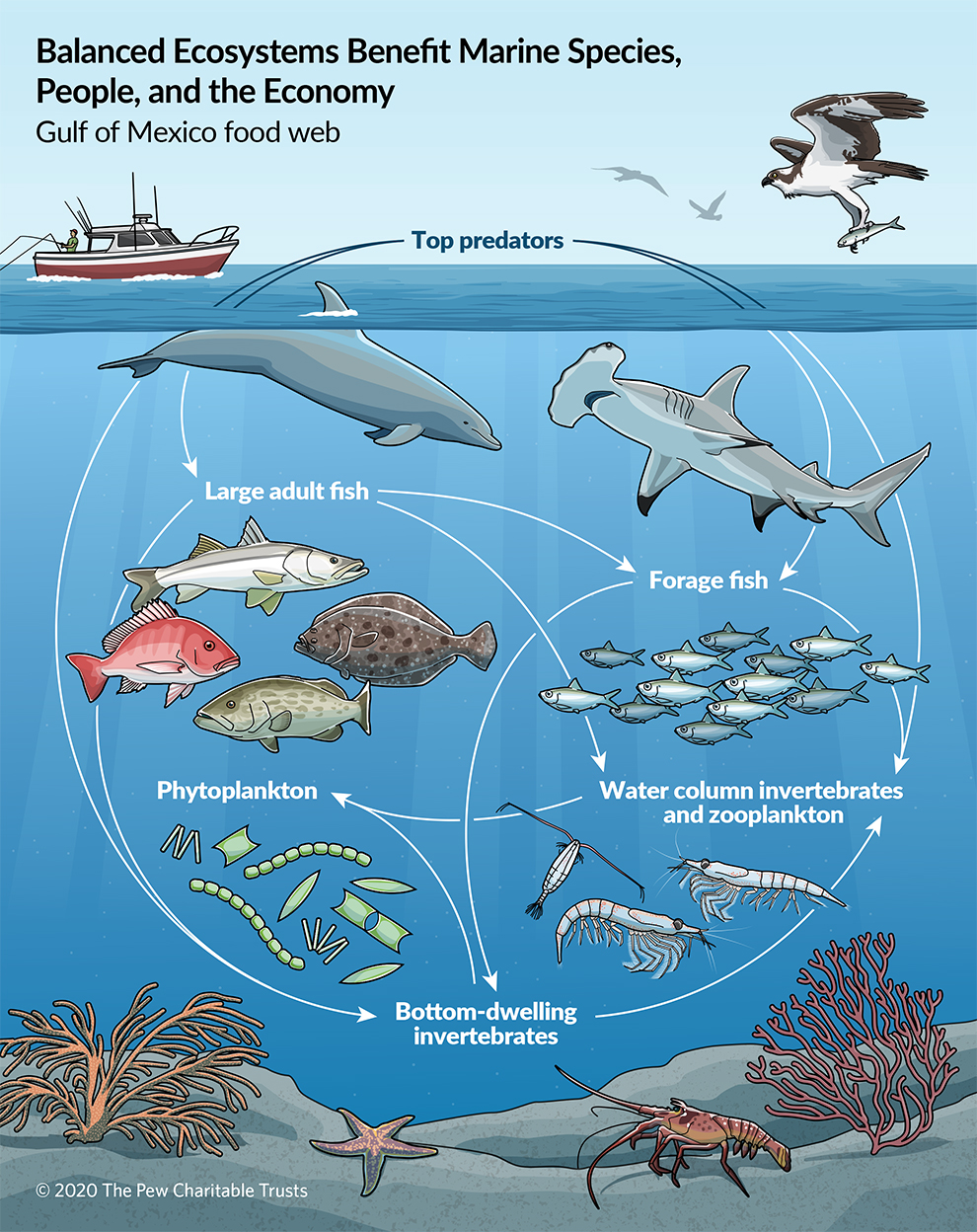
The Gulf of Mexico, as it’s been called for ages, is a vital cornerstone of prosperity, history, and culture for the nations around it. But let’s face it—the name just doesn’t do justice to the big, bustling, blue bowl of life that it really is. Renaming it the Gulf of America could give it the recognition it deserves while adding a touch of unity and a wink of practicality. Now, before anyone starts throwing their sombreros or Stetsons in the air, let’s explore the why, the how, and the “what’s in it for us” of this idea.
A Name That Sticks (and Means Something)
Names carry weight, and not just the kind you toss around in a family feud. The Gulf’s current name is tied to history, sure, but it doesn’t quite capture the shared ties of the nations that sip from its shores. Mexico, the United States, and Cuba all rely on the Gulf’s treasures—be it for oil, shrimp, or a good spot to sunbathe. Calling it the Gulf of America nudges everyone to think of it as a shared resource, a neighborly handshake across the waves.
More than that, a new name shines a spotlight on the teamwork it takes to manage such an important patch of water. The Gulf isn’t just a pretty face; it’s a major player in global commerce, a livelihood for fishermen, and a challenge for environmentalists. A name like Gulf of America would remind everyone of the shared responsibility to keep it ticking.
Tying It All Together: History, Culture, and a Dash of Nostalgia
This big blue stretch has seen it all: Native American trade routes, European explorers, revolutions, and even a pirate or two. It’s been a cultural melting pot long before melting pots were cool. Renaming it doesn’t wipe the slate clean; instead, it adds a new chapter to its story—a chapter about unity and a shared purpose.
Imagine the coastal folks—Texans, Yucatecans, Cubans—all nodding in agreement that this watery wonder is theirs to care for, protect, and celebrate. A name like Gulf of America could even make folks a little prouder of their corner of the world, seeing it as not just theirs, but ours.
Dollars, Sense, and Sandy Toes
Here’s the kicker: a name change could mean big bucks. The Gulf is already a hotspot for tourists, from its sun-soaked beaches to its seafood shacks. Rebranding it as the Gulf of America could double down on its appeal, drawing in visitors eager to discover “The Heart of America.” Think about it: cruise liners, beach resorts, and coastal towns all cashing in on the new name’s charm.
This isn’t just about fancy marketing. It’s about creating a shared identity that could lead to joint ventures—whether in tourism, environmental conservation, or even cross-border festivals celebrating the Gulf’s rich traditions. Everybody wins when the pie gets bigger.
The Road Ahead: How Do You Pull This Off?
Changing a name isn’t like naming a dog—it takes effort. It means talking to everyone who has a stake in the game: governments, local communities, environmentalists, historians, and anyone else who might raise an eyebrow or a placard. But it’s doable if framed right. This isn’t erasing history; it’s updating it, like giving your grandpa’s old car a fresh coat of paint.
Sure, there’ll be skeptics. Some folks might bristle at the change, seeing it as too bold or too USA-centric. But diplomacy and a few good metaphors can help. It’s not about claiming ownership; it’s about claiming a shared future, a collective identity that reflects everyone’s stake in the Gulf’s well-being.
The Closing Argument: A Name Worth Its Salt
Renaming the Gulf of Mexico as the Gulf of America isn’t just a fancy idea—it’s a statement. It’s saying, “This place matters to all of us.” It’s a nod to the Gulf’s history, its economic might, and its role as a cultural bridge. It’s a call to action to work together to protect and cherish this vital resource.
So, let’s stop calling it by a name that fits like last year’s boots. Let’s give it a name that feels right, that feels big, that feels like home. Gulf of America—it’s got a nice ring to it, don’t you think?
Recently, President Elect, Donald J. Trump has shown interest in a much closer relationship with Greenland, an autonomous country in the North Atlantic, but a protectorate of Denmark. The following is a “best way forward” approach to improving our relationship with “Kalaallit” (the people) of Greenland “Kalaallit Nunaat” (Land of the People).
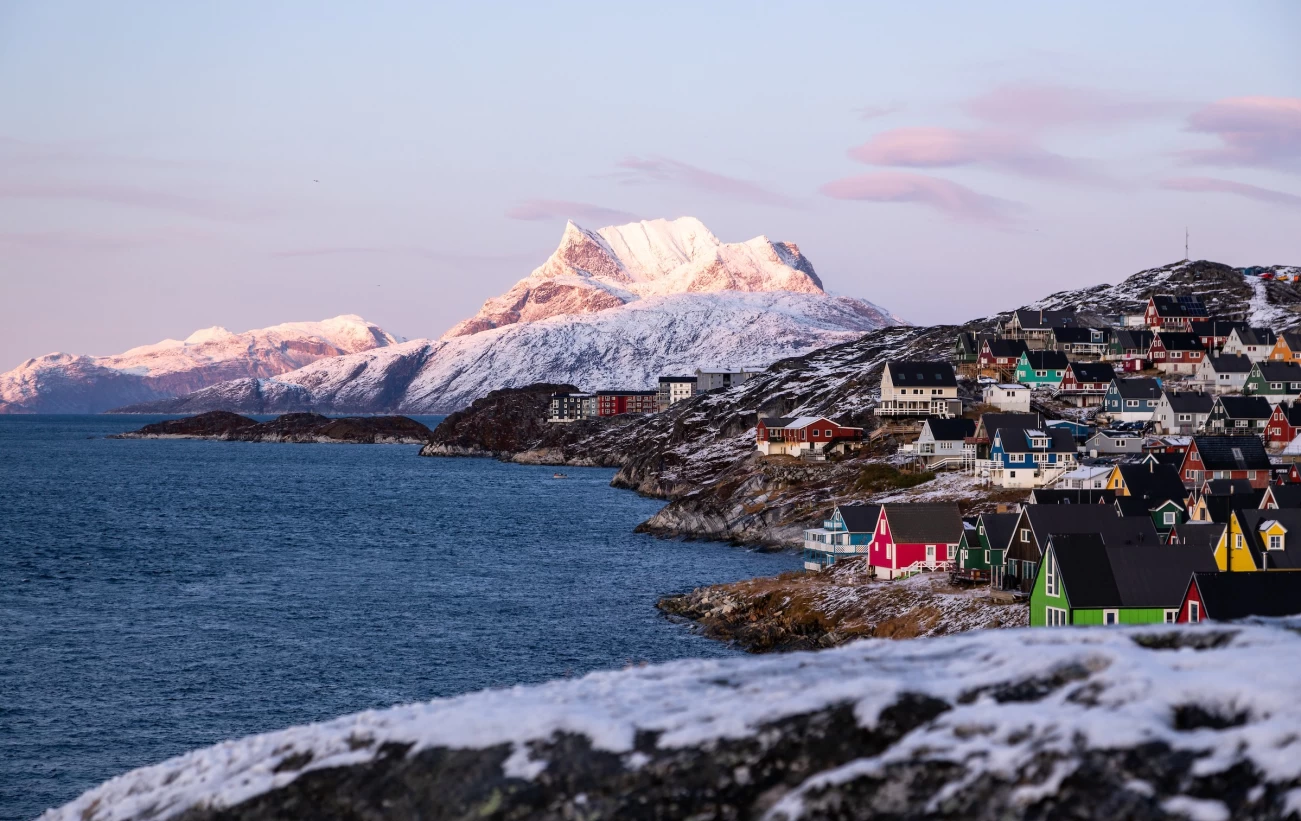
Greenland is a land of breathtaking beauty and rich traditions, home to resilient people who have preserved their heritage in the face of a changing world. As Greenland charts its path toward greater autonomy and prosperity, there is an opportunity for a deeper partnership with the United States that could unlock new possibilities for economic growth, security, and cultural preservation. By exploring the idea of Greenland becoming a protectorate or commonwealth of the United States, we can envision a future that respects Greenland’s unique identity while providing resources and opportunities to enhance the quality of life for all its people.
Respect for Greenland’s History and Culture
Greenland is more than just a vast, icy expanse—it is a vibrant land with a proud Indigenous heritage. Any partnership with the United States would honor and protect Greenland’s culture, language, and traditions. Greenlanders have fought for and achieved self-rule, and this autonomy would remain at the heart of any agreement. Much like Puerto Rico or the Northern Mariana Islands, Greenland could maintain its distinct identity while benefiting from access to American resources and global networks.
Unlocking Greenland’s Economic Potential
Greenland is rich in natural resources that can fuel its development and prosperity. Rare earth minerals, critical for renewable energy and modern technologies, lie beneath Greenland’s surface. With U.S. investment and technology, Greenland could responsibly develop these resources, creating jobs and generating revenue while protecting the environment.
Tourism, already a growing industry, could flourish with the support of U.S. infrastructure development, including modern airports and sustainable transportation systems. Greenland’s fisheries—among the most pristine in the world—could gain better access to international markets, boosting the livelihoods of Greenlandic fishermen.
Moreover, U.S. partnerships in education and training could equip Greenlanders with the skills to lead these industries, ensuring that the wealth generated benefits the local population first and foremost.
Security and Sovereignty in the Arctic: “Greenland First!”
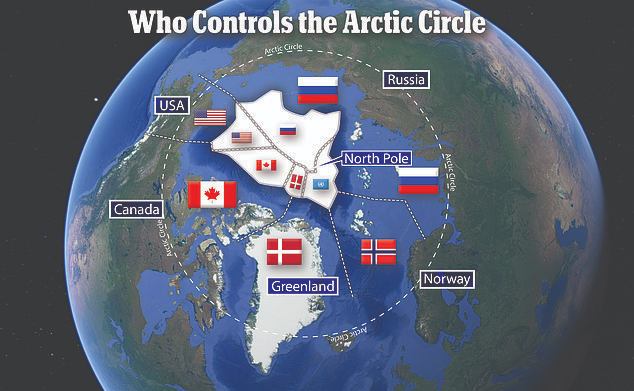
Greenland’s location in the Arctic places it at the center of global attention. If changing weather patterns create new shipping routes, Greenland would face increased interest from powerful nations like China and Russia. A closer relationship with the United States could provide Greenland with the resources and expertise to protect its sovereignty and ensure that its people—not foreign powers—control its destiny.
The United States has long recognized Greenland’s strategic importance, hosting Thule Air Base as a vital part of international security. By formalizing a partnership, Greenland could gain greater support for protecting its waters and infrastructure while contributing to regional stability. Something Denmark cannot afford to do, economically or strategically.
Improving Quality of Life for Greenlanders
A partnership with the United States could bring transformative benefits to Greenlandic communities. Improved healthcare facilities, modernized schools, and expanded vocational training could provide Greenlanders with new opportunities to thrive. Investments in renewable energy and sustainable development would not only create jobs but also position Greenland as a global leader in combating climate change.
In particular, Greenland’s youth could benefit from enhanced educational opportunities, including scholarships to study abroad and training programs to prepare them for leadership roles in government, business, and science. These investments would ensure that Greenland’s next generation has the tools to build a prosperous and self-sufficient future.
A Relationship Built on Respect – Inuuqatigiitsiarniq: Living in Harmony
Greenland’s path forward must be shaped by its people. Any partnership with the United States would require the consent and participation of Greenlanders at every step. This would not be an arrangement of dominance but of mutual benefit—where Greenland retains control over its culture, resources, and governance while gaining access to the tools and partnerships needed to succeed on the global stage.
Living in harmony, or Inuuqatigiitsiarniq to the Inuit’s indigenous to Greenland, embodies respect, kindness, and fostering good relationships with others. It reflects a way of life that values cooperation, mutual respect, and a deep connection to the community and environment.
The idea behind Inuuqatigiitsiarniq is about maintaining balance and showing consideration for all living beings, which aligns with the Greenlandic and Inuit cultural ethos of respecting nature, elders, and each other.
The United States has a history of working with territories and protectorates in ways that respect their autonomy and cultural heritage. Greenland could shape this relationship to reflect its unique identity and values, ensuring that its voice is heard, and its traditions are preserved.
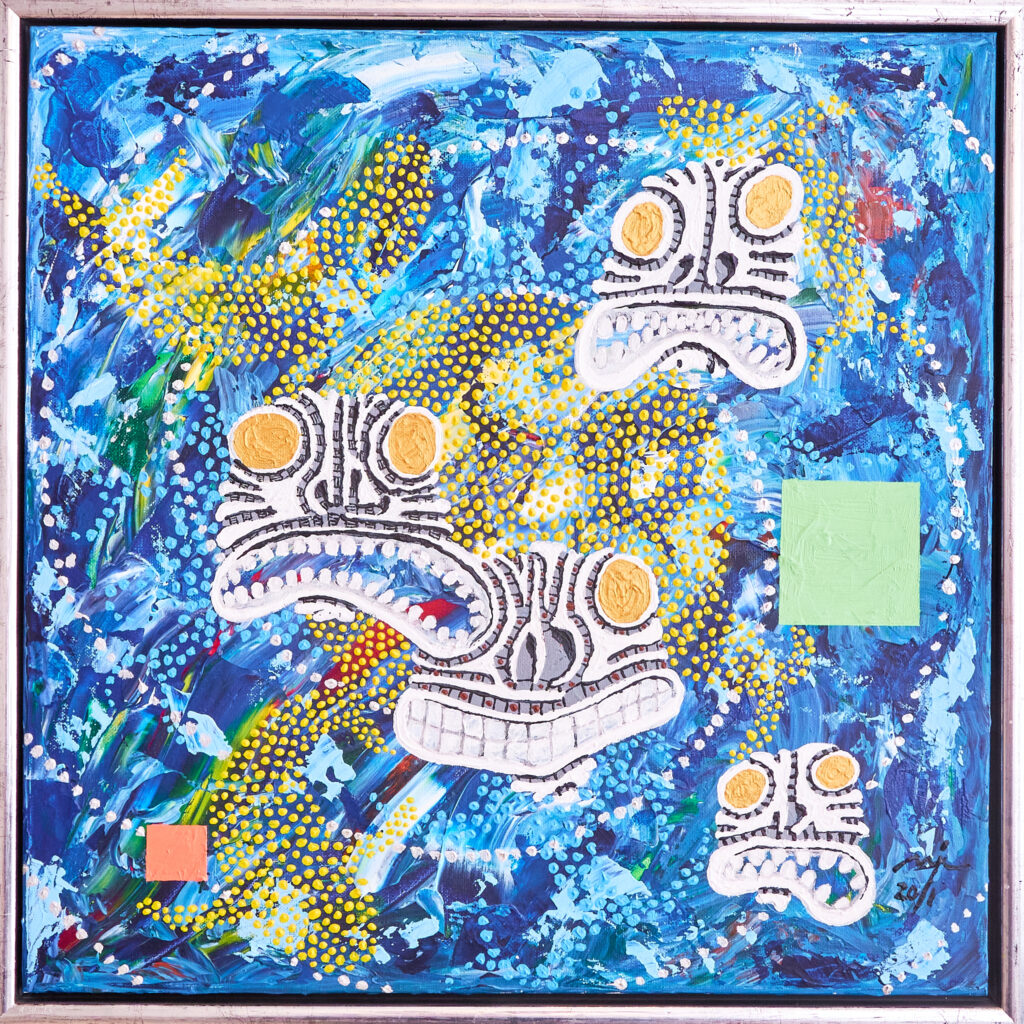
Tupilak art – meaning “ancestors spirit or soul.”
A Shared Future
The challenges and opportunities facing Greenland are immense. From the effects of climate change to the pressures of globalization, Greenland stands at a crossroads. By forging a closer partnership with the United States, Greenland could secure its future while retaining its heritage. Together, we could create a model of cooperation that respects the past, embraces the present, and builds a brighter future for generations to come.
Donald Trump, Jr., with “Kalaallit” (the people).
The choice belongs to the people of Greenland. With careful consideration and mutual respect, this partnership could be a journey toward shared prosperity and enduring friendship.
The release of known terrorists, especially during an ongoing Global War on Terror, seems counterintuitive and potentially dangerous. The analogy of “capture-the-flag” illustrates this point succinctly: retaining captured adversaries weakens their side; letting them go weakens your side. However, the decision by the Biden administration to release 11 Yemeni detainees from Guantanamo Bay (Gitmo) in January 2025 has sparked significant debate and concern.
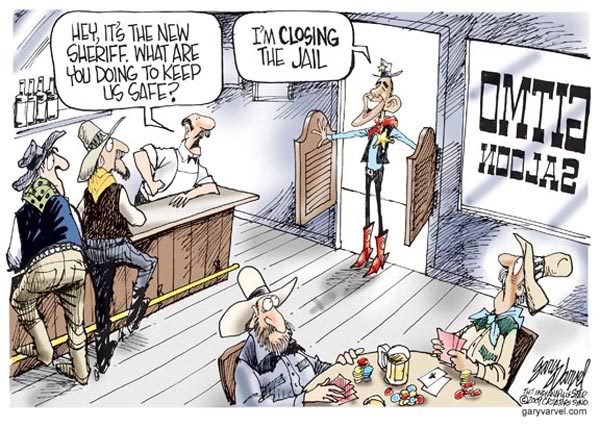
On his first day as President, Barack Hussein Obama promised to “close Gitmo.”
Historical Context and Gitmo’s Role:
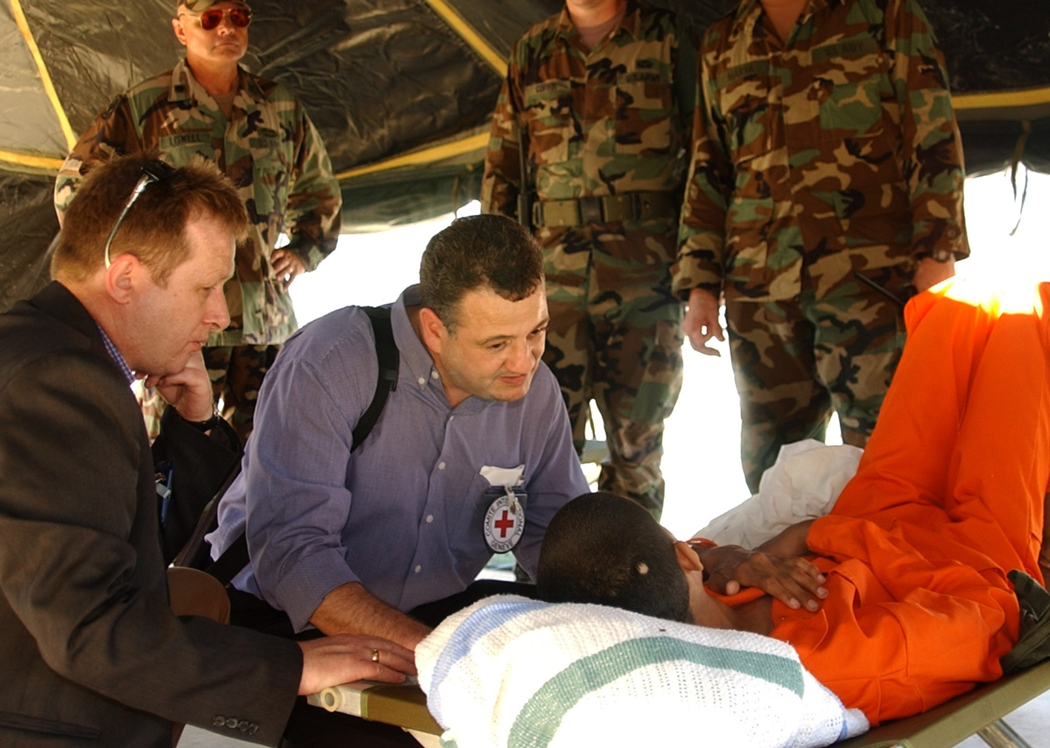
The US military detention facility at Guantanamo Bay, Cuba (Gitmo), was initially established as a response to international crises but was repurposed after 9/11 to detain unlawful combatants from Afghanistan, individuals intent on perpetrating acts of terror against the U.S. and its allies. The facility was operated with a directive to treat detainees within the spirit of the Geneva Conventions, as articulated by then-Secretary of Defense Donald Rumsfeld, ensuring dignity and respect for prisoners, which was confirmed by international observers like those from the International Committee of the Red Cross.
Swiss ICRC physicians interviewing a Gitmo detainee, Camp X-Ray, Guantanamo Bay, Cuba, January, 2002. They told me, “No one does [detention operations] better than the US.”
The Risks of Releasing Terrorists:
Releasing known terrorists, particularly those with direct links to al-Qaeda and Osama bin Laden, sends a message of weakness at a time when terrorist threats, including attacks like those in Germany, New Orleans, and Israel, underscore the persistent danger posed by radical Islamic terrorism. The statistics are alarming: of the over 750 detainees released from Gitmo, 30% are known or suspected to have returned to terrorism, suggesting that the threat these individuals pose does not necessarily diminish with release.
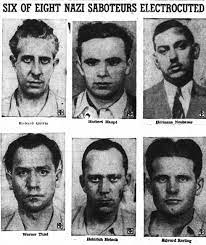
The Law of War allows for detention of unlawful combatants as well as POWs, without charge or trial, until hostilities cease. However, the treatment and release of these detainees have been influenced by political pressures and evolving legal frameworks, notably the Military Commissions Acts of 2006 and 2009, which have granted detainees rights akin to those in civilian courts. This shift contrasts with historical precedents like Operation Pastorius, where swift military justice was administered to German saboteurs during WWII.
Executed German saboteurs, denied habeas corpus and tried by military commission (tribunal). None had hurt a fly nor destroyed any property, they merely had the means and intent to do so, in violation of the Geneva Conventions and Law of War. What’s different now?
The moral argument against torture or harsh treatment was somewhat overshadowed by the effectiveness of Enhanced Interrogation Techniques (EIT) in obtaining life-saving intelligence, though these practices were later discontinued. Yet, the comparison between Gitmo’s operations and the brutal treatment of captives by terrorist groups like ISIS or Hamas starkly underlines the ethical disparity.
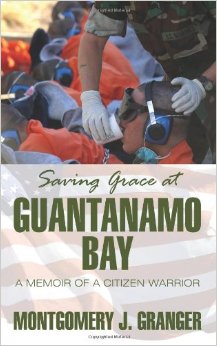
The author’s memoir, based on his experiences as the Joint Detainee Operations Group US Army Medical Department officer, Joint Task Force 160, FEB-JUN 2002.
Current Threats and Global Implications:
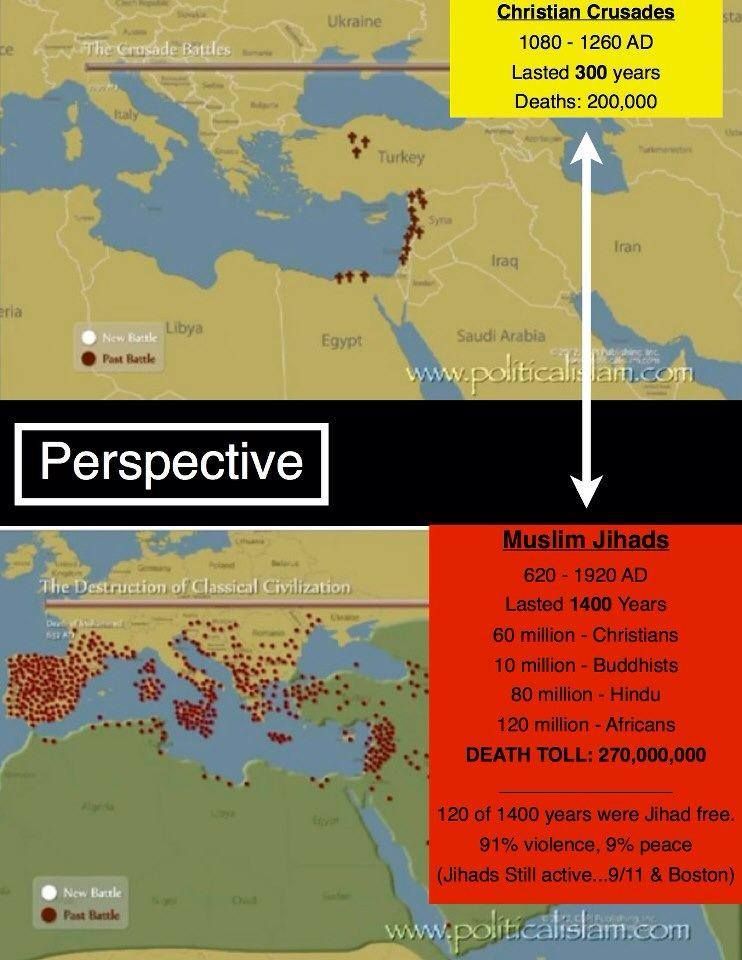
The recent spate of terrorist activities globally, including the Hamas attacks in Israel, challenges the notion of “peaceful Islam” and forces a reevaluation of policies like detainee release. The narrative of Islamophobia versus genuine security concerns becomes more pronounced when considering the historical expansionist nature of Islam and its doctrinal roots in conquest, as seen through the actions of Muhammad and the spread of Islamic rule over centuries.
Releasing known terrorists during the Global War on Terror not only potentially endangers national security but also undermines the moral and strategic efforts of those combating terrorism. It raises questions about the commitment to the war’s objectives and the safety of citizens worldwide. In an era marked by increased terrorist activities and the ideological spread of radical Islam, such actions could be seen not just as misguided but as potentially treasonous, especially when the lessons from past conflicts and current threats are so evidently clear. The decision to release these individuals should be critically examined in the context of ongoing global security challenges.
Forget everything you thought you knew about money.
In the end, your monetary system should be a barter system, exchanging one thing of value for another thing of value. That’s fair and equitable.
That’s how the monetary system of the United States was imagined. With Roger Sherman, member of Congress, monetary scientist and in favor of tariffs and a national bank, helped write the finance sections of the Constitution, Article I, Sections 8 & 10.
These passages establish the who, what and how of our monetary foundation, which included weights and measures, gold and silver as a backing for our currency and Congressional control.
Where we went wrong was in allowing private banking interests to confiscate the wealth of our nation with the Federal Reserve Act of 1913. The Federal Reserve (FED) is neither federal (it is listed as a private business) nor a reserve (any gold it holds is not ours) of anything, and it is owned by US and global banking interests, not the American people. The shares of the FED cannot be bought on the market or sold but earn interest on debt owed by every US citizen of the bankrupted United States, payable to the owners of the FED.
By 1971 the gold standard was gone, and so was the promise to pay in lawful money on our currency, once “US Notes,” now “Federal Reserve Notes” (a monetary “note” is a promise to pay, not payment in and of itself). The dollar, which was a measure of a certain amount of gold or silver, became the thing for which it was a measure.
US Fifty Dollar Gold Certificate – Payable in Gold Coin
Think of a gallon becoming milk instead of a gallon of milk. Absurd, right? Not if you change things over generations.
Today, our all-debt money system works because we have been conditioned to think and believe that the paper money or the “dollars” we spend have value. In fact, they have only psychological value, where once they held intrinsic value, like in a true barter system.
But now, because about 90 percent of all M1 (money in circulation) is zeroes and ones (digital), it can be created out of thin air, based on imagination, not a tangible thing.
Why not return to a gold standard and use precious metals to back our money? Currently, that would be impractical, as these things are sold as commodities, which rise and fall in value based on market pressures, supply and demand. You would need any country willing to trade with us to agree on a standard weight, measure and value of these metals for a legitimate monetary system to work.
Small gold nuggets in an antique measuring scale
So, what’s with crypto and Bitcoin? These are simply notional currencies, just like the digitized dollar, only they pretend to have value, again, based on market pressures of supply and demand.
Bitcoin fans would argue that because there is a finite amount of Bitcoin, 21 million “coins,” they will hold and increase in value. Bitcoin is “made” when “miners” solve cryptographic puzzles to add new blocks to the blockchain (a shared, immutable ledger that facilitates the process of recording transactions and tracking assets in a business network). This process rewards them with new bitcoins and transaction fees. Over time, the issuance of new bitcoins decreases, ensuring a finite supply. Bitcoin mining takes a lot of energy and physical assets, which they say adds to the legitimacy of the process, which is decentralized.
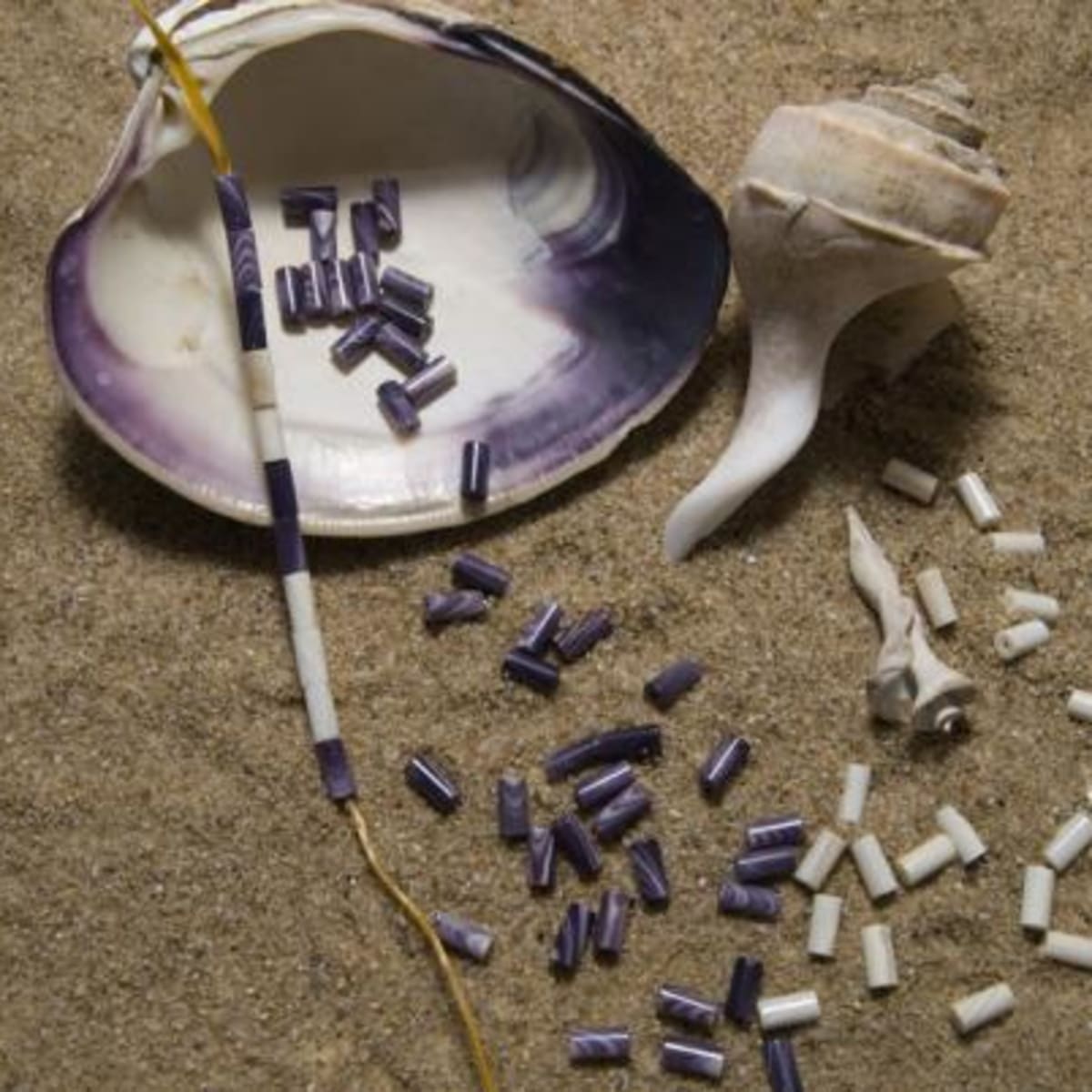
But imagine a Native American trading in wampum (seashells), being told there was a new money, but you can’t touch, taste, see, smell or make nice clattering sounds with it!
Native American Wampum – crafted seashell beads used as currency.
Bitcoin works now only because laws allow it. But wait and see, at some point it will become regulated. Why? Because the government always gets its cut. Corrupt politicians and the rich elite can’t pass up the temptation to make money by creating something out of thin air, just like our former fractional reserve banking system.
Banks in this system needed only have a “fraction” of the money on hand in order to loan out much more, say reserves of $1,000 in order to loan out $9,000. That’s right! They could create $9,000 out of thin air and then loan it out at interest, making free money for themselves. The more they loan, the more they earn. But the interest on that $9,000 was never created. What does that mean to a monetary system?
If the interest on a loan is never created, then at some point someone has got to default on their loan because there isn’t enough money in circulation to accommodate the repayment of all loans plus interest, it means the money has to come from somewhere, but where? Enter the government and the FED. The more the government spends, the more money there is in circulation. The more government borrows, the more interest is owed, causing inflation.
But, news flash! Since March 2020, the fractional reserve amount required of FED member banks is now ZERO PERCENT. That’s right, a bank is allowed to loan money it does not have, all of it, creating a bonus of interest payments for itself.
Member banks have to “buy” FED stock equal to 6% of their paid-up capital and surplus. But they only have to put up 3% to the FED; the other 3% is “callable.” That entitles the member bank to dividends from earned interest on government securities, but only up to 6%.
Most people think banks can only loan out what they keep on deposit from checking and savings accounts. The truth is, checking and savings accounts are bank LIABILITIES. That’s right, it is money they OWE, so they can’t spend it or loan it out because it’s not their money. Banks only make money on fees and interest on loans and other holdings, and dividends from FED stock.
Shocked? Did you never learn this in school? This system guarantees that the wealthy get wealthier. It guarantees that some percentage of borrowers will always end up in default, losing their loan collateral to the banks.
That’s what happened in the housing bubble burst in 2008. Home loans were cheaper than dirt and loan officers were told to give, give, give, so that when they borrower defaulted they could collect, collect, collect. Only when the defaults rolled in did people simply walk away from loans, leaving the loaning institutions in the lurch and failing, but with lots of real estate no one could afford!
Two of the biggest loaners (and losers) were government loaning institutions, affectionately known as Freddie Mack and Fannie Mae. The government should only be involved in the loan business if the government owns the central bank. Ours does not. Ours borrows from the private central bank known as the FED.
That’s right, We the People used to own our money system, controlled by Congress, our representatives, whose feet we could hold to the fire if things got out of control. No more. If you ask your congressional representatives about our money system they will refer you to the Federal Reserve, when they should be referring you to the Constitution.
Roger Sherman, one of the Founding Fathers and a signatory of the Declaration of Independence, played a critical role in shaping the financial and monetary principles of the United States. His views on monetary policy, often rooted in economic pragmatism and fairness, align with the constitutional provisions in Article I, Sections 8 and 10, which govern Congress’s powers over money and the monetary limitations on states. Let’s delve into these topics:
Roger Sherman’s Perspective on Money
Advocate for Sound Money:
Sherman was a proponent of “sound money,” meaning money backed by tangible assets like gold or silver.
In his 1752 pamphlet, A Caveat Against Injustice, Sherman warned against the dangers of fiat money (currency not backed by physical commodities) and decried the unfairness of paper money schemes that often led to inflation and economic instability.
In the beginning, gold smiths charged owners of gold to keep the metal safe, and issued receipts that the owners began to use as currency in the economy. After a while, gold smiths, or our first bankers, learned they could create receipts for gold they did not have, and then spend them into the economy. Eventually, short bankers were hung from tall trees once owners of gold discovered the bankers had created false receipts which were brought in, reducing the amount of gold on hand.
Principles of Honest Trade:
Sherman believed that money should be a stable medium of exchange and a store of value to ensure fairness in trade and prevent fraud or devaluation.
Article I, Section 8: Monetary Powers of Congress
This section grants Congress the following powers relevant to monetary science:
“To coin Money, regulate the Value thereof, and of foreign Coin”:
Congress holds the exclusive authority to mint coins and establish their value, creating a uniform national currency.
This clause aims to standardize currency across states, preventing the chaos of competing currencies and varying values.
“To provide for the Punishment of counterfeiting the Securities and current Coin of the United States”:
Counterfeiting disrupts economic stability, and Congress’s power to penalize it upholds the integrity of the monetary system.
Relevance to Sherman’s Views:
Sherman’s insistence on precious metals (gold and silver) as the standard for currency aligns with the Constitution’s granting of monetary authority to Congress to ensure reliability and stability in currency value.
Article I, Section 10: Monetary Limitations on States
This section restricts state monetary practices:
“No State shall… coin Money; emit Bills of Credit; make any Thing but gold and silver Coin a Tender in Payment of Debts”:
Prohibition on State Currencies: States cannot issue their own currency or print paper money (bills of credit). This prevents the monetary fragmentation and instability experienced under the Articles of Confederation.
Gold and Silver as Legal Tender: States are limited to gold and silver as legal tender for debts, reflecting Sherman’s argument that precious metals are the most stable and just form of money.
Rationale:
These restrictions centralize monetary authority under Congress to ensure uniformity and prevent inflationary policies or economic manipulation by individual states.
Monetary Science Implications
Standardized Currency:
By centralizing the creation and regulation of money under Congress, the Constitution ensures a single, standardized currency for the nation. This promotes economic efficiency and trust in the monetary system.
Intrinsic Value of Money:
Sherman’s preference for gold and silver reflects an intrinsic value approach, where the monetary unit derives its worth from physical commodities. This contrasts with modern fiat currencies, whose value is based on government backing and public trust.
Inflation and Stability:
The framers’ restrictions on states and emphasis on gold and silver were responses to the rampant inflation caused by overissued paper money during the Revolutionary War period.
The Role of Congress:
Congress’s power to regulate currency values ties into its broader economic responsibilities, such as managing interstate commerce and the national debt.
Roger Sherman’s Legacy
Sherman’s advocacy for a stable, commodity-based monetary system influenced the framers’ decision to enshrine gold and silver as the monetary standard for states. While the U.S. has since shifted to a fiat currency system (with the Gold Standard abandoned in 1971), Sherman’s principles highlight the foundational goals of fairness, stability, and trust in the monetary system.
The principles codified in Article I, Sections 8 and 10 continue to reflect the balance between central monetary authority and limitations designed to prevent economic instability—a balance Sherman deeply cared about.
Yet with the FED in charge, all profits or “dividends” paid to the holders of Federal Reserve stock from interest paid on government securities and the National Debt go to banking interests, not the American people.
That has got to change.
Our money system was designed to do the work of economic stability and prosperity for the people, not the banking interests. Certain of our Founding Fathers were concerned about this, including Thomas Jefferson.
We need to reclaim our money system from the FED and design a legitimate barter system based on an agreed upon gold (and silver) standard.
Remember that Wall Street is merely Las Vegas without the lights. Adults are entitled to their entertainment, and if you choose to spend your hard earned cash on speculation, that’s your choice, but the average American citizen should be allowed to avoid speculation and invest in their future using solid, accountable, stable currency that will hold its value.
We need to avoid the gambler’s temptation for crypto and Bitcoin, and stick with and strengthen the dollar, returning to US Notes and a true United States central bank that is of, by and for the people, dedicated to life, liberty, property and the pursuit of happiness.
Tell your congressional representatives that you are “Mad as hell,” and you’re “not going to take it anymore!” They, Congress is our “legitimate avenue of redress of [our] grievances.” Let them know who you are, what you expect, and that you will be following up and voting according to their response and action.
In quantum physics there is a paradox scenario that illustrates how one could imagine two different states of reality existing at the same time. The paradox is called Schrodinger’s Cat.
In this scenario, a cat is in a sealed box, along with a radioactive isotope that will degrade within an hour, a Geiger counter and a hammer. If the isotope degrades, the Geiger counter will detect it, setting off the hammer to kill the cat.
One doesn’t know the status of the cat unless one opens the box.
In quantum mechanics, the theory states that both states of the cat, alive and dead, can exist simultaneously, in separate universes.
George Orwell, in his book “1984,” has a name for this in terms of corrupt government control of the language: Doublethink. The state of accepting two conflicting thoughts simultaneously.
Doublespeak is the manifestation of doublethink.
WAR IS PEACE
FREEDOM IS SLAVERY
IGNORANCE IS STRENGTH
Rather than perceive Schrodinger’s Cat as a contradiction, in quantum mechanics it is a way of perceiving two separate realities at once.
Today, our real-life Schrodinger’s Cat has become Schrodinger’s Muslim.
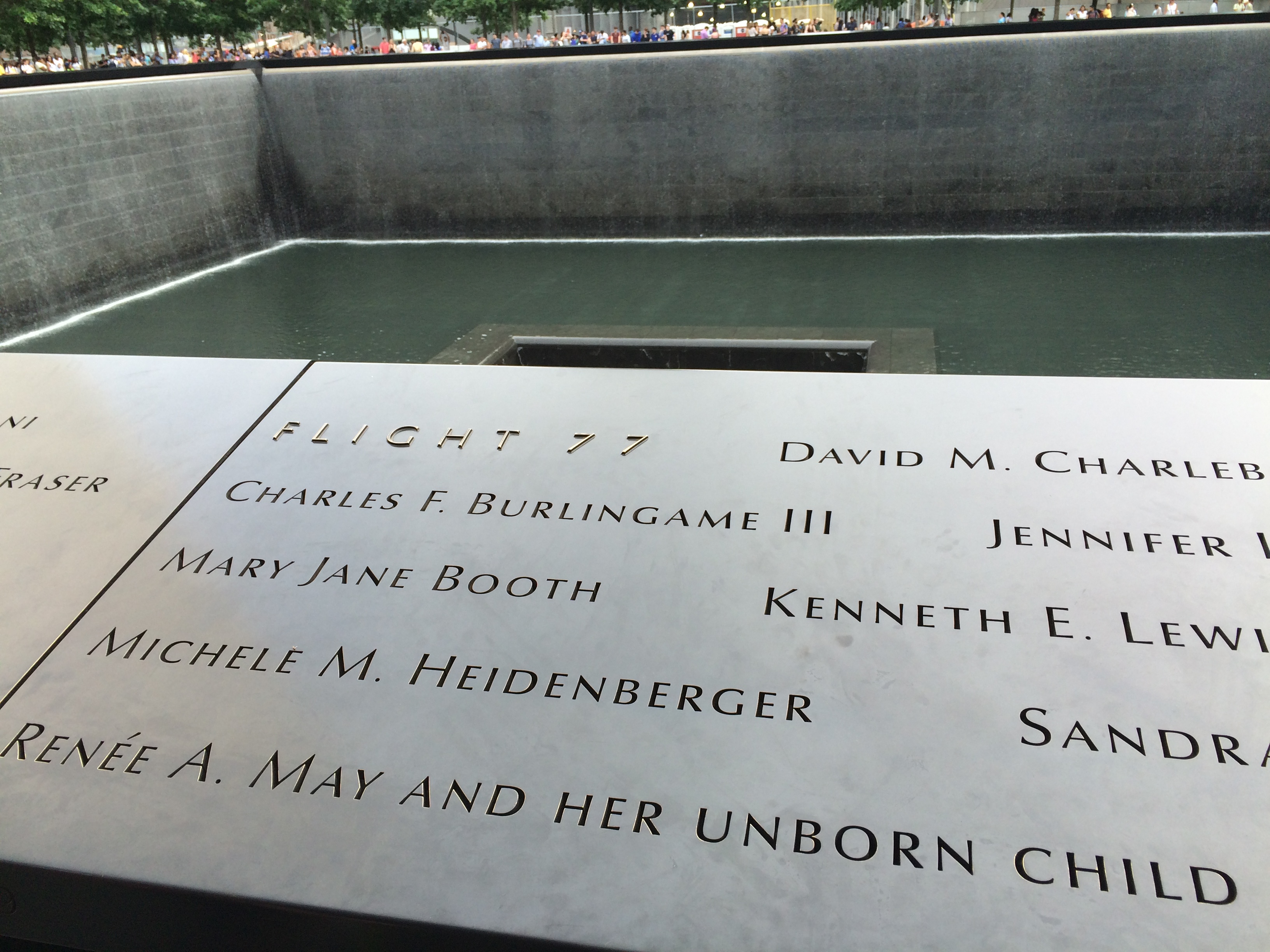
Should we believe that even Normal American Muslims (NAMs)are both contributing members of civil society and potentially blood thirsty terrorists, a-la 9/11, where NAMs in the US took flying lessons but not landing lessons in plain sight, before they flew planes into perfectly good buildings and a field in Pennsylvania, and killed nearly 3,000 innocent men, women, children and pregnant women?
Imagine Japanese Americans parading down Broadway in Manhattan, New York City, on December 8, 1941, waving Rising Sun flags and criticizing the US for shooting down Imperial Japanese warplanes over Pearl Harbor on December 7, 1941. Let that sink in. Picture it.
That is Schrodinger’s Imperial Japanese.
What we did with Japanese Americans a few months into 1942 was intern them for the four years it took to defeat Imperial Japan in WWII.
The status of Muslims in America is changing, and rapidly. If we are honest with ourselves, we have to admit that Islam is incompatible with American culture, values and laws. Islamic supremacists want only theocracy, government and religion in one. That is diametrically opposed to democracy, our Constitution and laws.
Islamic supremacists will never assimilate to US or western culture, nor do they respect US or western laws.
Islamic supremacists immigrate to non-Muslim majority countries and then criticize our culture and laws and insist on living according to Sharia (which is an END STATE without “kafir” (non-believers). We have allowed this because we are all-accepting and diverse, and that’s what strengthens us, right? Diversity?
Is this idea of strength through diversity why 57 Muslim majority countries are importing Asians and Westerners by the hoards into their countries? No? Why not? Isn’t diversity strength?
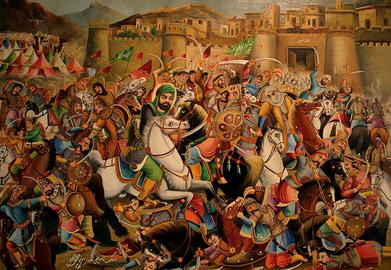
This migration is called Hijra, required of all Muslims, invented by the founder of Islam, Muhammad, who performed the first Hijra from Mecca, where he was rejected, to Yathrib, an Arab and Jewish enclave, later renamed Medina, but only after Muhammad had slaughtered hundreds of Jews and then assumed control of the city. So began the trail of murder, rape, pedophilia, enslavement, taxing, forced conversion to Islam, from only the Arabian Peninsula during Muhammad’s time, to now dozens of countries world wide.
There are 57 member states in the Organization of Islamic Cooperation. How many times have you read a statement from them, or the Arab League, condemning Islamic supremacists or terrorism? I have been questioned on social media about all the “peace-loving” Muslims who reject Islamic supremacism and terrorism. I say to them, show me when these “peace-loving” Muslims have rejected Islamic supremacists and terrorism publicly. Where are they? Cowering in the dark, far away from the media camera lights and microphones.
How many domestic terror or sabotage incidents were there in the United States, perpetrated by Imperial Japanese pretending to be American citizens, from March 1941 to March 1946? I couldn’t find any.
Does that justify the internment of over 100,000 Japanese and Japanese Americans during WWII?
Is the cat alive or dead? You only know for sure if you open the box, labeled in this case, “Pandora.”
Pandora’s Box contained human suffering, evil, despair, and hope. When opened, Pandora released these things into the world but closed the box in time to save hope.
Schrodinger’s Muslim is both alive and dead, peace loving and terrorist, trustworthy and a lying, cheating, bloodthirsty supremacist.
If we read the Quran, the Muslim holy book, we will find (Meccan) peace-loving scriptures , but also edicts, rules and laws that are misogynistic, violent, deceptive, murderous and cruel (Medinan). They exist simultaneously, in the same book.
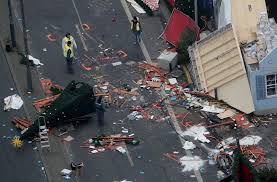
The German Christmas market massacre and the New Orleans massacre, and no the Australian Bondi Beach, Washington, DC, and Brown University have something in common: Schrodinger’s Muslim. Citizens of the countries in which they lived, the Muslim perpetrators of these terrorist acts were somewhat civil in their daily lives and interactions with others, one even espousing anti-Muslim ideation. Yet all became “Mr. Hyde,” as they slammed into and shot innocent human beings who were merely going about their Judeo and/or Christian business, celebrating the birth of Christ, the renewal of the Roman calendar, Chanukah, and studying about Israel respectively. These activities and beliefs considered “haram” (unacceptable) by an Islamic supremacist.
The concept of “taqiyya” is in play as well. This is the Muslim practice of morally absolved deception towards kafir or non-believers (us). This was certainly the case with the German incident, where the Muslim pretended to be anti-Islam, until of course he ran over innocent men, women and children with a two-ton truck.
Schrodinger’s Muslim will kill you while smiling.
However uncomfortable it is to even think it, especially after remunerating Japanese Americans with $20,000 each and an official presidential apology for their internment in 1988, we must now discuss the necessity of doing something about Schrodinger’s Muslim.
Internment camps, deportation, surveillance, questioning, swearing of statements of loyalty for non-citizens, etc.
Islamophobia? Irrational fear of Muslims? Does this prevent us from ever talking about their Anglophobia and intolerance of western culture and laws?
Schrodinger’s Muslim is the definition of irrationality. We are entering into the realm of double-negatives, paradoxes and brain cramps; quantum rationality, where two conflicting ideas exist simultaneously.
Do we do what we decided was discrimination, inhumane and possibly un-Constitutional treatment towards Japanese and fix the problem? Or, do we ignore reality, facts and blood that we observe when we open the box or turn on the TV or social media?












 Saving Grace at Guantanamo Bay